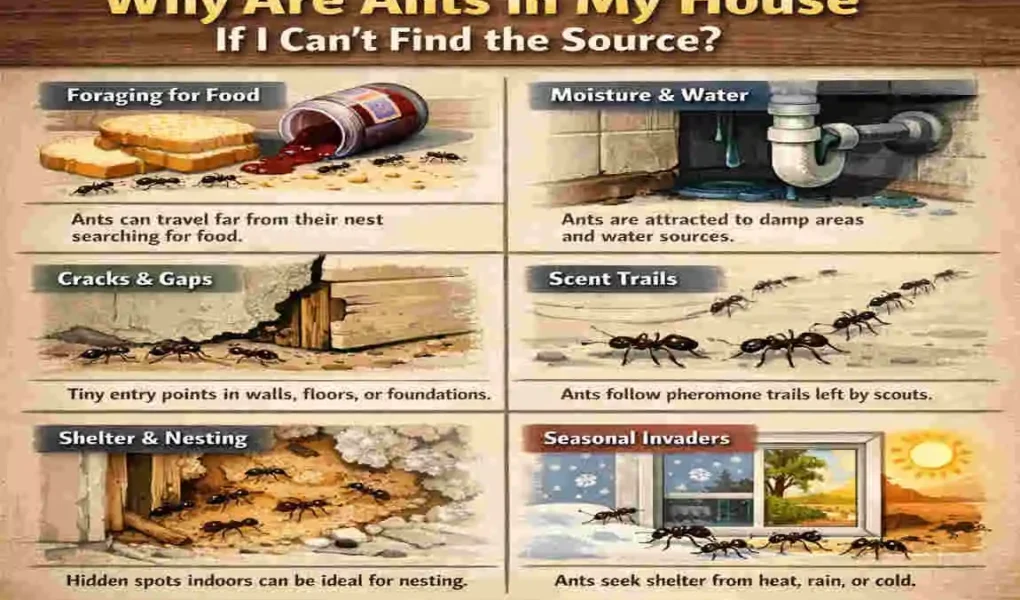
Ants often appear inside even when you don’t see a visible nest or food spill. Small cracks, moisture, and the promise of shelter are enough to draw them inside.
| Possible Cause | What It Means | What to Do |
|---|---|---|
| Tiny Cracks | Ants can enter through very small gaps in walls, windows, or foundations. | Seal visible cracks and openings. |
| Hidden Food | Crumbs, sugar, grease, or pet food can attract ants. | Clean surfaces and store food in sealed containers. |
| Moisture | Leaks and damp areas can attract ants. | Fix leaks and keep areas dry. |
| Hidden Nest | The colony may be inside walls, under floors, or outdoors. | Follow ant trails to locate activity. |
| Weather Changes | Rain, heat, or cold can drive ants indoors. | Inspect entry points and seal gaps. |
| Outdoor Colony | Ants may be entering from soil, plants, mulch, or foundation areas. | Keep the home’s exterior clean and inspect the foundation. |
Understanding Why Ants Are in Your House
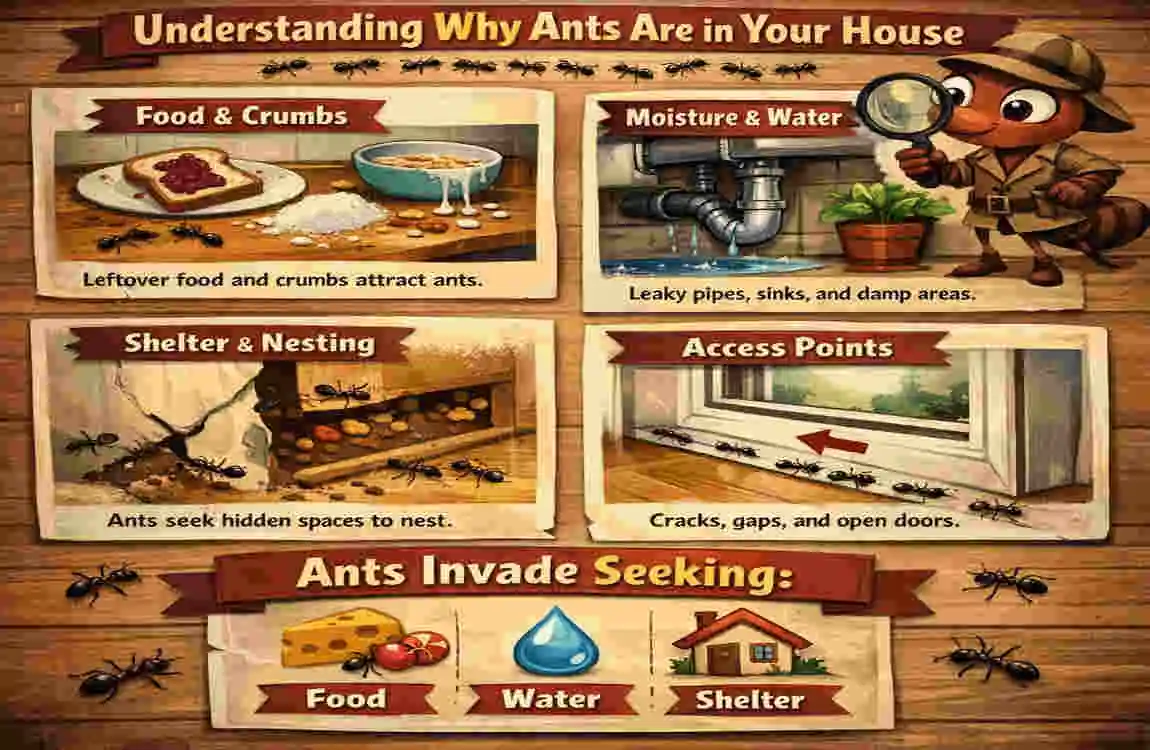
Ants are attracted to any place that offers food, water, and a safe route back to their colony. Even a tiny crumb or a damp patch can be a magnet.
Common Reasons Ants Enter Homes
- Food and sugary spills
- Water leaks and damp spots
- Weather shifts that force colonies outward
- Warm, protected spaces
- Nearby outdoor colonies that use the house as a shortcut
Why You May Not See the Source
Ants travel through wall voids, cracks around plumbing, foundation gaps, and tiny openings invisible without close inspection. Their trails can disappear as quickly as they appear.
How to Find Where the Ants Are Coming From
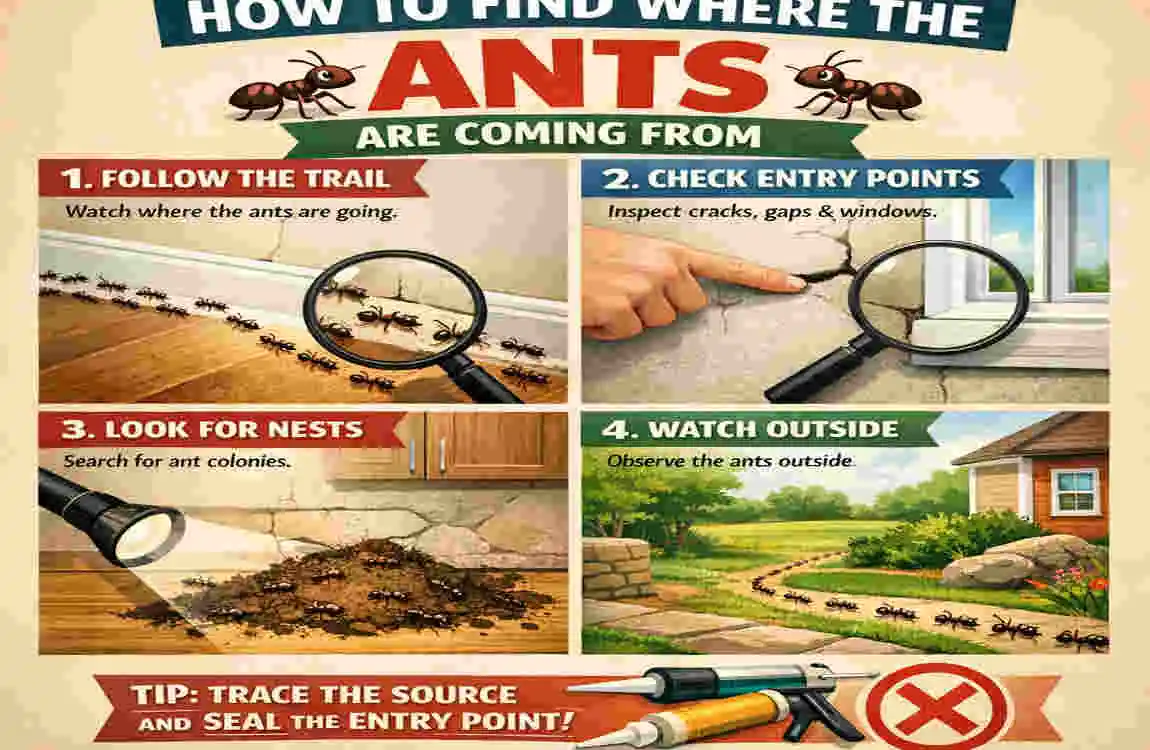
Finding the entry point doesn’t require a magnifying glass—just observation and a systematic check.
Follow the Ant Trail
Watch the line of ants for a few minutes. They usually move along the same route, heading toward food or moisture. Once you spot their direction, start checking the walls or floor along that line.
Check Common Entry Points
- Windows and door frames
- Baseboards and crown moulding
- Pipe and electrical conduit openings
- Vents and dryer exhausts
- Cracks in the foundation
Look for Hidden Nesting Areas
Ants may nest behind walls, under floorboards, inside cabinets, or just outside the foundation. These spots stay hidden until the colony grows large enough to spill over.
Hidden Places Ants May Be Nesting
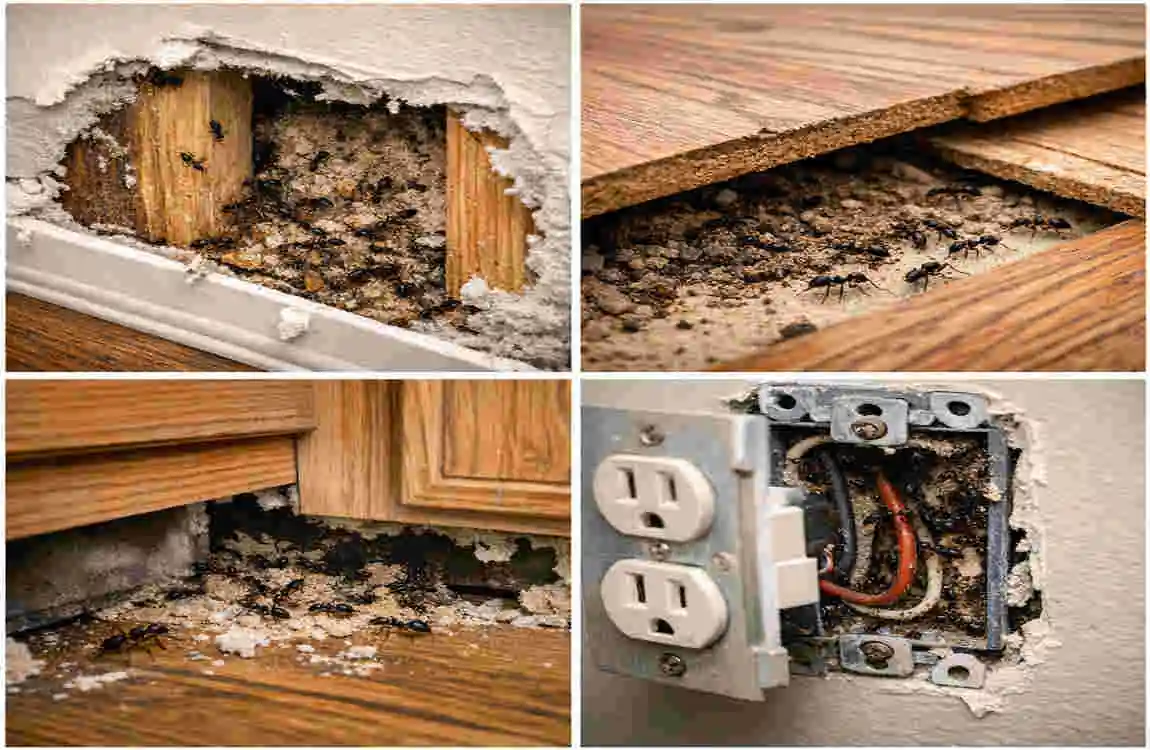
Even when you think the house is clean, ants can thrive in concealed spaces.
Inside Walls and Cabinets
Small gaps around wiring or plumbing give ants a protected hallway. Cabinets with loose back panels are especially inviting.
Under Floors and Around Foundations
The space beneath laminate or hardwood can stay dry and warm—perfect for a hidden colony. Foundation cracks let ants move between the yard and your living room.
Outdoor Sources Near the House
Ants often come from soil, mulch, garden beds, tree roots, or patio edges. A colony right against the foundation can send workers inside through the tiniest opening.
What Attracts Ants Inside Your Home?
Removing visible crumbs isn’t enough if other attractants remain.
Food and Kitchen Attractants
- Sugary drinks, honey, fruit slices
- Grease splatters on stovetops and cabinets
- Open snack bags or pet food left out
Moisture and Water Sources
- Leaking faucets or pipe joints
- Condensation on windows
- Damp wood in bathrooms or basements
Seasonal Changes
Heat waves, heavy rain, or a sudden drop in temperature can drive ants indoors in search of a stable environment.
How to Get Rid of Ants When You Can’t Find the Source
A practical, step‑by‑step approach works best.
Step What to Do Why It Helps
Clean Wipe trails, store food in sealed containers, take out trash daily Removes scent trails and food cues.
Seal Use caulk or weather‑stripping on cracks, gaps around pipes, and window frames Blocks the highways ants use
Dry Repair leaks, use a dehumidifier in damp rooms, and ensure proper ventilation Removes water that ants love.
Call Professionals When you see large numbers, suspect a hidden nest, or DIY methods fail Experts can locate and treat concealed colonies safely.
Clean and Remove Attractants
Start by scrubbing countertops, sweeping floors, and emptying trash. Ants lose interest when you erase their scent trail.
Seal Cracks and Entry Points
Apply silicone caulk around windows, door frames, and any visible gaps. Even a hair‑thin crack can be an entryway.
Address Moisture Problems
Fix dripping faucets, replace worn‑out rubber gaskets, and keep bathroom fans running to reduce humidity.
When Professional Pest Control May Help
If ants keep returning despite your efforts, a specialist can inspect wall voids, treat hidden nests, and apply long‑lasting barriers.
Preventing Ants From Coming Back
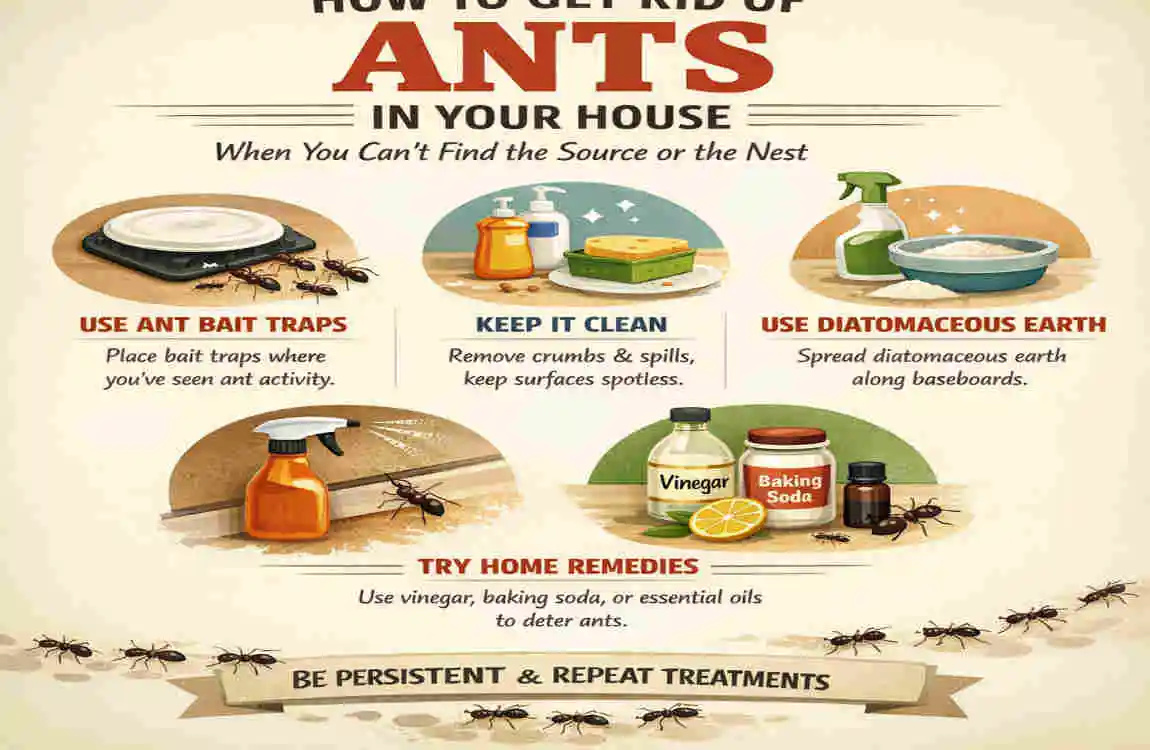
Staying ahead of ants is easier than reacting after they appear.
Keep Food Properly Stored
Seal snacks in airtight containers and wipe spills immediately.
Keep the House Dry and Clean
Regularly check kitchens, bathrooms, and basements for leaks or condensation.
Maintain the Outside of the Home
- Trim vines and bushes away from walls
- Keep mulch a few inches from the foundation
- Eliminate standing water in gutters or puddles
Frequently Asked Questions
Why are there ants in my house if I can’t find where they are coming from?
Ants use microscopic cracks, plumbing gaps, and wall voids that are invisible without a close look.
How do I find an ant nest inside my house?
Follow an active trail to see where ants disappear; the spot often leads to a hidden nest or entry point.
Why do ants suddenly appear in my house?
Weather changes, new food or water sources, and disturbances to outdoor colonies can push ants indoors.
Can ants live inside walls?
Yes—many species establish colonies in wall cavities where they stay protected and hidden.
Does a clean house still get ants?
Even a tidy home can attract ants through moisture, tiny food particles, or easy access points.