Can Household Gas Lines Freeze?
Home Improvement Plumbing

Can Gas Lines Freeze in Your Home? Winter Risks & Prevention Guide

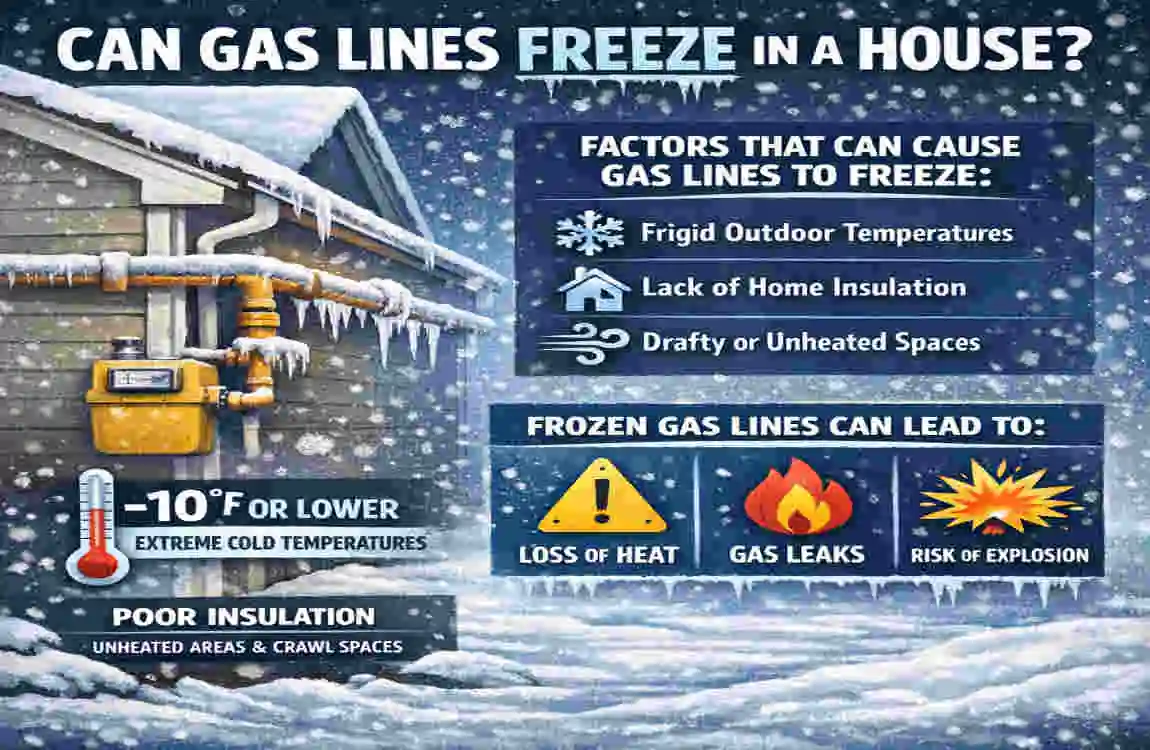
When winter gets serious, many homeowners start asking the same question: can gas lines freeze in a house? It is a smart question, especially when the cold settles in and the heating system has to work harder than usual.

Natural gas and propane do not usually freeze in normal winter weather. In fact, they would need extremely low temperatures to solidify. What often happens instead is that moisture, condensation, or pressure problems create a blockage in the line. That blockage can act like a freeze, even if the gas itself is not frozen.

Aspect Key Risks Prevention Tips
Temperature Impact Moisture freezes in lines below 32°F for days, blocking flow Insulate pipes with foam or heat tape; keep home >55°F
Moisture Issues Condensation or leaks allow ice formation Seal cracks/gaps; full propane tanks reduce risk
Installation Factors Poor setup exposes lines to cold Annual pro maintenance; use gas line heaters in extreme cold
Warning Signs Hissing, rotten egg smell, no appliance function Clear vents of snow; avoid oven as heat source

Understanding Gas Lines in Your Home

Can Household Gas Lines Freeze?

What gas lines do and where they go

Gas lines are the pipes that bring fuel from the main supply to the appliances in your house. They connect the meter or tank to appliances such as your stove, water heater, furnace, fireplace, or backup generator.

In many homes, especially older row houses and apartments, these lines run through walls, crawl spaces, utility rooms, attics, basements, and outdoor sections near the meter. Some parts stay warm because they are inside the house. Other parts sit in colder spots and face more winter stress.

Most homeowners do not think about these pipes until something goes wrong. That is understandable. Gas lines are usually hidden, quiet, and reliable. But when winter hits hard, even a hidden system can show weakness if the installation is old, damaged, poorly insulated, or exposed to moisture.

Natural gas vs. propane

A lot of confusion starts here. People often use the phrase “gas line freezing” to describe two different problems:

  1. The gas itself getting cold
  2. Moisture inside or around the line freezing and blocking the flow

Natural gas and propane are both designed to work in very cold conditions. They do not freeze at everyday winter temperatures. The actual temperatures needed to solidify them are far lower than anything found in a normal household.

That means your gas supply is usually not at risk solely due to the fuel. The bigger concern is what happens around the line. Water, damp air, condensation, dirt, rust, or a tank pressure issue can create a blockage that looks and behaves like a frozen line.

A simple comparison

Gas Type Approximate Freezing Point Common Home Use

Natural Gas Around -295°F (-182°C) Furnaces, stoves, water heaters

Propane Around -306°F (-188°C) Backup tanks, grills, heating systems

The key takeaway is simple: normal winter weather is not cold enough to freeze the fuel itself. But winter can still create conditions that stop the gas from flowing properly.

Can Gas Lines Actually Freeze? The Science Explained

Why the answer is mostly “not the gas itself”

If you are wondering whether gas lines can freeze in a house, the most accurate answer is this: gas usually does not freeze, but the line can still stop working due to cold-weather issues.

This matters because the word “freeze” can be misleading. Gas lines do not behave like water pipes. Water turns to ice at 32°F, so it is easy to imagine a pipe full of gas doing the same thing. But gas is different. It is a fuel in vapor form, and it takes extremely low temperatures to become a solid.

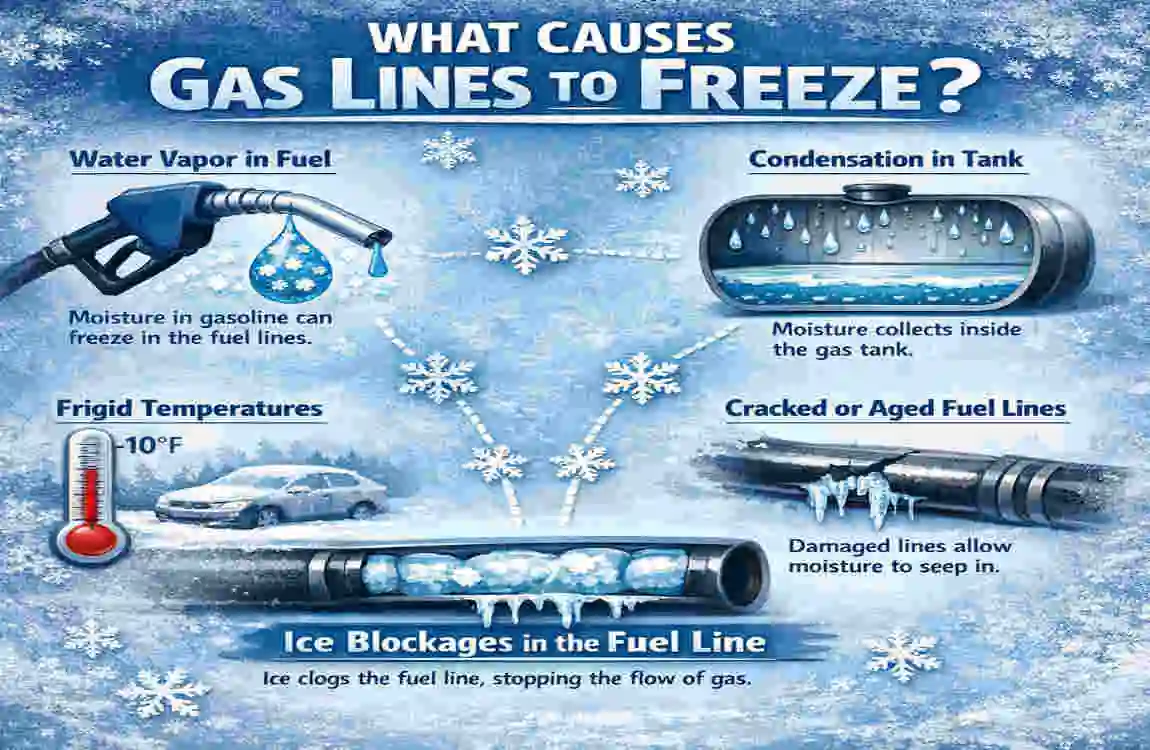
In everyday winter weather, your gas is still a gas. The problem usually starts when moisture enters the system. That moisture can come from humid air, small leaks, condensation, or poor sealing. Once temperatures drop, that moisture can turn to ice, creating a plug inside the line or around a regulator.

How condensation creates a blockage

Think of it this way. When warm, moist air meets a cold surface, water forms. You see it on a cold glass in summer. You see it on metal in winter too. The same thing can happen with gas-related equipment.

If a gas line, fitting, valve, or regulator gets cold enough, moisture in the area can collect. Then, if temperatures fall more, that moisture can freeze. The ice does not need to fill the entire pipe to cause trouble. Even a small plug can interrupt pressure and reduce gas flow to appliances.

That is why many winter gas line issues are really moisture and pressure problems, not pure gas freezing. In practical terms, the result feels the same to the homeowner: the stove does not light well, the furnace struggles, or the fireplace goes out.

You can think of it as a chain reaction:

  • Cold weather cools exposed parts
  • Moist air collects near the line
  • Condensation forms
  • Temperatures drop again
  • Ice or blockage develops

Winter Risks: Why Freezing Gas Lines Are Dangerous

When gas flow stops, the whole home feels it

A gas line problem is not just a plumbing issue. It can affect your whole house. If gas does not flow correctly, appliances may stop working, heat may fail, and safety risks can rise quickly.

If your furnace stops running during a cold night, the house can become uncomfortable fast. If your water heater loses gas flow, you may wake up to a cold shower. If your stove or fireplace acts up, it becomes clear that something in the system needs attention.

The risk gets worse when a homeowner ignores early signs. A partial blockage can become more serious if pressure changes or moisture continues to accumulate. In some cases, the system can become unstable enough to create a leak or damage sensitive components.

Safety concerns you should not ignore

When people ask whether gas lines can freeze in a house, they are often really asking, “Is this a real danger?” The answer is yes, it can be.

Here are the main risks:

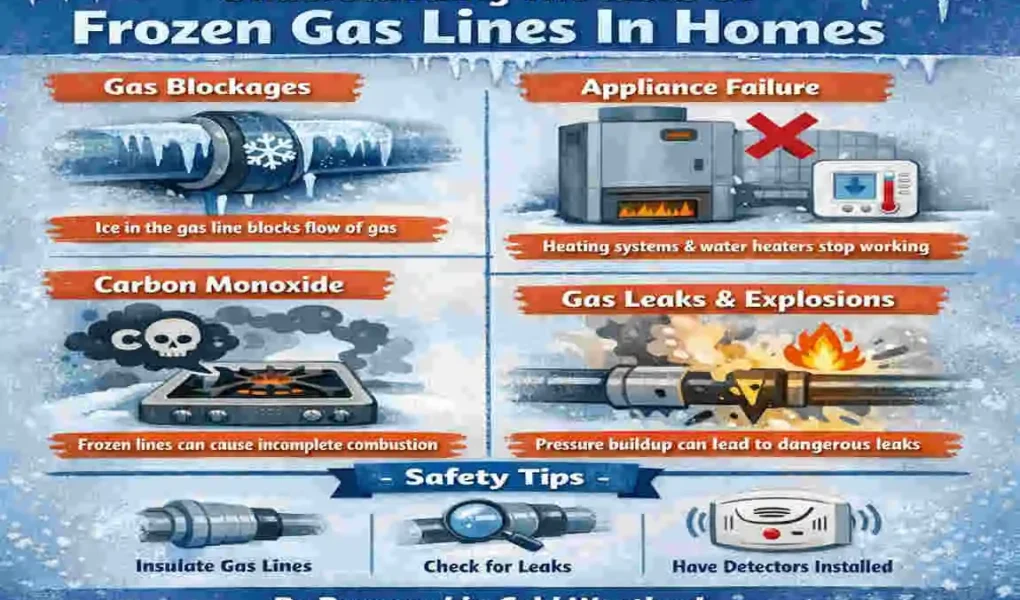
  • Loss of heating: If the furnace cannot get enough gas, your home may lose heat during the coldest part of the day.
  • Appliance failure: Stoves, fireplaces, and water heaters may shut down or perform poorly.
  • Carbon monoxide risk: If a gas appliance does not burn fuel properly, carbon monoxide can become a concern.
  • Possible leaks: A stressed or damaged system may leak gas, which is always serious.
  • Corrosion and wear: Repeated moisture issues can accelerate rust and damage metal parts.
  • Higher repair costs: A minor winter issue can turn into an expensive service call if you wait too long.

Why this can become expensive

A frozen-looking gas line problem is often not a simple do-it-yourself repair. The issue may involve pressure testing, seal checks, regulator inspection, or a full line assessment. If the problem reaches the appliance side, you may also need heating repair.

That is why the cost can add up quickly. A minor issue handled early may be manageable. A neglected issue can lead to repeated service calls, parts replacement, and avoidable inconvenience.

Think about the bigger picture

Gas problems in winter are dangerous not just because they interrupt comfort, but because they can affect health, safety, and daily life. No heat during a cold spell is more than a nuisance. For children, older adults, and anyone with health concerns, it can become a real problem.

Signs Your Gas Lines Might Be Freezing

Can Household Gas Lines Freeze?

Early warning signs to watch for

The best time to act is before the system fails. If you catch the warning signs early, you can call for help before the issue turns into a larger repair.

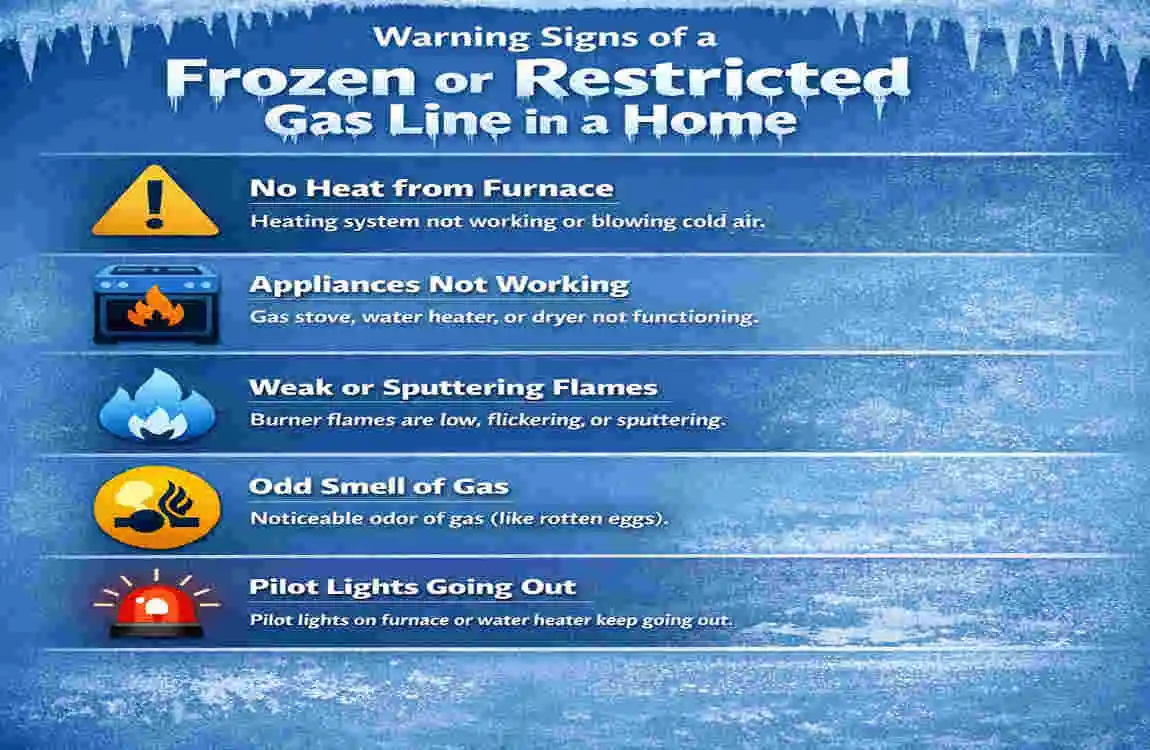
Watch for these common clues:

  • Weak or uneven flame on your stove or fireplace
  • Pilot light going out
  • Appliances taking longer to start
  • A faint hissing sound near a line or connection
  • Frost or ice on exposed pipes or fittings
  • Unusual smell of gas
  • Rooms not heating evenly
  • Low pressure feel in gas-powered appliances

A weak flame or a fireplace that will not stay lit often indicates a problem with gas delivery. It does not always mean freezing, but it does mean the system needs attention.

What the smell means

If you smell gas, do not treat it like a simple freezing issue. Natural gas is mixed with a strong odor so people can detect leaks. That smell is a warning, not a normal winter condition.

If the smell is strong, leave the area and follow your local emergency guidance. Do not light matches, flip switches, or use anything that could create a spark. This is one of those moments where caution matters more than curiosity.

Why frost matters

Frost on a gas line or on outdoor components does not automatically mean the entire line is frozen. But it does tell you that the area is cold enough for moisture to condense and freeze. That is your cue to take the situation seriously.

If you see frost on exposed pipes, regulators, or fittings, do not ignore it. The frost may be an early sign that the system is struggling in winter conditions.

When to call a professional

If your appliance is failing, your line seems iced over, or you suspect a leak, call a licensed professional. Do not try to force the system to work. Gas systems are not the place for guesswork.

You should call a pro right away if:

  • You smell gas
  • The furnace will not stay on
  • The flame is unusually weak
  • You see ice on outdoor gas parts
  • You hear hissing near a line
  • The issue returns after you “fix” it once

The goal is not just to get the heat back. The goal is to keep your home safe.

Common Causes of Gas Line Freezing in Houses

Cold weather is only part of the story

Extreme cold can create conditions that lead to gas line freezing in homes, but it is rarely the only cause. In many cases, the real problem starts earlier and hides until winter arrives.

Some homes have older gas lines. Some have poor sealing. Some have outdoor sections exposed to rain, humidity, and cold air. Some have appliances that are not maintained often enough. All of those factors increase the likelihood of winter gas line risks.

Common causes and quick fixes

Cause Risk Level What It Can Lead To Basic Fix

Extreme cold on exposed parts High Ice buildup, pressure drop Insulate and shield the line

Moisture entering the system Medium Internal blockage Seal leaks and inspect fittings

Poor insulation around pipes High Faster cooling and condensation Add proper insulation

Low propane tank pressure High Weak appliance performance Refill or check tank supply

Corroded or aging parts Medium Leaks and restricted flow Professional inspection

Blocked vents or regulator issues High Poor gas delivery Clean and service the system

Why moisture is such a big deal

Moisture is the hidden troublemaker. It can enter through tiny gaps, weak seals, or damp outdoor conditions. Once it is inside or around the line, winter makes it worse.

Older homes are especially vulnerable because the system may not have modern sealing or insulation. If a gas line passes through a damp area or near an exterior wall, the chance of condensation rises. That is one reason why a home can seem fine in autumn and then act up during the first real cold snap.

Propane tanks need extra attention

If your home uses propane, tank pressure becomes a bigger concern during cold weather. Propane vaporizes less efficiently when temperatures drop. That does not mean it freezes under normal winter conditions. Still, it can struggle to supply appliances properly if the tank is low or poorly managed.

This is why full tanks, proper regulator setup, and routine checks matter so much. A propane system under low pressure can behave like a frozen line even when the fuel has not frozen.

The bottom line

The phrase “gas line freezing” covers more than one problem. In real homes, the issue is usually a mix of cold, moisture, pressure, insulation, and maintenance. Fix the weak point, and you reduce the risk.

What to Do If You Suspect a Frozen Gas Line

Stay calm and do not rush

If your gas system seems blocked in winter, your first job is to stay calm. A fast reaction is useful, but a reckless one is not.

The biggest mistake homeowners make is trying to solve the problem with a torch, lighter, or other open flame. That is extremely dangerous. You should never appliance direct flame to gas lines or fittings.

Safer first steps

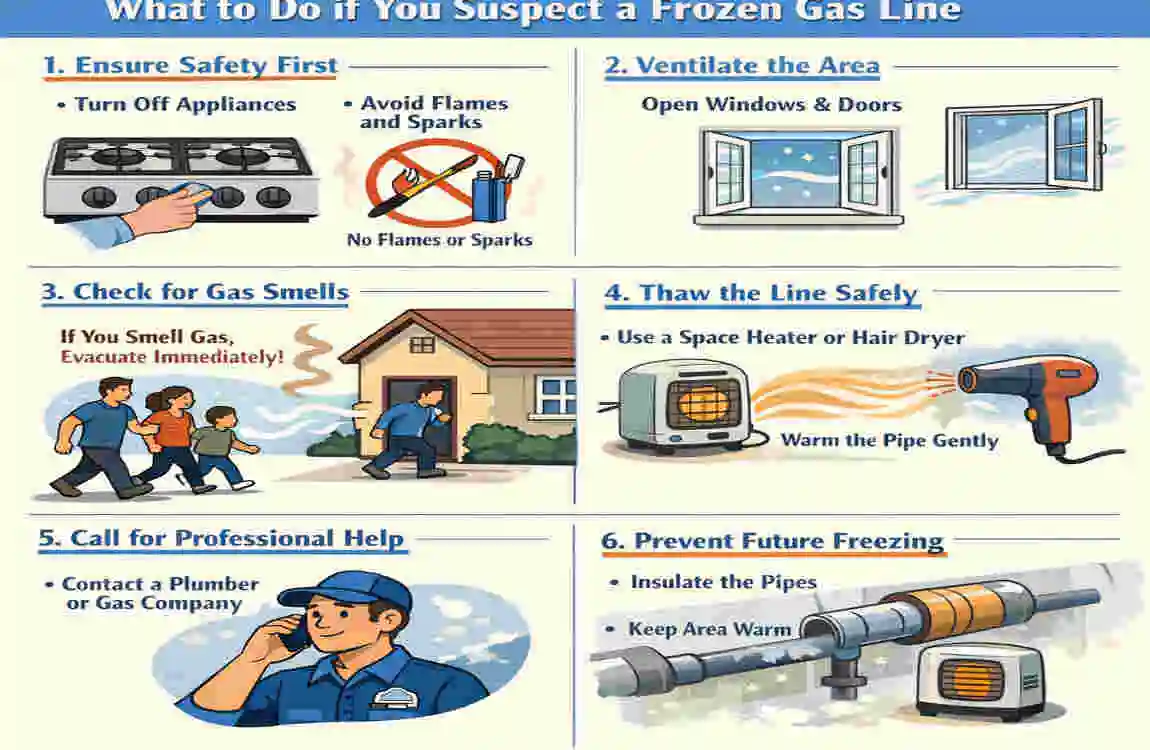
If you suspect a gas line issue, follow these simple steps:

  1. Stop using affected appliances
  2. Look and listen for obvious signs of leakage
  3. If you smell gas, leave the area
  4. Do not turn electrical switches on or off if a leak is possible
  5. Call a licensed gas professional
  6. Wait for inspection before restarting the system

If the problem is only a cold-weather blockage and not a leak, a professional may use safe thawing and testing methods to restore service. The important point is this: do not try to guess your way through a gas problem.

What not to do

This part matters a lot. Never:

  • Use a torch or open flame
  • Hit the pipe with tools
  • Pour boiling water on gas equipment
  • Wrap unsafe heat sources around the line
  • Ignore a gas smell
  • Keep trying to restart an appliance that keeps failing

Those actions can make a small problem much worse.

Why professional help is the right move

A licensed technician can check pressure, inspect joints, test for leaks, and figure out whether the issue is in the line, regulator, tank, or appliance. That kind of diagnosis is hard to do safely without training.

Prevention Guide: How to Stop Gas Lines Freezing

Prevention is cheaper than repair

This is the section that saves you time, stress, and money. To prevent gas line freeze-ups, focus on insulation, maintenance, and simple winter habits.

The good news is that most of the best prevention steps are not complicated. You do not need a major renovation. You need smart care and regular attention.

A practical winter prevention checklist

Here are the most useful steps homeowners can take:

  1. Insulate exposed gas lines
  2. Keep indoor temperatures steady
  3. Seal cracks near utility areas
  4. Check outdoor regulators and vents
  5. Keep propane tanks properly filled

Insulation makes a big difference

Insulation helps slow heat loss. If gas pipes run through unheated areas, foam sleeves or proper wrap can reduce the chance of condensation and cold shock. This is especially useful for pipes near outside walls or in open utility spaces.

It is not just about warmth. Insulation also helps stabilize the line so sudden temperature drops do less damage.

Keep the home environment stable

A house that gets very cold at night is more likely to develop winter gas line issues. Try to keep indoor temperatures steady and comfortable. You do not need to overheat the home. You just want to avoid deep temperature swings.

If you are leaving home for a few days, do not let the indoor temperature fall too far if you can safely avoid it. A stable interior helps protect hidden systems.

Make air flow work for you

Some homeowners close off utility cabinets or block vents without realizing they are hurting circulation. In certain setups, that can trap cold air or moisture near the line. A little airflow can help keep the area more stable.

That said, do not change ventilation around gas equipment unless you understand the system. If in doubt, ask a professional.

Routine checks matter more than people think

A yearly inspection can catch small issues before winter exposes them. That includes worn seals, loose fittings, corrosion, regulator problems, and partial blockages. If your home is older, a seasonal check becomes even more valuable.

Gas vs. Water Lines: Key Differences in Freezing

Can Household Gas Lines Freeze?

Why people confuse the two

It is easy to mix up gas and water lines because both are hidden in walls and can cause winter problems. But the way they fail is very different.

Water freezes at 32°F (0°C). Gas does not freeze at temperatures anywhere near normal winter temperatures. So if someone says a gas line “froze,” they often mean the system was blocked by moisture or another issue, not that the fuel turned into ice.

What the difference means for homeowners

Water line freezing is usually about ice expansion inside the pipe. Gas line freezing is more often due to condensation, pressure issues, regulator problems, or ice around components.

That difference matters because the prevention steps overlap, but they are not identical. Both systems benefit from insulation, leak checks, and winter care. But gas systems require extra caution due to the safety risks associated with fuel and combustion.

Shared prevention, different risks

The overlap is simple:

  • Both need protection from cold exposure
  • Both need insulation in vulnerable areas
  • Both benefit from early maintenance
  • Both can fail when homeowners ignore warning signs

The difference is also simple:

  • Water line freezing usually causes a plumbing outage
  • Gas line problems can affect heat, cooking, and safety

Professional Inspection Checklist

What a technician should look for

If you call a professional for gas line freezing concerns, they should not just glance at the pipe and leave. A proper inspection should be thorough.

Here is what a good check often includes:

Inspection Point Why It Matters

Leak testing Finds dangerous escapes early

Pressure check Confirms the system is delivering gas properly

Pipe condition Reveals corrosion, damage, or wear

Regulator review Helps identify pressure and flow problems

Appliance connection check Makes sure the issue is not at the furnace, stove, or water heater

Outdoor exposure review Shows where cold and moisture may be entering

Insulation inspection Confirms whether exposed sections are protected

Why this level of detail matters

A gas line issue can come from the line itself, the regulator, the tank, or an appliance, or from a hidden leak. If the inspector only checks one part, the real problem may remain.

That is why you want a complete look at the system, not just a quick fix.

A good inspection gives you peace of mind

A winter check does more than solve a current problem. It also tells you what might fail later. That gives you time to plan repairs, replace worn parts, and avoid emergency calls during the worst weather.

If you own an older home, this is especially worth doing. Age does not automatically mean danger, but it does mean more wear, more hidden joints, and more chances for trouble.

FAQs: Can Gas Lines Freeze in a House?

Can gas lines freeze in a house at 20°F?

Usually the gas itself will not freeze at 20°F. But moisture, condensation, or pressure issues can create a blockage that behaves like a frozen line. So the system can still fail in cold weather even when the fuel is not frozen.

How do I know if my gas line is frozen?

Look for weak flames, appliances that will not start, frost on exposed parts, or unusual hissing sounds. If you smell gas, treat it as a possible leak and leave the area right away.

Can I thaw a gas line myself?

No, not with heat tools, torches, or open flames. A licensed professional should handle gas systems. Safe diagnosis and thawing require proper training and equipment.

What is the biggest winter gas line risk?

The biggest risk is not just the blockage itself. The chain reaction that follows: no heat, unsafe appliance performance, possible leaks, and potential carbon monoxide concerns.

Does propane freeze in a house?

Propane does not freeze in normal household winter conditions. But low tank pressure, cold weather, and poor system setup can still cause propane supply problems.

How can I prevent gas line freezing in homes?

Focus on insulation, steady indoor temperatures, dry utility spaces, full propane tanks where needed, and yearly inspections. Early maintenance is the best defense.

Should I call a plumber or a gas technician?

If the issue involves gas flow, leaks, or appliance failure, call a qualified gas professional or a technician trained to work on gas systems. If you are unsure, get help before trying anything yourself.

You may also like...

Leave a Reply

Your email address will not be published. Required fields are marked *