how to change a name on a house deed
REAL ESTATE

Changing a Name on a House Deed: A Complete Guide

Just got married and realized your house deed still lists your maiden name? Or maybe you went through a divorce, inherited a property, or legally changed your name and now the deed no longer matches your official records. If that sounds familiar, you are not alone.

Learning how to change a name on a house deed can feel confusing at first, but it does not have to be stressful. In simple terms, this process helps your property records match your legal identity. That matters more than many homeowners realize.

A deed is not just a piece of paper. It is one of the most important documents tied to your home. If the name on it is outdated or incorrect, you may run into problems later when you try to sell, refinance, transfer house deed ownership, or prove your rights to the property. Even small mistakes can slow down a closing or create extra legal questions.

The good news is that in many cases, you can update property deed records without major hassle if you follow the right steps. You will need the right paperwork, the correct deed type, and a clear understanding of what your lender, county recorder, or title office expects.

Section Short SEO Informational Content
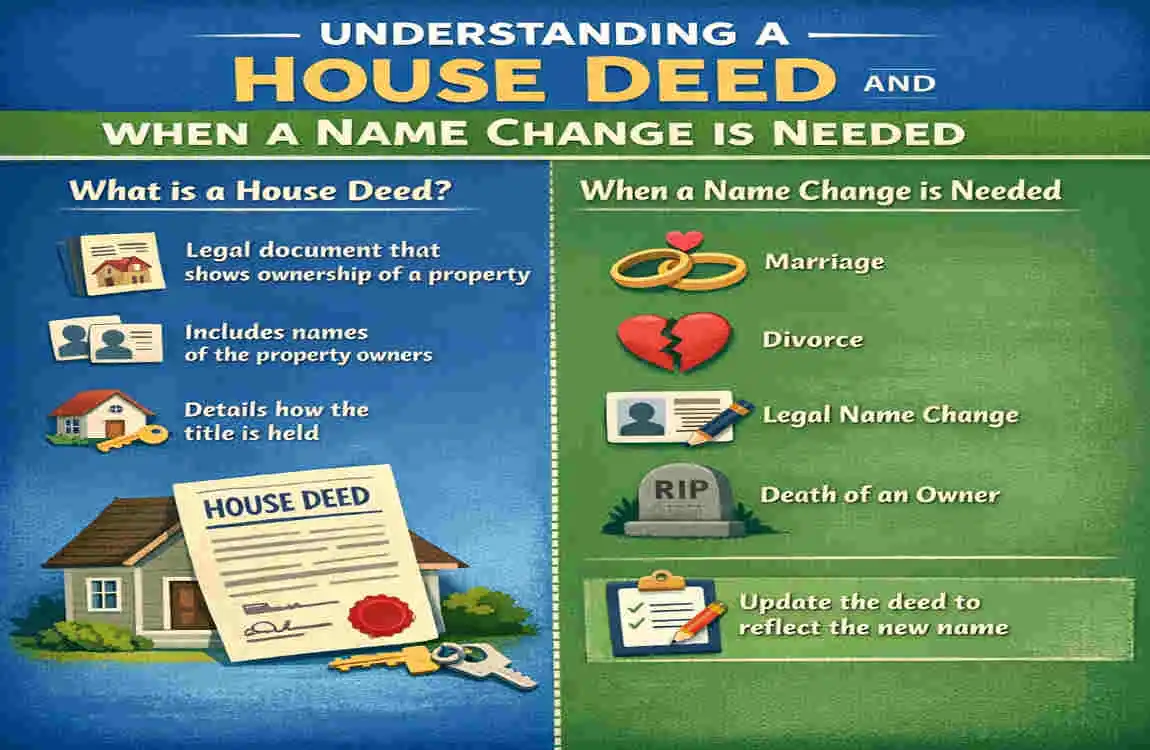
What It Means Changing a name on a house deed means updating the legal record of property ownership to reflect a new or corrected name .
Common Reasons Marriage, divorce, legal name change, inheritance, or correcting an error on the deed .
Documents Needed Proof of identity, legal proof of name change, and sometimes lender consent or identity verification forms .
Basic Process Review the current deed, prepare the required transfer or application form, attach supporting documents, and submit it to the land or county registry .
Mortgage Consideration If the property has a mortgage, the lender may need to approve the change before the deed is updated .
After Marriage A marriage certificate is usually enough if you are changing to your spouse’s surname .

When to Change a Name on a Deed

how to change a name on a house deed

Why this step matters

A name change on a deed usually happens when life changes and your legal records need to keep up. Sometimes the change is simple, like updating a last name after marriage. Other times it is more complex, like removing a former spouse after divorce or transferring a home after someone passes away.

The key idea is this: the deed should reflect the correct legal owner or owners. If it does not, future property transactions can become messy. You may face delays with title companies, banks, county recorders, or estate administrators.

Some real estate professionals say that a large share of deeds need updating after marriage because homeowners often forget to update property records when they change their name. Even if the mismatch seems harmless, it can cause trouble later.

Common life events that trigger a deed update

Here are the most common reasons people need to change a name on a house deed:

Marriage or divorce

After marriage, one spouse may want the deed to match a new last name. After divorce, one spouse may need to be removed from the deed entirely, especially if the home is awarded to one person in the divorce agreement.

Inheritance after an owner’s death

If you inherit a property, the deed may need to be transferred from the deceased person’s name to the heir’s name or to multiple heirs. This often involves probate documents or a recorded will.

Gender affirmation or court-ordered name changes

If you legally changed your name through a court order or another official process, the deed should be updated to reflect that change. This helps prevent identity confusion and protects your legal rights.

Adding or removing co-owners

Sometimes property ownership changes because someone is added as a co-owner, removed from the title, or the ownership structure changes for planning or family reasons.

Quick comparison table

Scenario Trigger Document Needed Urgency Level

Marriage Marriage certificate Medium

Divorce Divorce decree High

Inheritance Will or probate documents High

Legal name change Court order or deed poll Medium

When urgency becomes important

Some situations are more urgent than others. For example, if a divorce decree states that one spouse gets the house, the deed should be updated as soon as possible to reduce conflict and keep the title clear. In an inheritance case, delays can make it harder to manage taxes, insurance, or future sale plans.

If you are unsure whether your situation calls for a deed change, ask yourself one question: Does the deed still show the correct legal owner name? If the answer is no, it is time to act.

Legal Requirements and Documents

Start with the basics

Before you can change a name on a house deed, you need to gather the right documents. This part is important because a county recorder or title office will usually reject incomplete paperwork. Taking a little time here can save you a lot of frustration later.

The exact rules depend on your location, but most people need proof of the name change, a copy of the current deed, and property details that match county records.

Common documents you may need

Here is a simple checklist of the documents often required:

  • Proof of identity, such as a driver’s license or passport
  • Proof of the name change, such as a marriage certificate, divorce decree, or court order
  • Current deed copy from the county recorder or land records office
  • Property legal description, not just the street address
  • Mortgage or lien information, if the property is financed
  • Title or ownership records, if multiple owners are involved
  • Additional local forms, depending on county or state rules

In some cases, you may also need tax identification details, insurance records, or other supporting paperwork. If you are in a country or region that uses different identity documents, make sure those match the name change record as well.

Why the legal description matters

One of the most common mistakes people make is using the street address alone. A deed usually needs the full legal property description, which may include lot numbers, subdivision names, metes and bounds, or parcel information.

That legal description must match the county’s official record. If it does not, the update can be delayed or rejected. This is why it is so important to review the current deed before you prepare a new one.

Watch for liens or mortgage restrictions

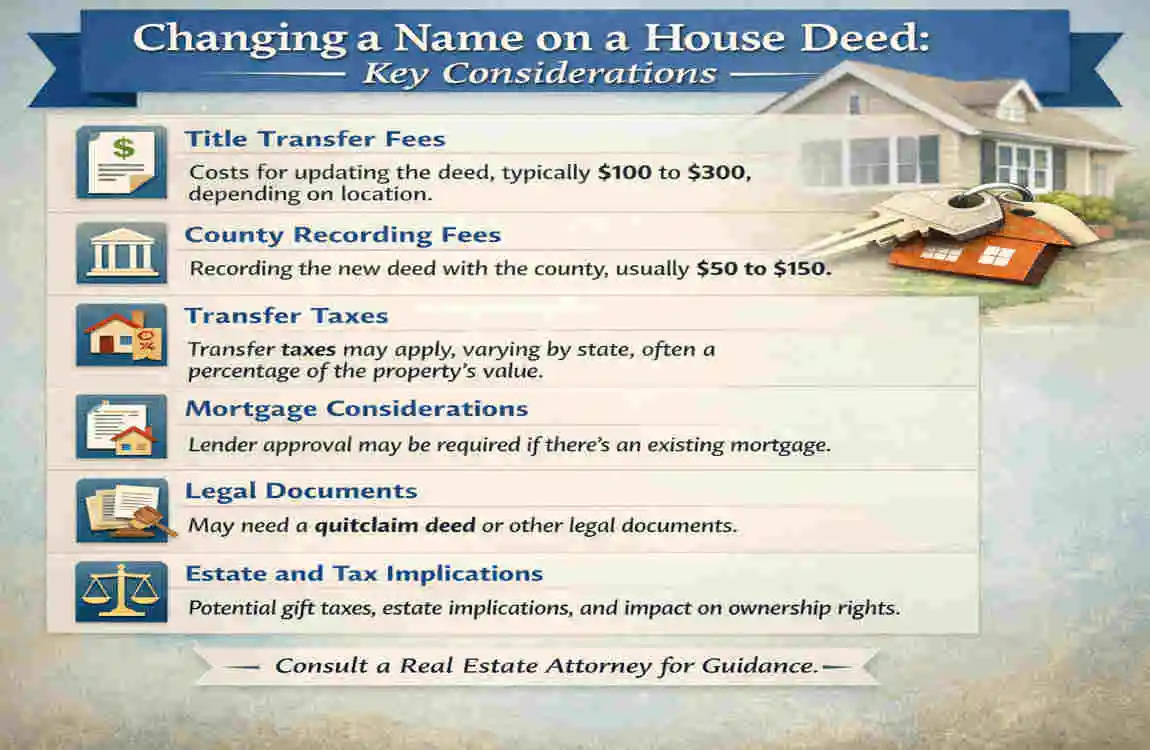
If you still have a mortgage, the lender may need to be informed before you make any deed changes. A deed transfer can sometimes trigger questions about the loan, especially if the ownership structure changes.

You should also check for:

  • Mortgages
  • Home equity loans
  • Tax liens
  • Judgments
  • HOA restrictions, if applicable

A clean title makes the process easier. If liens exist, you may need extra permission or extra forms before the transfer can go through.

Regional notes

In the United States, the process usually goes through the county recorder, county clerk, or local land records office. In the United Kingdom, similar updates may involve Land Registry forms and title corrections.

The exact office, form name, and filing fee will vary by region. So while the steps may look similar, always check the local requirements first. That small step can prevent many avoidable problems.

Step-by-Step Guide: How to Change a Name on a House Deed

how to change a name on a house deed

The big picture

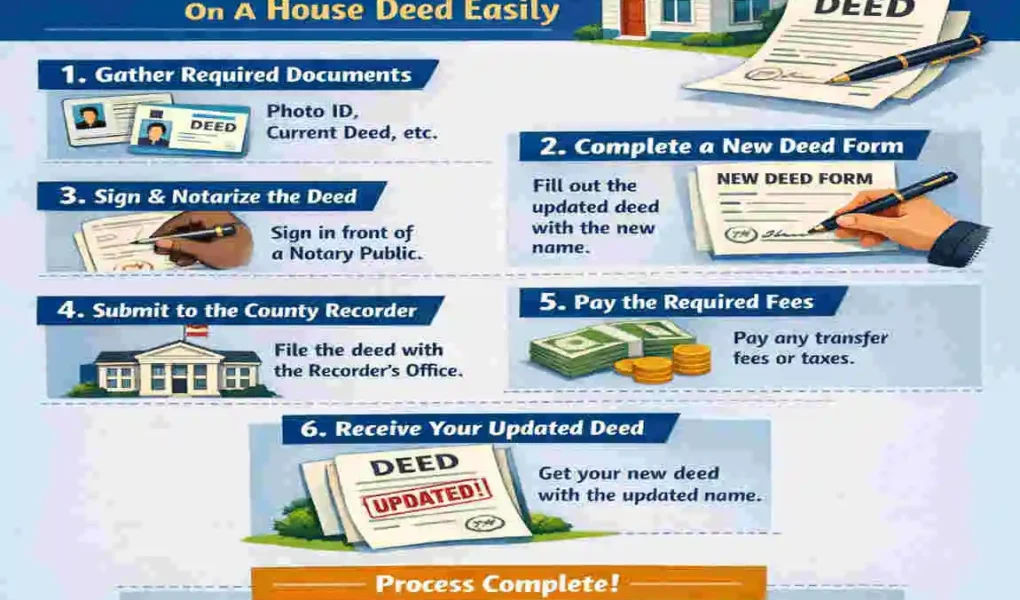
If you want to know how to change a name on a house deed, the process usually follows the same basic pattern:

  1. Update your official identity documents
  2. Review the current deed
  3. Check with your lender if needed
  4. Choose the right deed type
  5. Prepare the new deed
  6. File it with the proper office
  7. Update related records

Let’s go through each step in detail.

Update Official IDs First

The first step is to make sure your personal identification is up to date. This matters because the name on your deed should match the name you use on official records.

If you recently changed your name after marriage, divorce, or a court order, start with your Social Security card or the equivalent national identity record in your area. After that, update your driver’s license or state ID.

Why does this matter? Because the name on your ID helps prove that you are the same person listed in the earlier records. If your deed update uses a new name but your ID is still outdated, you may face questions from the recorder or title company.

This is also the time to update other accounts, such as your bank account, insurance policy, and tax records. While those are not part of the deed itself, they often need to match for future paperwork to go smoothly.

Review the Current Deed

Before you draft anything new, get a copy of the current deed. You can often request this from the county recorder’s office or the local land records office. In many places, you may also be able to search records online or visit the office in person.

Once you have the deed, look closely at:

  • The current owner name
  • The type of ownership
  • The legal property description
  • Any additional owners listed
  • Any recorded restrictions or notes

Ownership type matters more than many people realize. The deed may show joint ownership, tenancy by the entirety, tenants in common, or sole ownership. Each structure affects how the name change should be handled.

For example, if two spouses own the home together, changing one spouse’s name may not remove ownership rights. If the property is held in a trust or through an estate, the paperwork can become more detailed.

Consult the Lender if the Property Has a Mortgage

If your home has a mortgage, speak with the lender before you file anything. This is especially important if the change could affect ownership, loan responsibility, or the terms of the mortgage.

Some mortgage contracts include a due-on-sale clause, which may give the lender the right to demand repayment if property ownership changes without notice. A simple name correction after marriage may not trigger a problem, but a more meaningful transfer could.

That does not mean you cannot change the deed. It just means you should confirm the lender’s requirements first.

You may need:

  • A written notice of the name change
  • A copy of the marriage certificate, divorce decree, or court order
  • A waiver or approval letter
  • Guidance on whether the mortgage itself also needs updating

Choose the Right Deed Type

This is one of the most important parts of the process. The deed type you choose depends on your goal, your ownership situation, and your local rules.

For many simple name changes, people use a quitclaim deed to change their name. A quitclaim deed transfers whatever interest the person has in the property, but it does not promise that the title is free of problems. It is fast and common for family transfers and name corrections.

A grant deed is different. It usually gives more protection because it includes certain assurances about ownership. It may be used in sales, inheritances, or transfers where a stronger warranty is preferred.

Deed type comparison table

Deed TypeBest ForWarranty LevelCost Estimate

Quitclaim Deed Self-name changes, family transfers None $50–$200

Grant Deed Sales, inheritances, transfers with more protection Medium $100–$300

How to choose wisely

If you are simply updating your own name after marriage or a legal name change, a quitclaim deed may be the simplest route in some jurisdictions. If the transfer involves more people, a mortgage, or a more complex ownership change, a different deed may be better.

Prepare the New Deed

Once you know which deed type to use, prepare the new document carefully. You can often use a standard template, but the information must be accurate.

The deed should usually include:

  • The current owner name
  • The new legal name
  • The legal property description
  • The names of any other owners
  • The type of deed being used
  • The date of transfer
  • Notary acknowledgement if required

Even a small typo can cause problems. For example, if your legal name includes a middle name or suffix and it is left out, the county may reject the filing or create confusion later.

After the deed is completed, it usually needs to be signed in front of a notary public. Some states or counties also require witnesses.

Tip: Before signing, read every line slowly. Ask yourself whether the document reflects the exact way you want the property ownership to appear.

Simple example:

If your deed currently says “Sarah M. Johnson” and you legally changed your name to “Sarah M. Williams,” the new deed should show the correct updated legal name exactly as it appears on your official ID and supporting documents.

 File the Deed with the County Recorder

After the deed is signed and notarized, file it with the county recorder or the local office that handles property records. This step makes the update official.

You may be able to file:

  • In person
  • By mail
  • Through an approved electronic filing system, if your county allows it

You will likely need to pay a recording fee. The office may also review the deed for formatting, signatures, margins, notarization, and the accuracy of the legal description.

Typical timeline

Processing times vary, but many homeowners can expect the filing to take 2 to 8 weeks, depending on the county’s workload and the type of transfer.

If the document is returned for corrections, the process can take longer. That is why careful preparation matters so much.

Flow of the process

Update IDs → Review current deed → Check mortgage rules → Choose deed type → Prepare new deed → Notarize → File with county recorder → Confirm recording

You can think of this as a simple chain. If one link is weak, the whole process slows down.

Update Related Records After Recording

Once the deed is recorded, the job is not fully done. You should update other records tied to the home so everything matches.

That includes:

  • Property tax records
  • Homeowners insurance
  • Mortgage servicing records
  • HOA records, if you belong to one
  • Estate planning documents, if needed

Why does this matter? Because if one office has your old name and another has your new one, you may get mismatched notices, billing problems, or insurance confusion.

This final step is easy to overlook, but it makes the change much more useful in day-to-day life.

Costs Involved

What you may pay

Changing a name on a house deed is usually not the most expensive legal task, but the total cost can still vary a lot. Your final bill depends on where you live, whether you use an attorney, and how complicated the transfer is.

Some people handle the paperwork themselves, keeping costs low. Others hire a lawyer to make sure everything is correct. Both choices can make sense depending on your comfort level and your situation.

Cost breakdown table

ItemAverage Cost in the USNotes

Recording Fee $20–$100 Depends on county rules

Notary $10–$15 per signature Sometimes free at banks

Legal Preparation $200–$500 Higher if an attorney drafts it

Transfer Tax 0–2% of property value Often exempt for name-only changes

Total estimated cost

For many homeowners, the total cost lands somewhere between $100 and $1,000. That range is wide because every property situation is different.

A simple name correction after marriage may stay on the low end. A more involved transfer, especially one involving legal advice or title issues, can raise costs.

What affects the price

A few things can raise or lower the cost:

  • County filing fees
  • Number of signatures
  • Attorney fees
  • Need for title review
  • Whether transfer tax applies
  • Complexity of ownership structure

If you want to keep costs low, make sure your documents are complete the first time. A rejected filing often means paying again.

Common Mistakes to Avoid

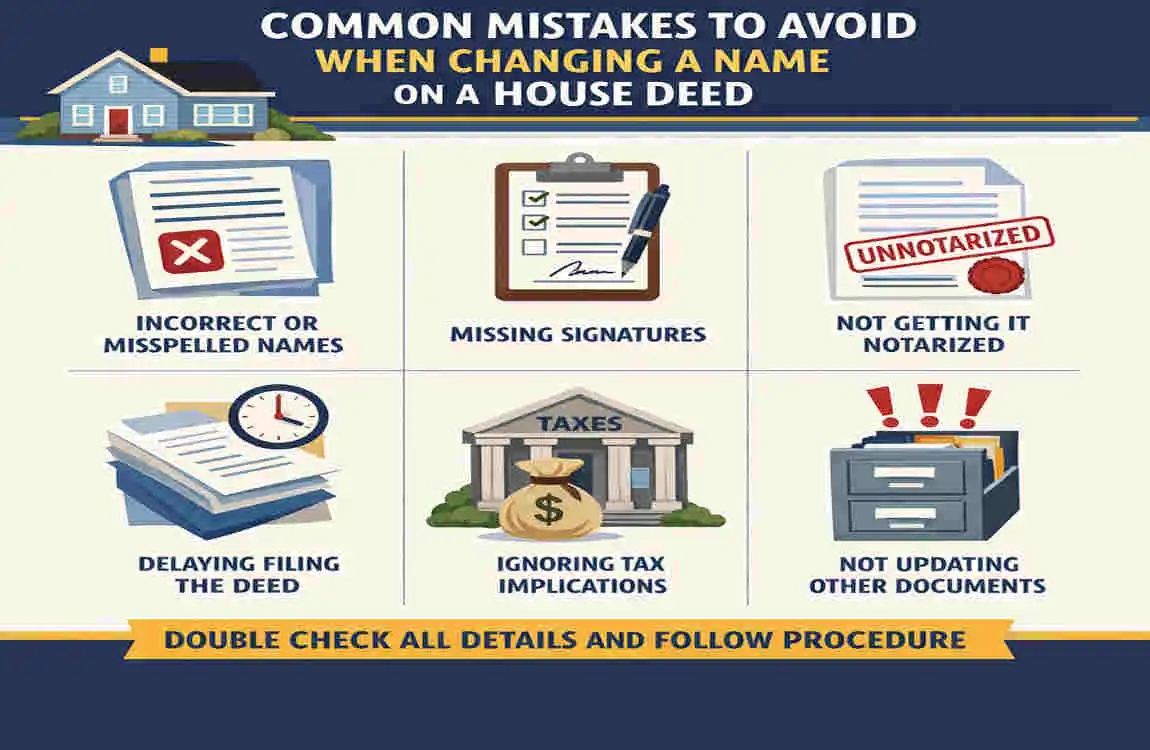
Small errors can create big delays

The deed change process is usually straightforward, but mistakes are common. Some are minor. Others can delay recording or create legal confusion later.

Here are the biggest problems to avoid:

Skipping lender approval

If your home has a mortgage, do not assume the lender will ignore the change. In some cases, failing to notify the lender can create loan problems or raise questions about the property transfer.

 Using the wrong legal description

The property description must match the county record exactly. A street address alone is usually not enough. If the legal description is wrong, the deed may be rejected.

 Forgetting to update taxes and insurance

Once the deed is recorded, your other records should match. If they do not, you may receive bills or notices under the old name.

 Choosing the wrong deed type

A quitclaim deed may work well in one case and be the wrong choice in another. Do not pick a deed just because it sounds easy. Pick it because it matches your legal goal.

Missing required notarization or witness signatures

Some counties will not accept a deed without proper notarization. Others require witnesses as well. Always check local rules before signing.

Simple pro tip

If you want extra peace of mind, hire a real estate attorney or title professional to review the document. The cost may be worth it if the property has a mortgage, multiple owners, or estate issues. For many people, that review helps prevent far more expensive problems later.

State-Specific Variations

how to change a name on a house deed

Why local rules matter

The overall process for changing a name on a house deed is similar in many places. Still, the details can vary from state to state, county to county, or country to country.

For example:

  • Some counties have different recording fees
  • Some states require specific form language
  • Some areas ask for additional tax forms
  • Some places allow electronic filing, while others do not

Examples of local differences

In some states, a quitclaim deed is the most common way to update a name after marriage. In another case, the recorder may expect a separate affidavit or a supplemental page. The paperwork can look similar, but the filing instructions can vary widely.

If you are in the U.S., check your county recorder, county clerk, or local assessor instructions. If you are in the U.K., review the requirements for Land Registry updates and corrections.

Best practice

Always use your local office’s rules as the final authority. That is the safest way to avoid delays. Even if a friend in another state had an easy filing process, yours may not be identical.

FAQs

Does changing the name on a deed affect the mortgage?

Usually, no, not by itself. But if the change affects ownership or loan responsibility, you should notify the lender. The mortgage and the deed are connected, so it is smart to keep the lender informed.

How long does it take to change a name on a house deed?

In many cases, the process takes 4 to 12 weeks, including preparation, notarization, recording, and any correction requests. Some counties move faster, while others take longer.

Do I need a lawyer to change a name on a deed?

Not always. A simple name update may be done without a lawyer in some places. But if there is a mortgage, divorce, inheritance, trust, or co-owner issue, legal help is often worth it.

Is a quitclaim deed enough for a name change?

Often, yes, especially for a simple correction after marriage or a legal name change. But it depends on your situation and local rules. A quitclaim deed is common, but it does not give warranties about title.

What if I make a mistake on the deed?

If the deed is not yet recorded, you may be able to correct it before filing. If it has already been recorded, you may need a correction deed or another corrective filing. This is why careful review before submission is so important.

Can I change the deed name after divorce or inheritance?

Yes. In fact, those are two of the most common reasons people need to update a property deed. The paperwork may be more detailed, but the process is very common.

Is transfer tax always required?

No. In many cases, name-only transfers or certain family-related transfers may be exempt, but rules vary by location. Always check before filing.

You may also like...

Leave a Reply

Your email address will not be published. Required fields are marked *