If your home has old pipes, frequent leaks, or low water pressure, you may already be asking a very important question: how much does it cost to replace plumbing in a house?
It is a smart question to ask before you begin any major project. Plumbing replacement can protect your home from water damage, improve water flow, and even raise your property value. But it can also be a big expense, and the price can vary widely depending on the size of your house, the type of pipes you choose, and how easy it is for a plumber to reach the old system.
Many homeowners put off plumbing replacement because they are unsure of the cost. That hesitation is understandable. After all, plumbing work is not something most people deal with every day. But when pipes get too old, corroded, or damaged, waiting too long can lead to bigger problems later.
| Factor | Description | Average Cost Range |
|---|---|---|
| Fixture Replacement (e.g., faucet, toilet) | Labor and materials for single items like sinks or showers. | $150–$750 |
| Pipe Repiping (per linear foot) | Replacing old pipes with PEX or copper in existing homes. | $0.40–$2.00 |
| Whole-House Repiping | Full system overhaul for 1,500–2,500 sq ft home. | $2,300–$12,000 |
| Water Heater Swap | Tank or tankless unit installation. | $600–$3,100 |
| Main Line Replacement (sewer/water) | Trenchless or full excavation for external lines. | $1,500–$25,000 |
| Labor (hourly rate) | Plumber fees, often with minimum charge. | $45–$150/hour |
| Sq Ft for New Rough-In | Basic plumbing install in new construction. | $4.50–$10/sq ft |
How Much Does It Cost to Replace Plumbing in a House?
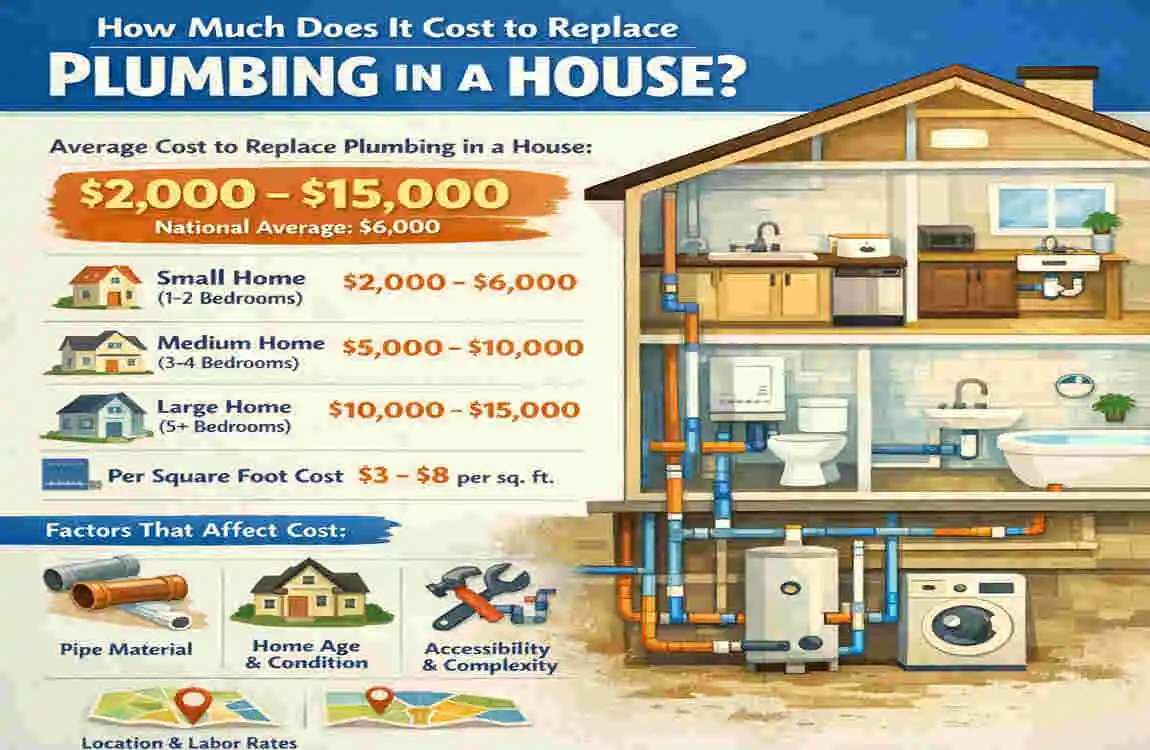
The cost to replace plumbing in a house can vary widely. A small home with easily accessible pipes may cost far less than a larger house with plumbing hidden behind finished walls. Still, most homeowners can expect a full repiping project to fall within a broad price range.
Average Cost Range
For a whole-house repiping project, the average cost often falls between $4,000 and $15,000. In some cases, it may be lower for a smaller home or higher for a larger or more complex property.
Here is a simple way to think about it:
- Low end: around $2,500 to $5,000 for smaller, simpler homes
- Mid range: around $6,000 to $12,000 for average homes
- High end: around $15,000 to $20,000+ for larger homes or premium materials
These numbers are only general estimates, but they give you a useful starting point. The final bill depends on labor, materials, access, permits, and the amount of restoration work needed after the pipes are replaced.
Cost Per Square Foot
Another way to estimate house repiping cost is by square footage. Many contractors use home size as one of the first pricing factors.
Typical repiping costs can range from about $4 to $8 per square foot. However, this can move higher based on material and complexity. For example:
- A 1,000-square-foot home may cost around $4,000 to $8,000
- A 1,500-square-foot home may cost around $6,000 to $12,000
- A 2,500-square-foot home may cost around $10,000 to $20,000
Keep in mind that square footage is just a guide. Two homes of the same size can have very different plumbing replacement cost estimates, depending on whether one has open access and the other requires extensive wall cutting and repair.
Cost by Pipe Material
The type of pipe you choose has a big effect on your budget. Some materials cost less up front, while others last longer or handle heat and pressure better.
Copper
Copper is often considered a premium choice. It is durable, long-lasting, and has a strong reputation. However, it is also one of the most expensive pipe materials.
- Typical cost: higher than most alternatives
- Best for: homeowners who want long-term durability and are willing to pay more
- Important note: copper prices can change based on market conditions
PEX
PEX is a flexible plastic piping material that has become very popular in modern homes. It is usually less expensive than copper and often faster to install.
- Typical cost: moderate to low
- Best for: many residential repiping projects
- Main advantage: easier installation often helps lower labor costs too
CPVC
CPVC is another plastic pipe material commonly used for water supply lines. It is generally affordable and works well in many homes.
- Typical cost: often lower than copper
- Best for: homeowners looking for a budget-friendly option
- Main advantage: simple, cost-effective solution for many replacement projects
Quick Comparison Table
Pipe MaterialTypical Cost LevelMain BenefitsCommon Drawbacks
Copper High Very durable, long lifespan, trusted material More expensive, higher material cost
PEX Low to Moderate Flexible, faster installation, budget-friendly May not be ideal in every application
CPVC Low to Moderate Affordable, widely used, practical for many homes Less durable than copper in some settings
If you are comparing costs to replace pipes, remember that material costs are only one part of the total. Labor, access, and restoration can matter just as much.
Key Factors That Affect Plumbing Replacement Costs
No two plumbing replacement projects cost the same. Even if two homeowners use the same pipe material, the final bill can still vary significantly. Understanding the main pricing factors can help you make better decisions and avoid surprises.
Size and Layout of the Home
The larger the home, the more pipe it usually has. That means more materials, more labor, and more time on the job. A small one-bathroom home will usually cost much less to repipe than a large multi-bathroom house with a complex layout.
The layout also matters. A simple, open floor plan is easier to work with. A house with tight crawl spaces, multiple stories, or hard-to-reach plumbing lines will usually cost more because the work takes longer.
Type of Plumbing Material
As we covered earlier, material choice plays a major role in the final price. Copper usually costs more than PEX or CPVC. But the lowest upfront price is not always the best long-term value.
When you compare materials, think about:
- Installation cost
- Expected lifespan
- Durability
- Compatibility with your home
- Maintenance needs
A cheaper material may seem attractive at first, but if it does not suit your home well, you could end up spending more later on repairs or replacements.
Accessibility of Pipes
This is one of the biggest cost drivers in any plumbing replacement cost estimate.
If the pipes are easy to reach, the job may go faster and cost less. For example, pipes in unfinished basements, open utility areas, or accessible attics are easier for plumbers to replace.
But if the pipes are hidden behind tile, drywall, flooring, or concrete, the work becomes more difficult. The plumber may need to cut into walls or floors to reach the old piping. That adds time, labor, and restoration costs.
Labor Costs
Labour often accounts for a large share of the total plumbing replacement cost. Rates can vary based on where you live, the contractor’s experience, and the project’s complexity.
In some areas, labour costs are higher due to local demand or higher living expenses. In others, competition between contractors may keep pricing more reasonable.
It is also important to remember that more complicated projects require more skill. If your home has outdated plumbing, unusual pipe routing, or major repairs, the labor cost will likely increase.
Permits and Inspections
Most plumbing replacement projects need permits and inspections. These are not optional in many places. Local rules help make sure the work meets safety and building standards.
Permit fees are usually not the largest part of the bill, but they still matter. Depending on your location, they may add a few hundred dollars or more to the project.
Inspections may also be required at certain stages of the job. These checks help confirm that the new plumbing is installed correctly and safely.
Signs Your Home Needs Plumbing Replacement
Sometimes the signs are clear. Other times, plumbing problems develop slowly and become easy to ignore. If you notice several warning signs, it may be time to consider repiping seriously.
Common Warning Signs
Here are some of the most common signs that your home may need plumbing replacement:
- Frequent leaks in different parts of the house
- Low water pressure that does not improve
- Discolored water or rusty-looking water
- Old piping materials, especially galvanized steel
- Visible corrosion or buildup on exposed pipes
- Noisy pipes that bang, rattle, or creak often
- Water that smells or tastes unusual
- Repeated plumbing repairs in the same areas
If you are dealing with more than one of these problems, your plumbing system may be reaching the end of its life.
Why Old Pipes Become a Problem
Pipes do not last forever. Over time, they can corrode, crack, clog, or weaken. Old galvanized steel pipes, for example, are well known for rust buildup and reduced water flow. As the pipe narrows, pressure drops, and water quality may suffer.
What starts as a small issue can become a larger one if ignored. A leak inside a wall can damage drywall, insulation, flooring, and even the home’s structure. That is why it is often better to replace failing plumbing early rather than wait for a serious failure.
Cost Breakdown by Project Scope
The cost of plumbing work depends not only on materials and labour but also on the size of the job. A small repair and a full repiping project are very different in scope.
Partial Pipe Replacement
Partial replacement means fixing or replacing only certain sections of pipe. This is common when the problem is isolated to a specific area, such as one bathroom, a kitchen line, or a damaged section behind a wall.
This option is usually cheaper than replacing the entire system. However, it may not be the best long-term solution if the rest of the plumbing is also old.
Partial replacement may be a good idea if:
- The rest of the system is still in good shape
- The damage is limited to one area
- You want to spread the project out over time
Whole-House Repiping
Whole-house repiping means replacing most or all of the plumbing system. This is a larger project, but it can be the best choice when pipes are old, failing, or made from outdated materials.
A full repipe often costs more up front. Still, it may save money in the long run by reducing leaks, improving water pressure, and limiting future repairs.
Replacing Water Supply vs. Drain Lines
Not all plumbing lines cost the same to replace. Water supply lines and drain lines can have different pricing because they serve different roles and may require different materials and installation methods.
- Water supply lines carry clean water into your home
- Drain lines remove wastewater from sinks, tubs, toilets, and appliances
Water supply line replacement often focuses on smaller-diameter pipes and may involve materials like PEX, copper, or CPVC. Drain line replacement can be more complicated because larger pipes may run through floors, walls, or concrete.
Additional Costs to Consider
When people ask how much it costs to replace plumbing in a house, they sometimes focus only on the plumbing itself. But that is not the full picture.
Additional costs may include:
- Drywall repair
- Painting
- Flooring restoration
- Tile replacement
- Cabinet removal and reinstallation
- Cleanup and debris removal
These restoration costs can add up quickly, especially if your plumbing runs through finished spaces. Always ask whether your estimate includes wall repair and cleanup, or whether those are separate expenses.
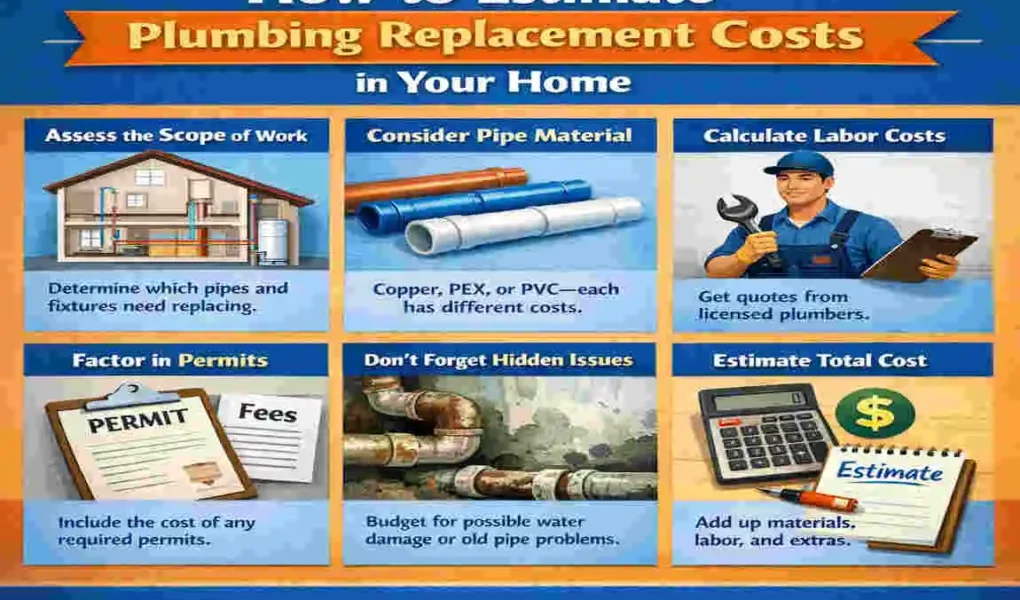
Step-by-Step Process of Replacing Plumbing
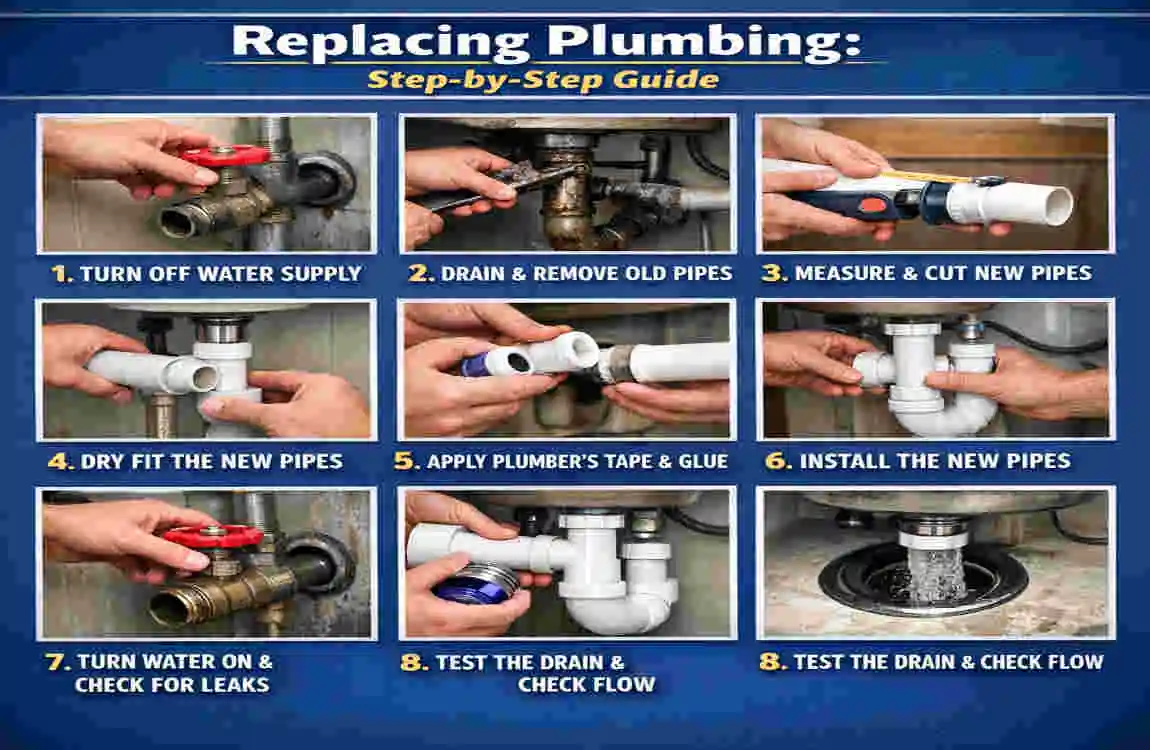
Replacing plumbing is a big project, but it becomes easier to understand when you break it into steps. Knowing the process helps you prepare for the work, budget correctly, and ask better questions when talking with contractors.
Inspection and Assessment
The first step is a full inspection. A plumber will inspect your current system, identify problem areas, and determine which plumbing components need replacement.
During this stage, the plumber may check:
- Pipe material and age
- Signs of corrosion or leakage
- Water pressure issues
- Drainage problems
- Accessibility of the existing lines
This inspection helps determine whether you need a minor repair, a partial replacement, or a full repipe.
Choosing the Right Materials
Once the problem is clear, the next step is choosing the right pipe material. This decision affects cost, performance, and long-term value.
Here is a simple way to think about it:
- Copper is strong and long-lasting, but more expensive
- PEX is flexible, efficient, and often budget-friendly
- CPVC offers a practical middle-ground for many homes
The best option depends on your home, your budget, and local building codes. A good plumber should explain the pros and cons of each material in simple terms.
Planning and Permits
Before work begins, the project needs a plan. This is where the plumber maps out the new system and makes sure the design fits your home’s layout.
Planning often includes:
- Choosing pipe routes
- Deciding where shutoff points will go
- Checking code requirements
- Applying for permits if needed
Permits matter because they help ensure that the work complies with safety rules. Skipping this step can create problems later, especially if you sell your house and need proof that the plumbing was done correctly.
Removing Old Pipes
After planning is complete, the old plumbing is removed. Depending on the house, this may involve opening sections of drywall, ceiling space, flooring, or crawl spaces.
This stage can be messy, but it is necessary. The plumber needs clear access to the old lines so they can take them out safely and prepare the area for the new system.
If your home has extensive hidden plumbing, this phase may take longer and require more restoration work afterwards.
Installing New Pipes
Now the new plumbing is installed. This includes both the water supply lines and, if needed, the drainage system.
During installation, the plumber will:
- Fit the pipes to the home’s layout
- Connect the lines to fixtures and appliances
- Secure the pipes properly
- Make sure the system is ready for testing
This is one of the most important parts of the project because the quality of the installation affects how well the system performs for years to come.
Step 6: Testing and Inspection
Once the pipes are in place, the plumber tests the system. They check for leaks, proper water flow, and correct pressure.
If local rules require it, an inspector may also review the work. This step gives you peace of mind that the system is working properly and safely.
Testing may include:
- Water pressure checks
- Leak tests
- Drain flow tests
- Final code inspection
If something is not right, it is much easier to fix it now than after the walls are closed.
Restoration Work
After the plumbing passes inspection, the final step is restoration. This means repairing the areas opened during the project.
Restoration may include:
- Patching drywall
- Painting walls
- Replacing tile or flooring
- Reinstalling cabinets or trim
Some plumbers handle this part directly, while others leave it to a separate contractor. Either way, restoration is an important part of the total project cost and should not be overlooked.
DIY vs. Hiring a Professional
Some homeowners like doing repairs themselves, and that can be a good instinct for smaller tasks. But full plumbing replacement is a different story.
What You Can Do Yourself
You may be able to handle small plumbing jobs on your own, such as:
- Replacing a faucet
- Fixing a minor leak
- Changing a showerhead
- Tightening a loose fitting
These simple tasks can save money and give you more confidence around your home’s plumbing.
Why Full Replacement Requires Professionals
A full repiping project is much more complex. It involves working with supply lines, drainage systems, pressure levels, building codes, and often structural access. One mistake can lead to leaks, poor performance, or major water damage.
Professional plumbers also understand local permits and inspection rules. That matters because a plumbing system must be safe, reliable, and code-compliant.
Cost Comparison
DIY may save on labour costs, but it comes with serious risks when the job is large. If you make a mistake during a full repipe, the repair cost could end up being much higher than the money you saved.
In most cases, professional installation is the smarter choice for whole-house plumbing replacement. The work is simply too important to leave to guesswork.
Tips to Save Money on Plumbing Replacement
A major plumbing project does not have to destroy your budget. There are practical ways to manage the cost while still getting quality work.
Smart Ways to Lower Costs
- Get multiple quotes so you can compare pricing and scope
- Choose cost-effective materials that still fit your home well
- Replace plumbing in phases if a full repipe is not urgent
- Plan during renovations so wall and floor access may already be open
- Maintain your pipes so you can extend their lifespan before replacement is needed
It is also wise to ask for a clear written estimate. That helps you understand exactly what is included and reduces the chance of hidden charges later.
The goal is not to find the cheapest option possible. The goal is to find the best value for your home and your long-term peace of mind.
Common Mistakes to Avoid
When planning a plumbing project, some mistakes can make the job more stressful and expensive than it needs to be.
Mistakes Homeowners Often Make
- Choosing the cheapest materials without thinking about durability
- Ignoring permits and local building requirements
- Underestimating total costs, especially restoration
- Hiring unqualified contractors with little experience
- Waiting too long until a leak becomes an emergency
These mistakes often lead to bigger problems later. A well-planned project usually costs less in the long run than a rushed one.
If you are comparing estimates, look beyond the lowest number. Ask what materials will be used, how long the work will take, and whether cleanup and repairs are included.
Is Replacing Plumbing Worth It?
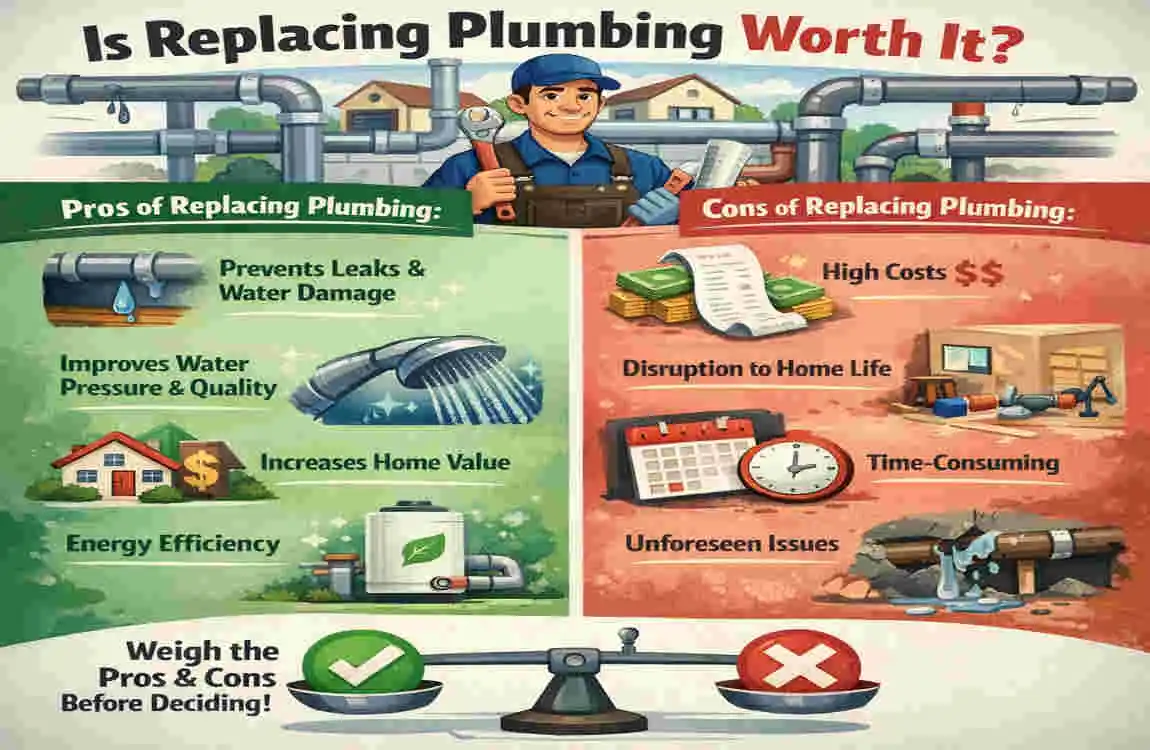
For many homeowners, the answer is yes. While the upfront price can feel high, the long-term benefits are often worth it.
Long-Term Savings
New plumbing can reduce the number of leaks, lower repair bills, and help you avoid emergency damage. Instead of paying for repeated fixes, you invest once in a system that works better.
Increased Home Value
A home with updated plumbing can be more appealing to buyers. People like knowing that the pipe system is modern, safe, and less likely to cause trouble.
Improved Water Quality
Old pipes can affect the taste, color, and quality of your water. Replacing them can give you cleaner, clearer water throughout the house.
Peace of Mind
Perhaps the biggest benefit is peace of mind. When you know your plumbing is in good shape, you do not have to worry as much about surprise leaks or hidden damage.
In that sense, plumbing replacement is not just a repair. It is also a way to protect your home and reduce stress.
FAQs
How much to replace plumbing in a house?
The cost usually ranges from about $4,000 to $15,000 or more for a whole-house repipe, depending on the size of the home, pipe material, labor, and access. Smaller homes may cost less, while larger or more complex homes may cost more.
How long does repiping take?
Most repiping projects take a few days to a week, but the timeline can be longer if the home is large or the pipes are hard to reach. Restoration work may add extra time after the pipes are installed.
What is the cheapest piping material?
In many cases, PEX or CPVC is less expensive than copper. The cheapest option is not always the best one, though. The right material depends on your home, local codes, and long-term goals.
Can I live in my house during repiping?
Often, yes. Many homeowners stay in the house during the project, though there may be short periods when water is shut off. The level of disruption depends on how much of the plumbing is being replaced and how your home is laid out.
Does repiping increase home value?
It can. Updated plumbing is a strong selling point because it reduces the chance of future problems and makes the home more appealing to buyers. Even if the value increase is not dramatic, it can help your home stand out in the market.