A hidden leak can turn a normal day into a very expensive one. One weak pipe behind a kitchen wall can damage cabinets, flooring, paint, and even your home’s structure. That is why choosing the right plumbing material matters so much.
If you are building a new house, remodeling an old one, or replacing aging water lines, you have probably asked this question: Which pipe is best for the house water supply? There should be one clear answer, but the truth is a little more practical than that.
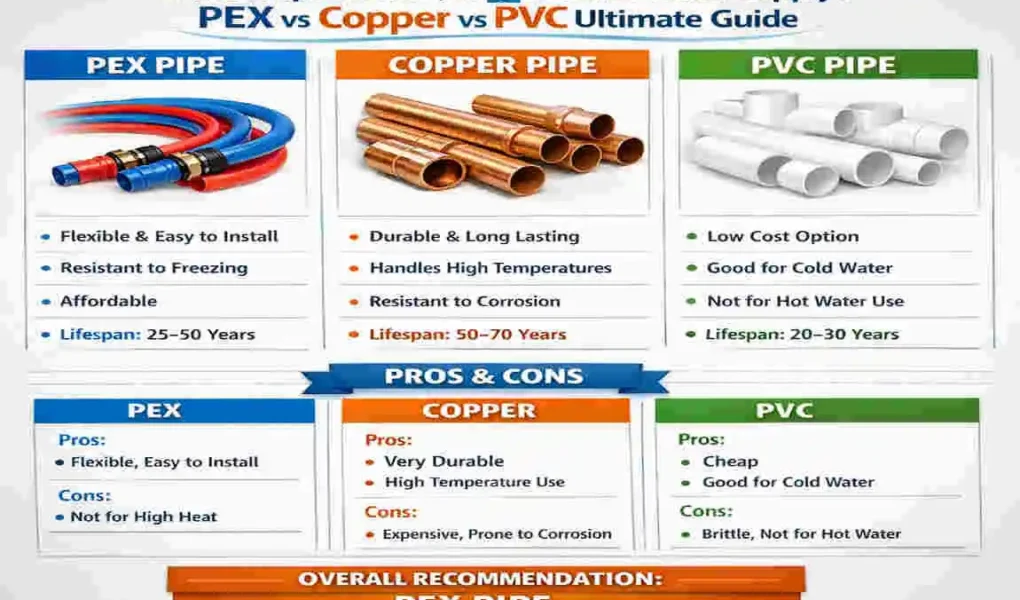
PEX, copper, and PVC are the three most common names when homeowners compare the best pipes for home water lines. Each one has clear strengths. PEX is flexible, easier to install, and better able to withstand freezing conditions than most materials. Copper is known for its long life, strength, and trusted reputation. PVC stands out for its low price and usefulness in cold-water and drainage applications.
What Makes a Pipe Ideal for House Water Supply?
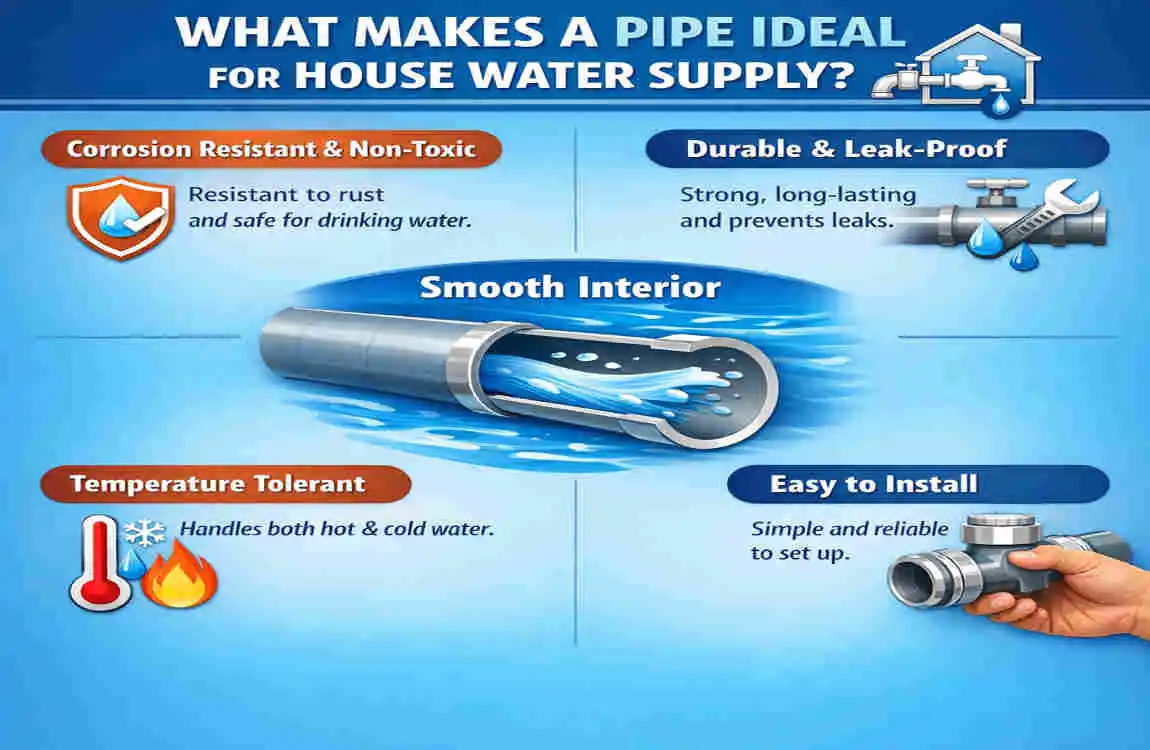
Before comparing materials, it helps to understand what actually makes a pipe “good” for residential plumbing. A pipe is not just a tube that moves water. It has to do that job safely, reliably, and for many years.
Pressure Handling Matters More Than Most Homeowners Realize
Your water supply system works under pressure. Every time you turn on a faucet, flush a toilet, or run the shower, the pipe has to handle that pressure without leaking, cracking, or weakening.
A good supply pipe should be able to manage everyday household pressure without trouble. In some homes, pressure is higher than normal, especially where booster pumps are used. In those cases, stronger materials can be a better long-term fit.
If your family uses multiple bathrooms at once, or you have a large home with several fixtures running together, pressure performance becomes even more important.
Temperature Tolerance Is Essential for Hot Water Lines
Not every pipe handles heat the same way. This is one of the biggest reasons some pipes work well with cold water but not with hot water.
A reliable house water pipe should withstand the temperatures your plumbing system reaches, especially near water heaters. Hot water lines need a material that stays stable and safe under heat over time.
This is where the differences between PEX, copper, and PVC become very important. Some are excellent for hot water. Others are not suitable at all.
Corrosion Resistance Can Extend Pipe Life
Water chemistry affects pipes more than many homeowners expect. Some materials resist rust, scale, and mineral buildup better than others.
If your water is acidic, hard, or mineral-heavy, certain pipe materials may wear down faster. Corrosion can create leaks, weak spots, or changes in water quality. Choosing a pipe that matches your local water conditions can save you money later.
Lifespan Is About More Than the Number of Years
Many people focus only on the advertised lifespan. That is understandable, but lifespan depends on more than the material itself.
A pipe that lasts 50 years on paper may fail much sooner if it is installed poorly, exposed to sunlight, subjected to freezing, or used in the wrong application. On the other hand, a properly installed system often lasts much longer than expected.
So when you ask, Which pipe is best for house water supply?, you are really asking several questions at once:
- Can it handle my home’s water pressure?
- Can it safely carry hot and cold water?
- Will it resist corrosion and damage?
- How long will it last in my climate and water conditions?
- Can I afford both the material and the installation?
Code Compliance Is a Big Part of the Decision
Local building codes play a major role in what you can and cannot use. For example, regular PVC is often limited to cold-water or drain applications. At the same time, CPVC may be approved for hot and cold potable water in some areas. PEX also comes in different types, such as PEX-A, PEX-B, and PEX-C, each with different flexibility and installation methods.
That means the “best” pipe is not only about performance. It also has to be approved for your location and for the exact use you have in mind.
Homeowner Priorities Are Different
Some homeowners want the cheapest working solution. Others want a pipe that may outlast the mortgage. Some want a fast remodel with minimal wall damage. Others are focused on drinking water quality.
That is why no single pipe is universally best for every house. The ideal choice depends on what matters most to you.
PEX Pipes: Flexible Modern Choice
PEX has become one of the most popular plumbing materials in modern homes, and for good reason. It is flexible, lightweight, easier to install than copper, and often more forgiving in cold climates.
For many households, PEX offers the best balance of performance and price.
Pros of PEX for Water Supply
One of the biggest advantages of PEX is its flexibility. Unlike rigid pipe, it can bend around corners and obstacles. That means fewer fittings, fewer connection points, and often a faster installation.
This is especially helpful in renovations. If you are replacing old plumbing in an existing home, PEX can often be threaded through walls, ceilings, and crawl spaces with less cutting and patching.
Another major benefit is its freeze resistance. No pipe is truly freeze-proof, but PEX can expand if water inside starts to freeze. That makes it less likely to burst compared to more rigid materials. If you live in a cold area, this feature alone can make PEX very attractive.
PEX also resists corrosion. It does not rust and is not affected by the same kind of internal corrosion that can trouble metal piping. In areas with aggressive water chemistry, that can be a real advantage.
It is also lightweight, making handling easier and reducing labor time. Installers can often complete a PEX job faster than a copper one, which usually lowers the total project cost.
In terms of pricing, PEX is often one of the most affordable materials for indoor hot- and cold-water supply lines. Material costs are usually far lower than copper, and labor is often cheaper too.
Cons and Limitations of PEX
PEX is not perfect, and it is important to understand its limits.
One of the most well-known drawbacks is UV sensitivity. PEX should not be left exposed to direct sunlight for long periods. It is not the right choice for outdoor-exposed runs, and even indoor storage in bright sunlight can degrade performance over time.
Some homeowners also have concerns about plastic plumbing in general. While modern PEX products are widely used and accepted, people sometimes prefer metal for peace of mind, especially for drinking water systems.
PEX can also have lower pressure or impact confidence in some extreme conditions compared to copper. In most homes this is not a practical problem, but in very high-demand or specialized systems, copper may still be preferred.
Rodent damage is another issue worth mentioning. It does not happen in every home, but in some cases pests can chew plastic piping.
Best Uses for PEX in a Home
PEX works especially well for:
- Hot and cold indoor water supply lines
- Whole-house repiping projects
- Retrofit jobs in older homes
- Cold-climate homes where freeze risk is a concern
- Manifold systems that send dedicated lines to each fixture
If you want a modern system that is efficient, practical, and budget-friendly, PEX is often the first material plumbers recommend.
PEX-A vs PEX-B vs PEX-C
Not all PEX is the same. The three main versions differ in flexibility and installation style.
Type Main Strength Flexibility Common Use
PEX-A Most flexible, expands well High Premium residential plumbing, complex routing
PEX-B Affordable and widely available Medium Standard home water lines
PEX-C Typically stiffer than PEX-A Lower Smaller jobs or budget-focused installs
PEX-A is usually considered the most flexible and easiest to work with in tight spaces. PEX-B is very common and often chosen because it offers strong value. PEX-C can work fine too, but it is often less flexible than the other two.
Why Many Modern Homes Choose PEX
If you ask many plumbers which pipe is best for house water supply in a typical modern home, they will often say PEX. Not because it is perfect, but because it fits the needs of most families so well.
It handles hot and cold water, reduces labor, keeps costs reasonable, and performs well in climates where freezing is a concern. For homeowners who want a practical, efficient solution, PEX is hard to beat.
Copper Pipes: Time-Tested Durability
Copper has been a trusted plumbing material for decades. It has a strong reputation because it performs well, handles heat extremely well, and can last a very long time when conditions are right.
For homeowners who care most about long-term durability, copper remains one of the top choices.
Pros of Copper for Home Plumbing
The biggest strength of copper is its durability. A well-installed copper plumbing system can last for many decades. In many cases, copper pipes remain functional for 50 to 70 years or more.
Copper also handles high temperatures and high pressure very well. That makes it a strong option for hot water systems, large homes, and plumbing setups where long-term reliability matters more than upfront cost.
Another reason some homeowners prefer copper is trust. Copper has been used for residential plumbing for generations, so many people feel more confident with a material with such a long track record.
Copper is also known for its natural antimicrobial properties. While that does not replace water treatment or good plumbing design, it is one reason people often view copper as a premium choice for drinking water systems.
It is also resistant to UV damage, so sunlight is not as much of a concern as with PEX.
Cons and Drawbacks of Copper
Copper’s biggest downside is cost. The material itself is much more expensive than PEX or PVC, and installation usually costs more too.
That is because copper is more labor-intensive. It needs cutting, fitting, and usually soldering. This kind of work requires more skill and time, which increases labor costs.
Copper is also rigid, which makes installation more difficult in tight spaces or in existing walls. In a remodel, that can mean more demolition and repair work.
Freeze performance is another weak point. If water inside a copper pipe freezes, the pipe is much more likely to crack or burst than a PEX pipe.
Water chemistry matters too. In homes with acidic water, copper can corrode over time. That can lead to pinhole leaks or changes in water taste. While copper is durable, it is not ideal in every location.
Best Applications for Copper
Copper is often a strong fit for:
- Whole-house plumbing in high-end homes
- Long-term “forever home” installations
- Hot water lines
- Areas where fire resistance and strength are priorities
- Visible plumbing runs where a traditional professional look is preferred
Copper is also a common choice for homeowners who want a pipe material with a long history and are willing to pay more for that confidence.
Copper Sizes and Residential Use
For residential systems, copper is commonly used in sizes like 1/2 inch, 3/4 inch, and 1 inch, depending on the fixture count and water demand in the home.
Smaller branches may use 1/2 inch. Main distribution lines are often 3/4 inch, while larger homes may use 1-inch mains or larger.
Proper sizing matters just as much as material. Even the best pipe will not perform well if it is undersized.
Why Copper Still Has a Premium Reputation
Copper remains the “gold standard” in many homeowners’ minds because it combines strength, long life, heat tolerance, and proven reliability.
So if your main question is not “What is cheapest?” but rather “What will serve my home for the longest time?” then copper deserves serious consideration.
For some buyers, the answer to which pipe is best for house water supply is still copper, especially when budget is less of a concern and longevity is the top goal.
PVC Pipes: Budget-Friendly Basics
PVC is one of the most recognizable plumbing materials, mainly because it is affordable, easy to work with, and very common in drain and cold-water applications.
But when it comes to indoor plumbing, you need to be careful not to confuse PVC with CPVC. They are not the same thing.
Advantages of PVC for Water-Related Plumbing
PVC’s biggest advantage is simple: cost. It is usually the cheapest of the three materials covered here.
It is also lightweight and easy to cut. Joints are made with primer and cement rather than soldering or crimping. That makes it approachable for many basic plumbing jobs.
PVC does not rust, and it is widely used for drainage, waste lines, vent systems, and outdoor irrigation. In those areas, it performs very well and keeps costs low.
For certain cold-water uses, PVC can also be a practical choice where local codes allow it.
Major Limitations of PVC
Regular PVC has one major weakness for water supply systems: heat.
It does not handle hot water well. At higher temperatures, it can soften or deform. That means it is generally unsuitable for hot-water distribution in a house.
PVC is also rigid, so it does not offer the same freeze protection as PEX. In cold weather, frozen water can crack it.
Another issue is code compliance. In many areas, regular PVC is not approved for indoor potable hot and cold water distribution, unlike PEX, copper, or CPVC. Local rules vary, so you should always confirm them before making a decision.
Ideal Scenarios for PVC
PVC is often best for:
- Cold-water outdoor lines
- Irrigation systems
- Drain, waste, and vent piping
- Budget-conscious non-hot-water applications
If you need a plastic pipe for hot water, CPVC is typically the variation designed for that use, not standard PVC.
When Homeowners Misuse PVC
A common mistake is assuming that if PVC works for drains, it must also be the best cheap option for the whole house. That is not usually true.
PVC has its place, but for main indoor hot and cold water supply, it is often not the best answer. It is more accurate to think of it as a specialized budget material rather than the universal winner.
Head-to-Head Comparison: PEX vs Copper vs PVC
Now let’s compare these materials directly so you can see where each one shines.
Quick Comparison Table
Category PEX Copper PVC
Material Cost Low to moderate High Very low
Labor Cost Usually low Usually high Usually low
Lifespan Around 40–50+ years in many systems Often 50–70+ years Around 25–50 years depending on use
Freeze Resistance Excellent Poor Poor
Hot Water Use Good Excellent Not suitable for regular hot water
Cold Water Use Excellent Excellent Good
Corrosion Resistance Excellent Good, but depends on water chemistry Excellent
DIY Friendliness High Low Medium to high
Flexibility High Low Low
Best Fit Most modern homes Premium long-term installs Budget cold-water or drain use
Which Material Wins by Category?
If your priority is lowest price, PVC usually wins on material cost alone.
If your priority is longest premium lifespan, copper often comes out ahead.
If your priority is best overall balance of cost, ease, and performance, PEX is usually the winner for most households.
Best Pipes for Home Water Lines by Homeowner Need
Different households need different things. Here is the simplest way to think about it:
- Choose PEX if you want a practical all-around solution for hot and cold lines.
- Choose copper if you want maximum durability and are comfortable with higher costs.
- Choose PVC for approved cold-water or drainage uses where budget matters most.
The Real Answer to “Which Pipe Is Best for House Water Supply?”
For the average modern home, PEX is often the best overall choice. It delivers solid performance, lower installation costs, and better freeze tolerance.
But if your main goal is long-term durability and you want a proven premium system, copper can still be the best option.
And if your project is limited to certain cold-water or drain uses, PVC may offer the best value.
That is why the honest answer is not one word. It is a decision based on budget, climate, water type, and where the pipe will be used.
Cost Breakdown and Installation Guide
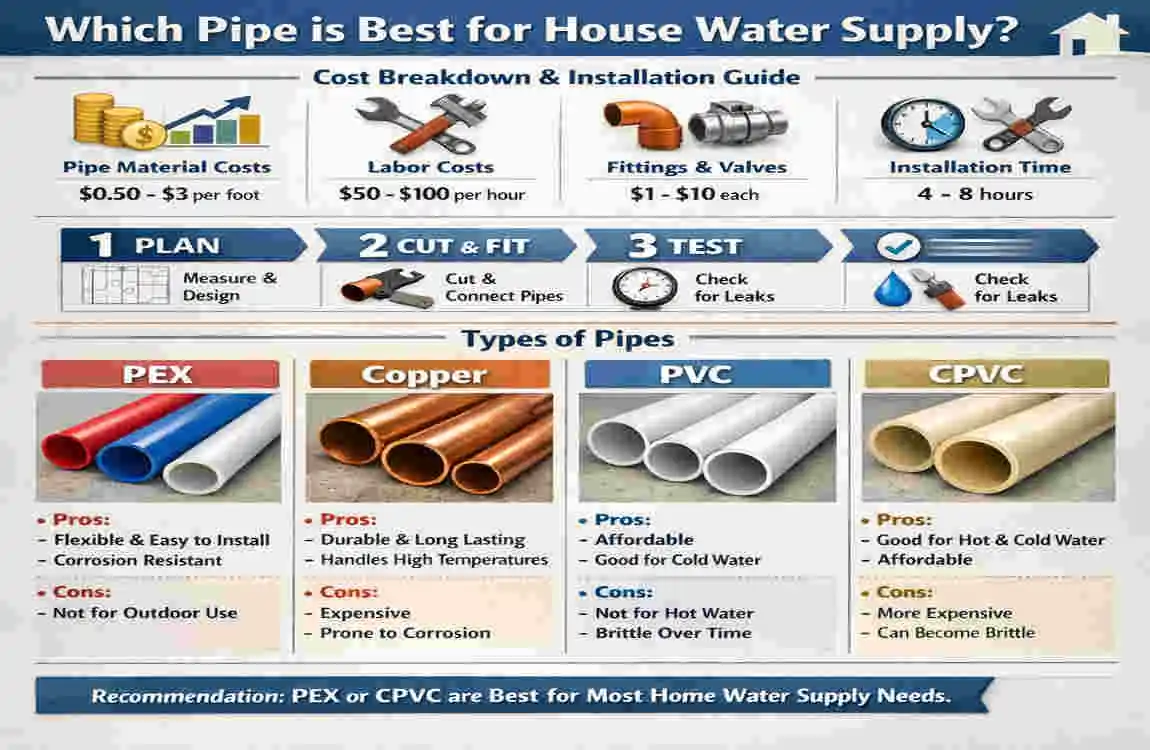
Cost is one of the biggest deciding factors for homeowners, and rightly so. Plumbing upgrades are not cheap, especially for full-house repiping.
Material and Whole-House Cost Expectations
While prices vary by region, home size, and labor rates, here is a simple general range:
Pipe Type Approx. Material Cost per Foot Rough Full-House Repiping Range
PEX $0.50–$2 $3,000–$6,000
Copper $2–$10 $8,000–$15,000+
PVC $0.20–$1 $2,000–$4,000 for limited suitable applications
These are broad estimates, not fixed prices. A small single-story home will cost less than a large multi-bathroom house. Wall access, local code requirements, and fixture count also affect the final number.
Installation Difficulty by Material
PEX is usually the fastest and simplest to install. It uses crimp, clamp, or expansion fittings depending on the system. Because it bends, installers can often run longer sections with fewer joints.
Copper takes the most skill. Proper cutting, cleaning, fitting, and soldering are critical. This is why many homeowners leave copper installations to licensed professionals.
PVC is easier to cut and glue, but it still requires proper measuring, alignment, and curing time. Also, it is only appropriate where code and application allow.
DIY vs Professional Installation
If you are reasonably handy, PEX is often the most DIY-friendly of the three. The tools are not overly complex, and the pipe is easier to handle.
Copper is much less forgiving. One weak soldered joint can create a slow leak hidden inside a wall, and that is a costly mistake.
PVC falls somewhere in the middle. It can be easy for straightforward drain or cold-water jobs, but correct application matters a lot.
Here is a simple rule you can follow:
- Use DIY only for small, code-approved jobs if you are confident.
- Hire a plumber for full-house supply systems, complex routing, or code-sensitive work.
- Always pressure-test before closing walls.
Return on Investment
Spending less upfront is not always the cheaper decision long term. A low-cost pipe installed in the wrong place can lead to leaks, repairs, and replacement costs later.
A smart plumbing choice balances today’s budget with future reliability.
Maintenance, Health, and Long-Term Factors
Once the pipes are in place, most homeowners want them to disappear into the background and work quietly. That is why long-term performance matters so much.
Health and Drinking Water Considerations
Many homeowners feel most comfortable with copper for drinking water because of its long history and solid reputation.
PEX is also widely used in drinking water systems, and many modern products are made to meet strict safety standards. If you are considering plastic piping, choose a high-quality product approved for potable water.
PVC for regular indoor drinking water supply is more limited and depends heavily on local code and exact product type. Again, this is where checking local approval matters.
Maintenance Needs
No pipe is truly maintenance-free. Even excellent materials can fail if fittings are loose, pressure is too high, or water quality is poor.
Annual inspections can help you catch small problems before they become expensive repairs. Watch for:
- Drops in water pressure
- Stains on ceilings or walls
- Musty odors
- High water bills
- Discolored water
These warning signs often appear before a major failure.
Environmental and Long-Term Value
Copper is recyclable and valued for its durability. PEX uses less energy to transport and can reduce installation waste because it comes in long flexible runs. PVC is low-cost and practical when used appropriately. However, it is not the first choice for every homeowner focused on long-term sustainability.
In simple terms, the best pipe is the one that lasts well in the correct application.
Which Pipe Wins for Your Home?
You probably already have a favorite. Still, let’s make the final decision easier.
Choose PEX If…
Choose PEX for the best balance of affordability, performance, and ease of installation.
It is especially smart if you live in a cold climate, are repiping an older home, or want a practical modern plumbing system without paying premium copper prices.
Choose Copper If…
Choose copper if you plan to stay in the home long term, want a premium material, and are comfortable with a higher upfront investment.
It is a strong fit for homeowners who value longevity, high heat tolerance, and a time-tested material.
Choose PVC If…
Choose PVC only when the application makes sense, such as drainage, irrigation, or approved cold-water uses. It is excellent in the right role, but it is not the universal answer for all indoor water supply needs.
Simple Decision Guide
Ask yourself these questions:
- Need the best all-around option? Go with PEX.
- Want the longest premium lifespan? Go with copper.
- Need the lowest-cost solution for certain cold-water or drain uses? Go with PVC.
- Live where pipes may freeze? PEX usually makes the most sense.
- Building a forever home with a flexible budget? Copper may be worth it.
So, which pipe is best for house water supply? For most modern homes, the answer is PEX. For premium long-term durability, it is copper. For low-cost basic cold-water or drain uses, it is PVC.
FAQs
Is PEX better than copper for house water supply?
PEX is often better for homeowners who want lower cost, easier installation, and better freeze resistance. Copper is often preferred by those seeking premium durability and willing to pay more.
Can PVC handle house water supply?
Regular PVC is usually best for cold-water or drainage applications, not for a full indoor hot-water supply. In many cases, CPVC, not PVC, is the preferred plastic for potable hot and cold water.
What is the safest pipe for drinking water?
Many homeowners trust copper because of its long track record. High-quality, potable-rated PEX is also widely used. The best choice depends on local code, water chemistry, and product quality.
Which pipe lasts the longest?
Copper generally has the longest premium lifespan when installed properly and used in suitable water conditions.
What pipe is best in cold climates?
PEX is usually the best choice in cold climates because it can expand more than rigid pipes when freezing happens.
Is PEX cheaper than copper?
Yes. In most cases, both material and labor costs are significantly lower with PEX than with copper.
Can I mix pipe types in one house?
Yes, many homes use more than one material. For example, PEX may be used for supply lines while PVC is used for drains.