Have you ever found yourself standing in the middle of a hardware store, staring at a massive wall of paint chips, and wondering if you should hire a professional? Or perhaps you are on the other side of the brush. You may be considering picking up a roller, starting a brand-new career, and wondering if the income can support your lifestyle.
If you are a homeowner trying to set a realistic renovation budget, or a job seeker scoping out your earning potential, you are probably asking yourself one main question: exactly how much does a house painter make an hour?
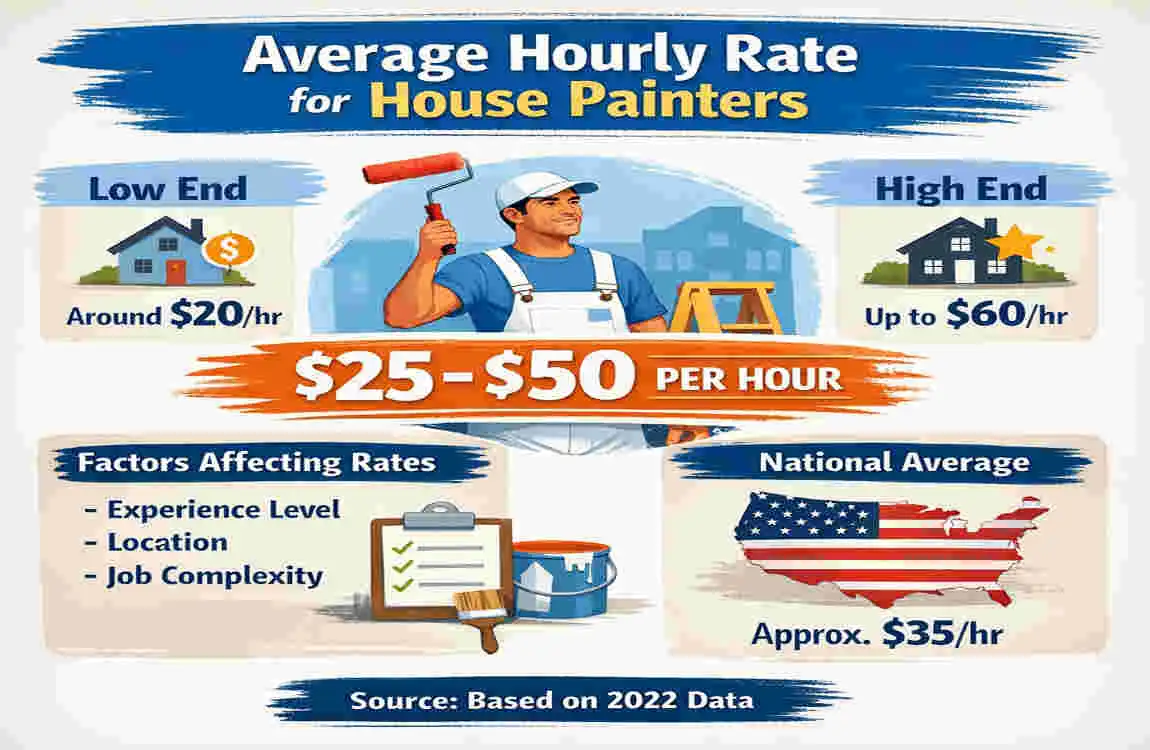
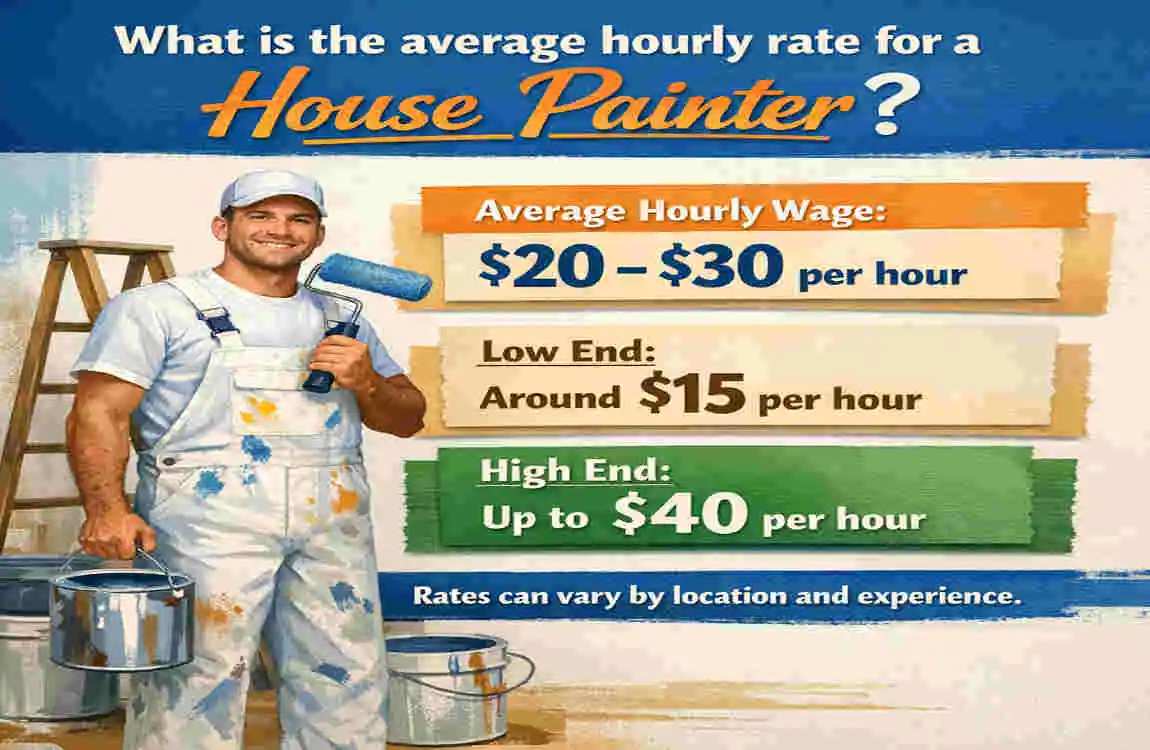
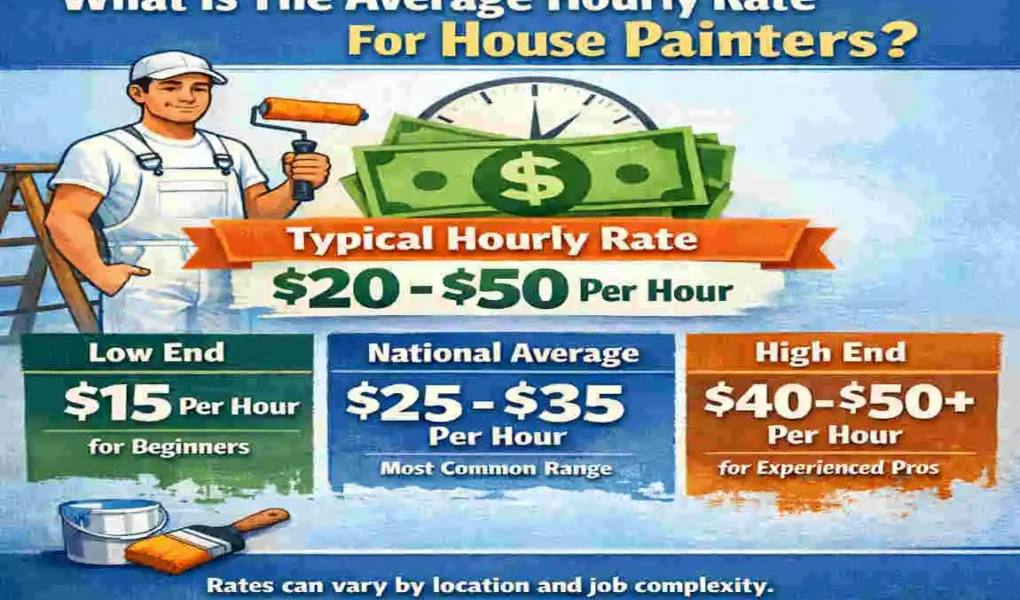
You are in the right place. In 2026, house painters across the United States are seeing a surge in demand. Currently, the national average wage for a house painter sits at $23.40 per hour, which translates to roughly $48,660 a year. However, that is just the middle ground. Depending on where you live and how much experience you have, those rates can easily hit $37 or more per hour in high-demand, affluent areas.
National Average Painter Wages

When we talk about the national average, it is important to look at the full picture. Averages give us a great starting point, but the painting industry has a massive range of earning potential.
Let’s take a look at the core numbers for 2026.
2026 National Painter Wage Breakdown
Metric Hourly Rate Annual Salary (Based on 2080 hrs)
Median $23.40 $48,660
Low (Bottom 10%) $17.63 $36,680
High (Top 10%) $36.80 $76,550
So, how exactly do we calculate these annual numbers? The math is straightforward. We use a standard full-time work schedule, which is 40 hours a week multiplied by 52 weeks a year. This gives us 2,080 working hours annually.
However, any seasoned tradesperson will tell you that a standard 40-hour week is sometimes a myth. Factors like overtime pay can massively inflate a painter’s take-home salary. During the busy summer months, many painters work 50 to 60 hours a week. Those extra hours, usually paid at time-and-a-half, can turn a $48,000 baseline salary into a $60,000 reality very quickly.
It is also helpful to compare house painting to other related skilled trades. For example, professional roofers generally average around $25 per hour, while general carpenters might pull in closer to $28 per hour. Painting sits comfortably in the middle of the home improvement spectrum. It requires less heavy lifting than roofing, but it demands an incredibly sharp eye for detail and immense patience.
Now that we have a bird’s-eye view of the national landscape, let’s zoom in. Why does one painter make $17 an hour while another makes $37? It all comes down to skill, location, and business structure. Let’s break those down.
Rates by Skill Level
In the painting world, experience is your absolute best currency. You do not just get paid for slapping paint on a wall; you get paid for knowing exactly how that paint will react to different surfaces, temperatures, and lighting conditions. Here is how your time in the trade directly translates to your hourly rate.
Entry-Level (0–2 Years Experience)
If you are brand new to the trade, you can expect to earn between $15 and $20 per hour. Annually, this looks like $30,000 to $40,000.
At this stage, you are paying your dues. You are essentially an apprentice. Your daily tasks will lean heavily toward the less glamorous side of the job. You will be doing the heavy lifting—moving furniture, laying down heavy canvas drop cloths, taping off miles of baseboards, and scraping away old, flaking paint. You will also be responsible for basic primer coats.
For example, a first-year painting apprentice working in Texas might start at around $16 an hour. The focus here is on learning the fundamental rules of prep work, which is arguably the most critical part of any painting job.
Mid-Level (3–10 Years Experience)
Once you have a few years under your belt, your value skyrockets. Mid-level painters generally earn between $20 and $28 per hour, bringing their annual salary to somewhere between $50,000 and $65,000.
At this level, you are trusted to work independently. You can perfectly cut in edges without using painter’s tape. You handle complex exterior jobs that require climbing tall ladders and dealing with tricky weather conditions. You are also capable of performing minor drywall and siding repairs before the painting even begins.
A great way for mid-level painters to push their rates higher is through specialized growth and education. Acquiring certifications, such as the EPA Lead-Safe Certification, makes you infinitely more valuable. Since any home built before 1978 likely contains lead paint, being legally certified to handle it safely means you can take on highly profitable historical renovation jobs.
Expert and Specialized (10+ Years Experience)
This is where the real money is made. Master painters with a decade or more of experience command rates of $28 to over $40 per hour, easily clearing $70,000+ a year.
These experts are not just painting living room walls; they are tackling high-end niches. They specialize in intricate faux finishes, Venetian plaster, and applying highly sensitive, eco-friendly, zero-VOC paints. Specialized niches often allow painters to hit the $60,000 to $80,000+ bracket with ease.
Let’s look at exactly how specific skills bump up your hourly paycheck.
The Impact of Specialized Skills on Hourly Rates
Specific Skill Average Hourly Pay Boost
Advanced Spray Techniques +$3 to $5 per hour
Commercial/Industrial Painting +$5 to $8 per hour
Specialized Certifications +$2 to $4 per hour
Rates by State and city

Where you live dictates what you earn. The exact same painter, with the exact same skills, will make a vastly different wage in New York compared to Kansas.
Currently, the data shows that the highest-paying states are heavily concentrated on the coasts and in areas with extreme weather. Washington leads the pack at an impressive $24.72 an hour. New York closely follows at $23.88, and specific California cities, like Berkeley, are pushing average rates up to $26.81 an hour.
Let’s look at the top ten states for house painters in 2026.
Top 10 Highest-Paying States for Painters
State Average Hourly Rate Average Annual Salary
Washington $24.72 $51,413
New York $23.88 $49,662
Massachusetts $23.83 $49,576
Alaska $23.50 $48,887
California $23.45 $48,776
Colorado $23.10 $48,048
Connecticut $22.95 $47,736
Oregon $22.80 $47,424
New Jersey $22.75 $47,320
Hawaii $22.60 $47,008
City Highlights and Regional Trends
When you drill down into specific cities, the numbers get even more interesting. For instance, house painters in Nome, Alaska, average a massive $27.16 per hour. Down in California, workers in South San Francisco are pulling in $26.31 an hour.
Why are these specific cities paying a Premium? It boils down to two main factors: high demand and a very high Cost of Living (COL). In places like Alaska, the outdoor painting season is incredibly short due to brutal winters. Painters have to cram a year’s worth of exterior work into just a few months, driving up demand and wages. In San Francisco, the cost of housing and groceries is so high that wages naturally have to scale up so that workers can survive.
On the other end of the spectrum, states with lower costs of living generally pay less—for example, the average rate in Kansas hovers around $19.53 per hour.
If you look at a heat map of the United States, visual regional trends become incredibly obvious. You will see a distinct Northeast Premium, where states from New Jersey up to Maine consistently pay top dollar. Conversely, you will find a South and Midwest value zone, where wages are lower, but the cost to buy a house or rent an apartment is also significantly cheaper.
Rates by Company Type
It is not just about what you know and where you live; it is also about who signs your paycheck. Let’s explore how different business structures drastically alter a house painter’s hourly wage.
Independent and Self-Employed Painters
If you work for yourself, you have the highest earning ceiling. Self-employed painters typically take home $25 to $45 per hour in pure profit.
However, they do not charge the client $25 an hour. An independent contractor will usually charge a homeowner $50 to $100 per job hour. Why the huge difference? Because the independent painter has to deduct business expenses from that rate. They pay for their own paint, primer, drop cloths, brushes, business insurance, vehicle maintenance, and self-employment taxes.
After all expenses are paid, a successful self-employed painter can comfortably net $70,000 to over $100,000 a year. The biggest pros here are ultimate flexibility and unlimited earning potential. The cons? You have to find your own clients.
Small Local Firms (1–10 Employees)
Working for a small, family-owned painting company is where most professionals spend their careers. In these roles, painters usually earn between $18 and $25 per hour.
Small local firms are all about steady work. They operate on a volume-based business model, moving from residential house to residential house. While the pay might be slightly lower than working for a massive corporation, these jobs often offer decent benefits, a tight-knit team environment, and incredibly stable year-round work.
Large Franchises and National Chains
Think of massive, recognizable brands like CertaPro Painters. Working for a large franchise usually yields an hourly rate of $20 to $30.
For instance, an experienced painter at a national chain might make between $22 and $28 an hour. The primary perks of working for corporate giants are the structured benefits. You get formal training programs, comprehensive health insurance, paid time off, and standard W2 employment protections. However, you also have to deal with rigid corporate rules and less creative freedom.
Union vs. Non-Union Painters
This is a massive dividing line in the trades. Union painters generally make between $25 and $35 per hour, plus substantial benefits like generous pensions and robust health care plans.
Unions negotiate pay rates collectively, ensuring their members get fair compensation. However, becoming a union painter requires meeting stricter qualifications and completing formal, multi-year apprenticeship programs.
Comparing Employment Types at a Glance
Company Type: Hourly Pay Range: Biggest Pros: Biggest Cons
Independent $25–$45 (Net) Extremely high upside Variable, unpredictable income
Small Firm $18–$25 High job stability Less autonomy and freedom
Large Chain $20–$30 Great corporate benefits , strict corporate rules
Union $25–$35 , Pensions and high pay , Strict entry qualifications
Finally, we cannot ignore the modern gig economy. Gig apps like TaskRabbit allow painters to pick up quick weekend jobs. These short “bursts” of work typically pay between $20 and $35 an hour, making them an excellent side hustle for those looking to supplement their income.
Factors Influencing Hourly Rates

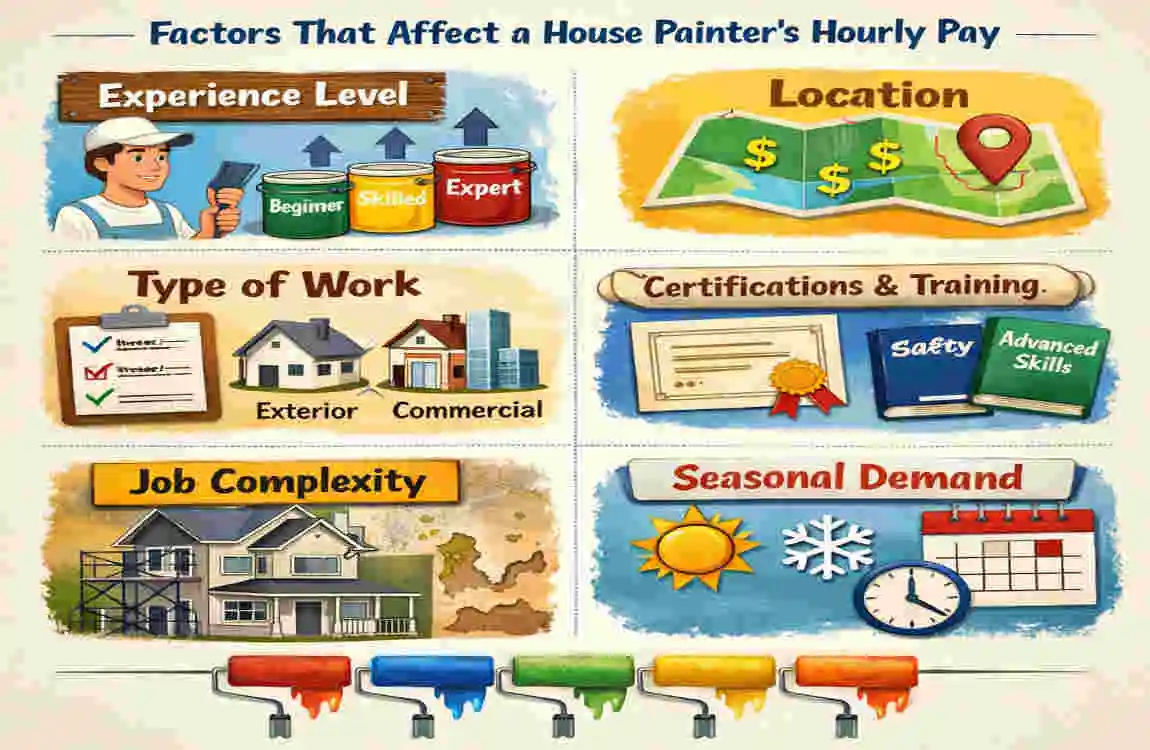
By now, you understand the baseline numbers. But the economy is a living, breathing thing. Several external factors constantly push and pull at a painter’s hourly rate. Let’s break down the biggest influences.
- Experience Level (The Biggest Driver): As we covered earlier, nothing beats time on the brush. Homeowners and contracting companies happily pay a Premium for someone who gets the job done perfectly the very first time.
- Location and Cost of Living Adjustments: Your zip code is your destiny when it comes to pay. Painters in California and New York city regularly see a +20% adjustment to their wages to combat the extreme local cost of living.
- Seasonality: Painting is highly seasonal, especially in colder climates. During the peak summer rush, when every homeowner wants their exterior painted, rates can easily jump +10% to 20% due to overwhelming demand.
- The Broader Economy: The construction industry dictates trade wages. In 2026, a massive nationwide housing boom and an increase in home flipping have lifted painter rates by roughly 5%.
A Note on Inflation: The cost of living has risen globally, and wages are attempting to keep pace. Year-over-year (YoY), painter rates have crept up 3% to 5% to combat inflation.
If you are a painter trying to navigate these factors, here are a few rapid-fire tips: always negotiate your starting wage, build a stunning visual portfolio of your past work on your phone, and collect positive online reviews. A painter with 50 five-star reviews on Google can charge significantly more than an unknown competitor.
How to Maximize Earnings
If you are reading this and thinking, “I want to hit that top tier of earnings,” you are in luck. You do not have to wait a decade to increase your paycheck. There are proactive steps you can take today.
First, heavily invest in certifications. Go beyond the basics. Take courses offered by major paint manufacturers. For example, becoming a certified applicator for high-end Sherwin-Williams specialty products allows you to bid on Premium jobs that your competitors are not qualified to touch.
Second, look into lucrative side hustles. Many successful painters use their weekends to partner with real estate investors. Flipping houses requires rapid, high-quality painting. If you can become the go-to painter for a local house flipper, you will have a nonstop stream of weekend cash. You can also look into cabinet refinishing, which pays significantly more per square foot than standard wall painting.
Finally, if you are an independent contractor, you must master your pricing strategies. Stop charging strictly by the hour. If you become incredibly fast and efficient at painting, charging hourly actually penalizes you! Instead, shift to flat-rate, project-based pricing. If you quote a room at $500, and you are skilled enough to finish it flawlessly in 5 hours, you just paid yourself $100 an hour.
FAQs: Common Questions About Painter Salaries
We know this is a lot of information to digest. To make things easy, we have compiled the most frequently asked questions we receive from both job seekers and homeowners.
How much does a house painter make an hour in the highest and lowest-paying states?
As shown in our data tables above, it varies wildly. In top-paying states like Washington and New York, average rates sit around $24 to $25 an hour. In states with a lower cost of living, like Kansas, the average drops to roughly $19.50 an hour. Always research your specific local market.
What is the real difference between an entry-level and an expert painter?
It comes down to speed, precision, and problem-solving. An entry-level painter (making $15–$20/hr) is mainly focused on prep work, taping, and basic rolling. An expert (making $30–$40+/hr) can spray intricate cabinet doors, apply faux finishes, repair damaged drywall seamlessly, and manage a crew of junior painters.
How do self-employed taxes affect a painter’s hourly rate?
This is a critical question! If you are an independent painter charging $50 an hour, you do not keep all $50. You must set aside money for the IRS, state taxes, and Medicare/Social security (self-employment tax). Independent painters net roughly 60% to 70% of their gross hourly rate after accounting for taxes and business deductions.