Does Home Plumbing Require a Permit? Essential Rules for Your House Renovation
Home Improvement Plumbing

Does Home Plumbing Always Require a Permit?

If you are planning a bathroom update, a kitchen upgrade, or even a simple water heater replacement, one question can save you a lot of trouble: does home plumbing require a permit?

The short answer is no, not always. But the real answer is more useful: it depends on what work you are doing, where you live, and what your local plumbing codes say. A small repair, such as tightening a connection or replacing a washer, may be fine without a permit. A larger job, like moving drain lines, installing a new toilet, or changing a water heater, often requires one.

That is why homeowners get confused. One neighbor says they never pulled a permit for a faucet swap. Another says the city fined them after a bathroom remodel. Both may be telling the truth. The difference is usually the scope of work and the local rules.

Project Type Permit Usually Required? Examples Notes
Minor Repairs No Faucet replacement, leak fixes without wall opening Check local exemptions for quick DIY jobs
Fixture Replacement No Toilet or showerhead swap (no pipe changes) Use existing hookups only
New Fixtures/Lines Yes Adding bathroom plumbing, new drain lines Alters water/sewer systems
Water Heater Install Yes (often) Tank upgrades with venting changes Gas line or type modifications trigger it
Sewer/Water Line Work Yes Replacements or extensions Involves public connections
Full Remodels Yes Kitchen/bathroom plumbing relocation Requires inspection for safety

What Is a Plumbing Permit?

Does Home Plumbing Require a Permit? Essential Rules for Your House Renovation

A plumbing permit is official approval from your local building department or authority having jurisdiction. It permits you to do plumbing work that must meet safety and code standards.

In simple language, a permit tells the city, “This project is being done the right way, and it can be checked.” It is not just paperwork. It is part of the system that keeps homes safe and functional.

Plumbing systems affect more than water flow. They affect drinking water safety, drainage, gas connections, sewage handling, and even the long-term condition of your home. If something is installed badly, the damage may not show up right away. A leak behind a wall can slowly destroy framing. A bad drain slope can cause backups. A poorly installed water heater can create serious safety issues.

Why plumbing permits exist

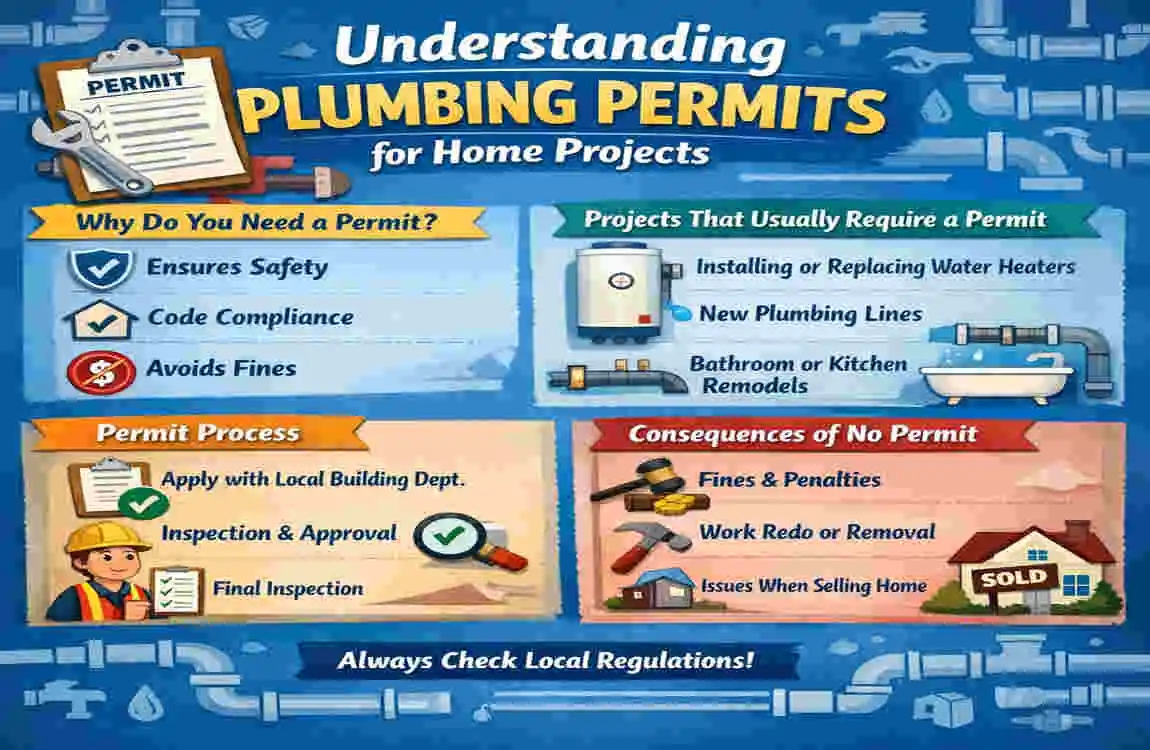
Permits exist for a few important reasons:

  • To protect health and safety
  • To make sure work follows local plumbing codes
  • To reduce the risk of leaks, contamination, and structural damage
  • To create a record of the work for future inspections, insurance, or resale

That is why the question does home plumbing require a permit is not just about rules. It is about risk management. A permit is often what separates a casual repair from an official home improvement project.

Plumbing codes and why they matter

Most permit systems are tied to local plumbing codes. These codes are the rulebook for how plumbing should be installed and repaired.

In many places, the code is based on a larger standard, but local authorities often add their own requirements. That means one city may allow a homeowner to replace a sink trap without a permit. In contrast, another city may require a permit for almost any fixture change.

This is why you should never assume that what worked in one place will work in another.

Different types of plumbing permits

Not all permits are the same. Depending on your project, you may need:

  • Residential plumbing permits for home projects
  • Commercial plumbing permits for business buildings
  • Special permits for water heaters, sewer work, private sewage systems, or hydronic heating

Some projects involve multiple trades. For example, a water heater replacement may involve plumbing, gas, and sometimes electrical work. In that case, one permit may not cover everything.

Permit vs. no-permit examples

Here is a simple comparison to help you picture the difference:

Project TypePermit Required?Reason

Replace faucet washer No Minor repair

Tighten a leaking supply line Usually no Simple maintenance

Install a new toilet Often yes New fixture installation

Replace a water heater Yes Plumbing, and sometimes gas or electrical ties

Move a sink to another wall Yes Changes piping and layout

Clear a clogged drain No Basic maintenance

Repipe part of a house Yes Major system alteration

This table is not a universal rulebook. It is a starting point. The final answer still depends on your local plumbing permit requirements.

Does Home Plumbing Require a Permit for Every Project?

No, does home plumbing require a permit is not a yes-or-no question for every job. Some plumbing work is considered minor maintenance, while other work counts as construction or modification.

A good way to think about it is this:

  • Repairing something already in place often does not need a permit
  • Replacing fixtures may or may not need one
  • Changing piping, drain lines, or connections usually does need one

That distinction matters a lot.

When do you need a plumbing permit?

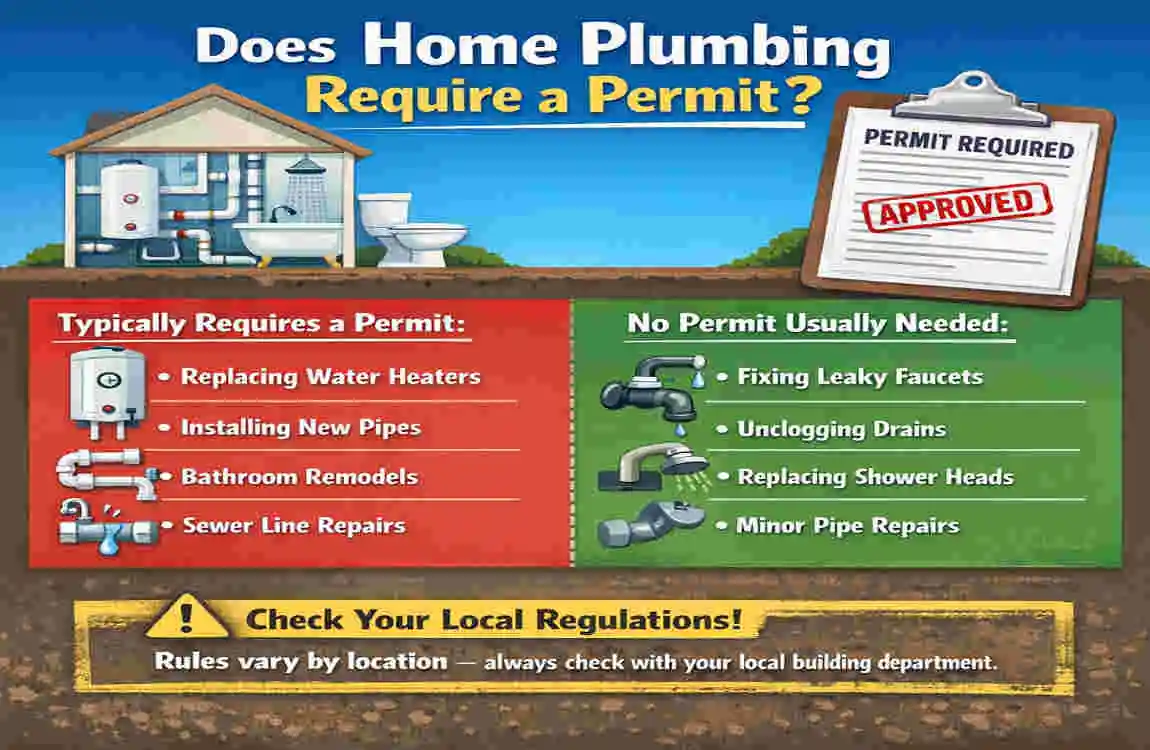
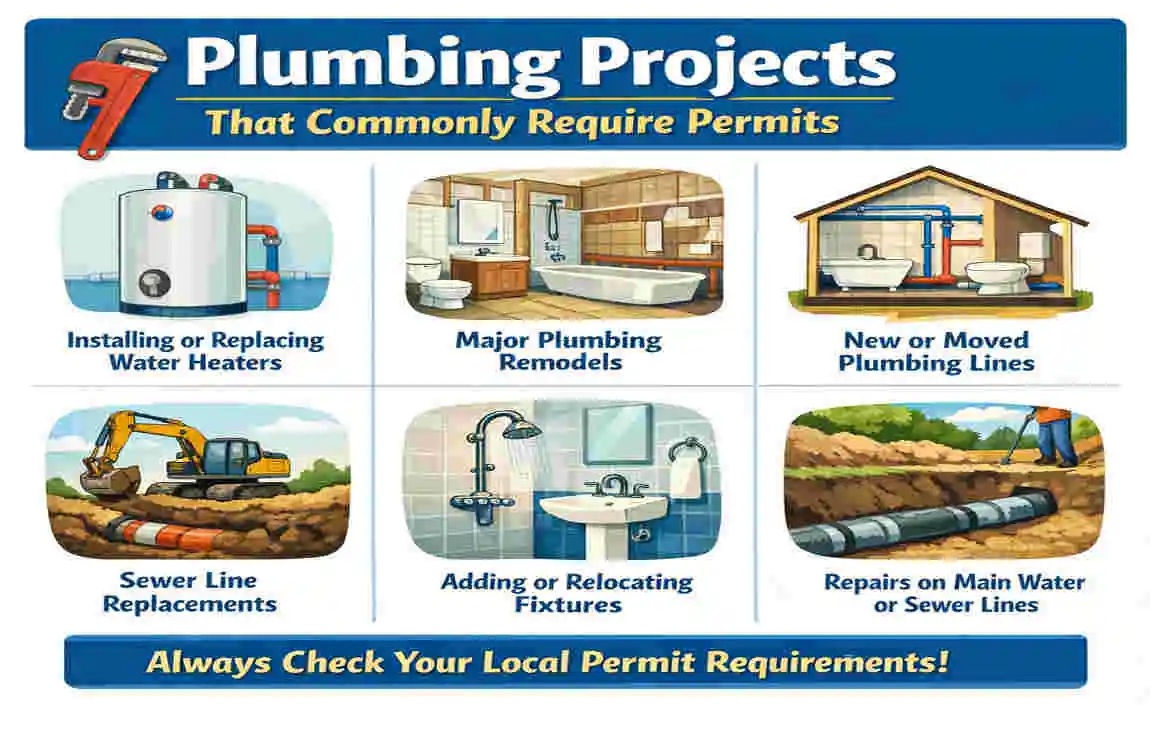
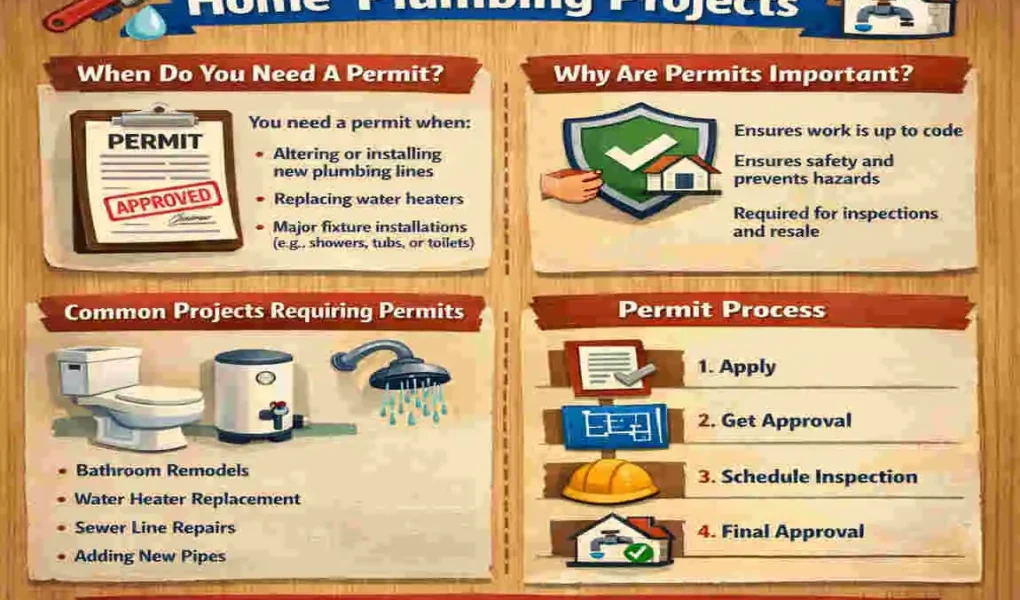
You usually need a permit when the work changes the plumbing system in a meaningful way. Common examples include:

  • Installing new supply or drain lines
  • Replacing sewer lines
  • Adding new fixtures
  • Moving a sink, toilet, or shower to another location
  • Replacing or installing a water heater
  • Connecting to municipal water or sewer service
  • Adding plumbing in a basement, garage, or other unfinished space
  • Redesigning a kitchen or bathroom layout

These projects can affect pressure, drainage, venting, and system safety. That is why local authorities want them reviewed.

Projects that often trigger plumbing permit requirements

Here are some of the most common jobs that lead people to ask when do you need a plumbing permit:

Sewer and drain replacements

If you are replacing drain pipes, sewer lines, or waste lines, a permit is usually required. This kind of work can affect the whole house and, sometimes, the public system as well.

Water heater installation

A water heater swap is one of the most common permit-related projects. Even if the old unit is being replaced with a similar one, many cities still require approval.

Bathroom remodels

If you keep everything in the same place and only replace fixtures, the rules may be simpler. But once you move a tub, toilet, shower, or sink, the project becomes more complex and often needs a permit.

Kitchen remodels

Kitchens may seem simple, but plumbing changes in a kitchen remodel can be significant. If you move the sink, install a pot filler, add a dishwasher line, or reroute drain lines, you may need a permit.

New fixtures in unfinished areas

If you turn a basement, attic, or garage area into a bathroom or laundry space, permit approval is usually required. You are adding a new plumbing system where none existed before.

Projects that may not need a permit

Some jobs are often treated as routine maintenance. These may include:

  • Replacing washers
  • Fixing a small leak under a sink
  • Clearing a clog
  • Replacing a faucet cartridge
  • Tightening loose fittings
  • Replacing a showerhead
  • Swapping out a toilet flapper
  • Minor irrigation adjustments in some locations

These are the kinds of tasks many people think of as DIY plumbing permit exemptions. But even here, you need to be careful. The word “exemption” does not mean the same thing everywhere.

A simple rule to remember

A useful guideline is this: assume yes for anything beyond surface-level work.

If your project affects pipes inside walls, under floors, in ceilings, or outside the home, the chance that you need a permit goes up fast. If you are only doing a simple repair that does not alter the system, you may be fine without one.

Plumbing Permit Requirements by State and Local Area

One of the biggest misunderstandings about plumbing rules is the expectation of a national standard. There is no one-size-fits-all rule across the country.

Plumbing permit requirements vary by state, and even more by city or county. In some places, the state sets strict rules and licensing standards. In others, local governments control the process. Some areas allow homeowner work under certain conditions. Others require a licensed professional for almost everything.

This is why the question, “Does home plumbing require a permit?” must always be answered locally.

Why rules vary so much

States and cities make these rules based on:

  • Local building safety concerns
  • Climate and freezing risks
  • Water quality and sewer system differences
  • Population density
  • How plumbing licenses are regulated
  • Whether the area uses state or local inspection systems

That means two homes only a few miles apart may face different plumbing permit requirements.

Strict states

Some states are known for tighter oversight. In these places, permits are often required for most plumbing work, and the person doing the work may also need a specific license.

In stricter systems, the government may want to know:

  • Who is doing the work
  • What kind of work is being done
  • Whether the person is licensed
  • Whether the job will be inspected

This can feel frustrating if you are trying to save time or money. But strict systems are usually designed to reduce bad installations and unsafe repairs.

Lenient states

Other states give more power to local authorities. In these places, there may not be a strong statewide rule for every plumbing job. Instead, city building departments decide what needs approval.

This does not mean “anything goes.” It just means you have to check with the local office first. What is allowed in one city may be disallowed in the next.

Homeowner exemptions

Some regions offer plumbing permit exemptions for homeowners, especially if:

  • The home is owner-occupied
  • The project is small
  • The work is not connected to a rental property
  • The homeowner is doing the work personally
  • The project does not affect major systems like gas or sewer

Even then, exemptions often come with conditions. You may need to pass inspections, file forms, or avoid certain types of work.

State examples at a glance

Here is a simplified table showing how different places can approach the issue:

StateLicense?Permit for DIY?Notes

California Yes Rarely Strong licensing and permit rules for most plumbing work

Louisiana Yes Usually no Master-level oversight is common

Nebraska Local Varies City or local boards often decide

Wyoming Local Varies Requirements can depend on the municipality and insurance rules

Again, this is only a broad overview. The real answer depends on your city, county, and project scope.

Plumbing Permit Exemptions for Homeowners

Does Home Plumbing Require a Permit? Essential Rules for Your House Renovation

Many homeowners are relieved to learn that not every plumbing task needs a permit. That is where plumbing permit exemptions come in.

These exemptions are meant for small, low-risk work that does not affect the overall plumbing system. They make sense because it would be impractical to require a permit every time someone changes a faucet washer.

Common DIY plumbing permit exemptions

Some of the jobs that may be exempt in many places include:

  • Replacing faucet washers
  • Swapping a showerhead
  • Fixing a minor leak at an accessible connection
  • Replacing a toilet flapper
  • Cleaning a clogged drain
  • Tightening a loose supply line
  • Adjusting simple irrigation parts in some areas

These tasks are often treated as maintenance rather than construction.

Owner-occupied homes vs. rentals

Some areas are more flexible with owner-occupied homes. If you live in the home and are working on a small repair, you may qualify for a homeowner exemption.

But rentals are different. If the property is a rental or part of a managed building, permit rules are often stricter. The city may want a licensed professional to do the work. It may require formal approval even for projects that a homeowner could do on their own property.

Why exemptions still need caution

Just because a job sounds simple does not always mean it is exempt. For example, replacing a toilet might look easy, but if the work includes:

  • Moving the drain location
  • Changing the flange
  • Modifying the venting
  • Reworking supply lines

then the project may cross into permit territory.

That is why the phrase DIY plumbing permit exemptions should be read carefully. Exemptions are usually narrow, not broad.

Risks of assuming too much

If you skip the permit because you believe your project is exempt, you may end up with:

  • A failed inspection later
  • A fine from the city
  • Trouble when selling the house
  • Insurance complications after a leak or accident
  • Problems proving that the work was done correctly

That is a lot of risk for a shortcut.

How to Check If Your Project Needs a Permit

If you are unsure whether home plumbing requires a permit, the best thing to do is verify before you begin. A few minutes of checking can save you a lot of money later.

Contact the local building department

Start with your city or county building office. This office is usually the AHJ, or authority having jurisdiction. They can tell you which types of work require approval in your area.

When you call or visit, be ready to explain:

  • What you want to do
  • Where the plumbing is located
  • Whether you are moving fixtures
  • Whether you are replacing or adding pipes
  • Whether the work involves gas, sewer, or water heater connections

The clearer you are, the more useful their answer will be.

Read the project scope carefully

Ask yourself whether the job is a repair or a change.

  • Repair: Fixing something already there
  • Replacement: Swapping one item for another in the same place
  • Alteration: Changing the layout, piping, or system design
  • Addition: Adding a new fixture or line

The more your project looks like an alteration or addition, the more likely it is that you need a permit.

Use local permit tools

Many areas now offer online permit search tools or city portals. These can help you see whether your project category typically needs approval.

If you hire a licensed plumber, they may also help figure this out for you. In many cases, professional plumbers are well-versed in local plumbing permit requirements. They can tell you what is needed before work begins.

Ask about inspections

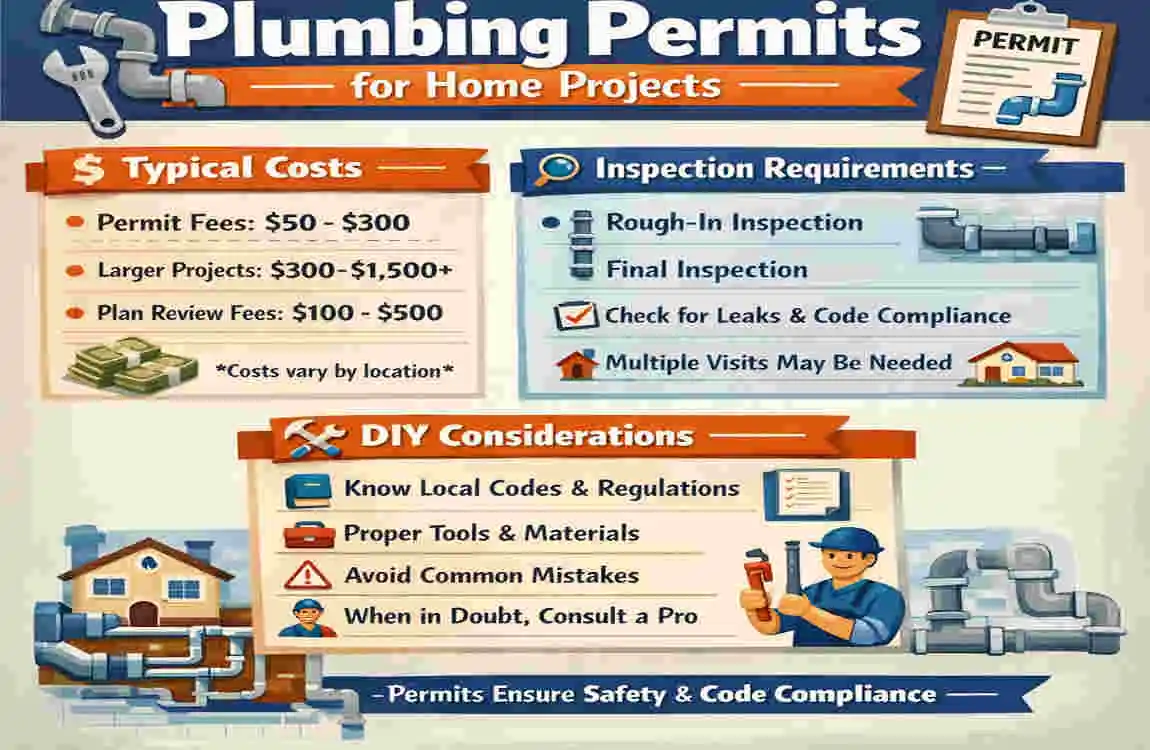
Even if a permit is required, the process may not be difficult. In many cases, the city only wants to inspect the rough-in stage or the completed work.

If you know the inspection schedule in advance, you can avoid delays and missed deadlines.

A helpful mindset

If you are wondering when do you need a plumbing permit, a good rule is this:

If the work changes the plumbing system in a way that the inspector would care about, assume a permit is needed.

Permit Application Process and Costs

Once you know the project needs approval, the next question is usually: how hard is the process, and how much will it cost?

The good news is that most permit systems follow a similar basic pattern. The process can feel tedious, but it is usually manageable.

Typical steps in the permit process

Most plumbing permit applications include these steps:

  1. Submit the application
  2. Describe the work
  3. Include plans or drawings if needed
  4. Show proof of contractor license if required
  5. Pay the permit fee
  6. Wait for approval
  7. Schedule inspections during or after the work

For a small job, this may be fairly quick. For a larger remodel, it may take more time.

What documents may be needed

Depending on the project, you may need:

  • Site plans
  • Floor plans
  • Plumbing layout drawings
  • Product specs for fixtures or water heaters
  • Contractor license numbers
  • Proof of ownership for homeowner permits

Not every job needs all of these. But the larger the job, the more documentation may be required.

How much do plumbing permits cost?

Permit fees vary widely. A small permit might cost $50 to $150, while a larger or more complex project may cost $300 to $500 or more.

Some cities charge based on:

  • Project value
  • Number of fixtures
  • Square footage
  • Type of plumbing system
  • Number of inspections needed

That is why plumbing permit requirements can feel confusing. The fee is not just a random charge. It usually reflects the size and complexity of the work.

How long does approval take?

A simple permit may be issued quickly, sometimes within a few days. Bigger remodels may take 1 to 4 weeks or longer if plans need review.

If your project has a deadline, factor this into your schedule. A permit delay can push back flooring, drywall, cabinet installation, and final cleanup.

Should you hire a licensed plumber?

In many cases, yes. A licensed plumber can help with:

  • Permit forms
  • Code compliance
  • Correct pipe sizing
  • Inspection readiness
  • Coordination with other trades

A professional can also reduce the chance of rework. If the plumber pulls the permit, the process often moves more smoothly because they already know the local plumbing permit requirements.

Risks of Skipping a Plumbing Permit

Does Home Plumbing Require a Permit? Essential Rules for Your House Renovation

Some homeowners are tempted to skip the permit to save time or avoid fees. But that shortcut can be expensive later.

Financial penalties

Cities can issue fines for unpermitted work. Depending on the area, these fines may be small or very large. In serious cases, they can reach thousands of dollars.

Failed inspections and repair orders

If unpermitted work is discovered, the city may require you to open walls, redo work, or pay for after-the-fact inspection. That can quickly turn a small project into a bigger one.

Insurance problems

If a plumbing failure happens and the work was never permitted, your insurance company may deny the claim or reduce coverage. That can be a huge problem if the damage spreads to floors, walls, or neighboring units.

Resale issues

When you sell your home, buyers and inspectors often ask about permitted work. Missing permits can delay the sale, lower the price, or force you to prove that the job meets code.

Warranties and long-term risk

If a water heater or fixture was installed without proper approval, a warranty claim may become more complicated. And if the installation was faulty, you may not notice the problem until months later.

So even if you are confident in your DIY skills, it is worth asking again: does home plumbing require a permit for this exact job? If the answer is yes, skipping it is rarely worth the gamble.

Practical Examples of Common Home Plumbing Projects

Sometimes the easiest way to understand plumbing permit requirements is through real-life examples. Let us look at the kind of projects homeowners ask about most often.

Replacing a faucet

If you are replacing a faucet in the same location, many places consider it a minor repair. Usually, you do not need a permit.

But if the project includes moving supply lines or changing the sink layout, the answer may change.

Installing a new toilet

A straight swap in the same location may be simple. However, many local codes still treat new fixture installation as a permit-worthy activity. If the toilet is being moved or if the rough-in is being modified, a permit is more likely required.

Changing a water heater

This is one of the clearest examples of a job that usually needs approval. Water heaters can involve plumbing, gas, venting, and safety controls. That makes them more than a basic DIY repair.

Remodeling a bathroom

This is where many homeowners get surprised. A bathroom remodel may look cosmetic at first. Still, if you move a shower, sink, or toilet, you are likely changing the plumbing system. That usually triggers a permit.

Remodeling a kitchen

Kitchen remodels often involve relocating sinks, dishwasher lines, refrigerator water lines, or drains. If the plumbing changes, permits are often needed.

Replacing pipes in a wall

Repiping work is a classic case where the answer is almost always yes. This is not routine maintenance. It is a structural plumbing job that affects the whole system.

Homeowner Checklist: Do You Need a Permit?

Here is a quick checklist to help you think it through before you begin.

  • Are you moving any plumbing fixture?
  • Are you adding a new sink, toilet, shower, or water heater?
  • Are you changing supply lines, drain lines, or venting?
  • Are you connecting to the sewer or public water system?
  • Are you working in an unfinished space that is being turned into a bathroom or laundry area?
  • Does the job involve gas, electrical, or structural work too?
  • Is the project more than a simple repair or replacement?

If you answered “yes” to more than one of these, there is a strong chance you need a permit.

A Closer Look at DIY Plumbing Permit Exemptions

DIY projects are popular because they can save money. But that does not mean every DIY job is automatically allowed without approval.

What DIY exemptions usually cover

DIY exemptions may cover simple homeowner tasks like:

  • Fixing a small leak
  • Replacing a showerhead
  • Tightening a loose trap
  • Swapping a faucet washer
  • Replacing a toilet flapper

These are low-risk jobs that do not alter the system.

What DIY exemptions usually do not cover

DIY exemptions usually do not cover:

  • Moving plumbing fixtures
  • Installing new water heaters
  • Replacing drain stacks
  • Reworking sewer connections
  • Adding bathrooms
  • Major kitchen or bath remodels

These jobs affect code compliance and often need inspections.

Why homeowners should be careful

The biggest problem with DIY plumbing is not always the visible work. It is what happens later. A fitting can leak slowly. A drain can slope the wrong way. A vent line can be missed. These problems may stay hidden until damage is already done.

That is why plumbing permit exemptions should be treated as a narrow exception, not a general rule.

FAQs: Does Home Plumbing Require a Permit?

Does replacing a water heater need a permit?

Yes, in most places it does. Water heaters often involve plumbing, venting, and sometimes gas or electrical work.

Do I need a permit to replace a toilet?

Sometimes yes, sometimes no. A simple same-location swap may be treated differently than a full fixture change or rough-in modification. Check local rules.

Does a small leak repair need a permit?

Usually no. Minor repair work often falls under maintenance rather than permitting.

Does repiping require a permit?

Yes, usually. Repiping is a major plumbing change and almost always requires a plumbing permit.

Can a homeowner do plumbing work without a license?

In some places, yes, for limited DIY projects in owner-occupied homes. But the project may still need a permit, even if you do the work yourself.

What happens if I skip the permit?

You may face fines, failed inspections, insurance problems, and resale issues.

How do I know for sure?

Call your local building department or AHJ and describe the project in plain language.

You may also like...

Leave a Reply

Your email address will not be published. Required fields are marked *