how long to build a house in florida
CONSTRUCTION

How to Estimate House Building Time in Florida

There is something special about the dream of owning a home in Florida. Maybe you picture bright sunlight, palm trees, warm evenings, and a lifestyle that feels a little more relaxed than your current one. That dream can feel exciting, but once you move from dreaming to building, the process becomes much more detailed.

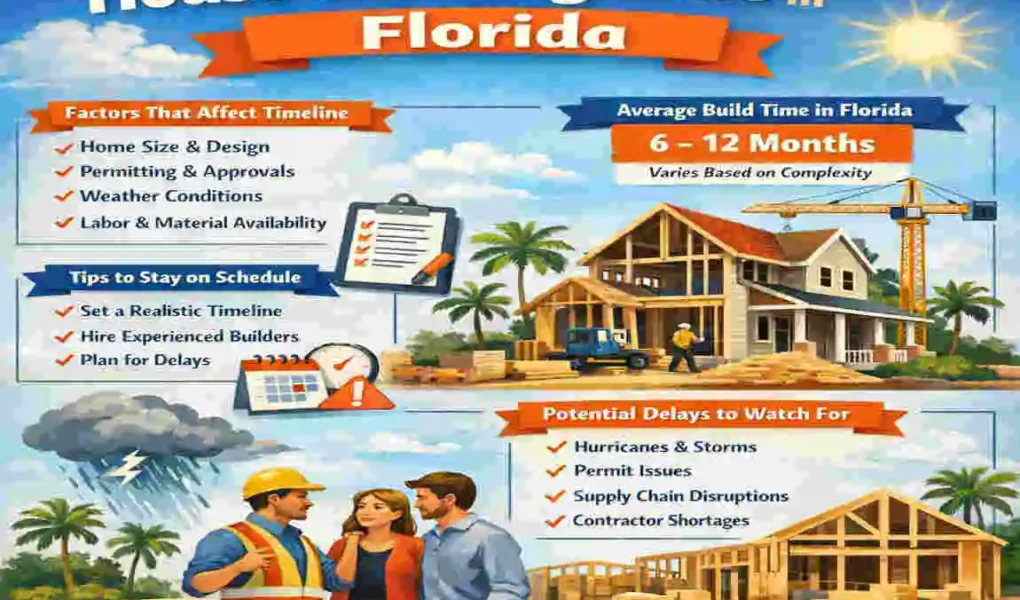
For many buyers, the full process for a custom home takes anywhere from 12 to 24 months. A production or tract home may move faster, often around 9 to 12 months. In comparison, a modular or prefabricated home can sometimes be completed in 4 to 6 months. But those numbers only tell part of the story.

Florida is not a simple place to build. The state has its own mix of rules, weather patterns, soil conditions, flood risks, and local permitting requirements. That means the timeline can stretch or shrink depending on where you build, what type of home you want, and how smoothly each step goes.

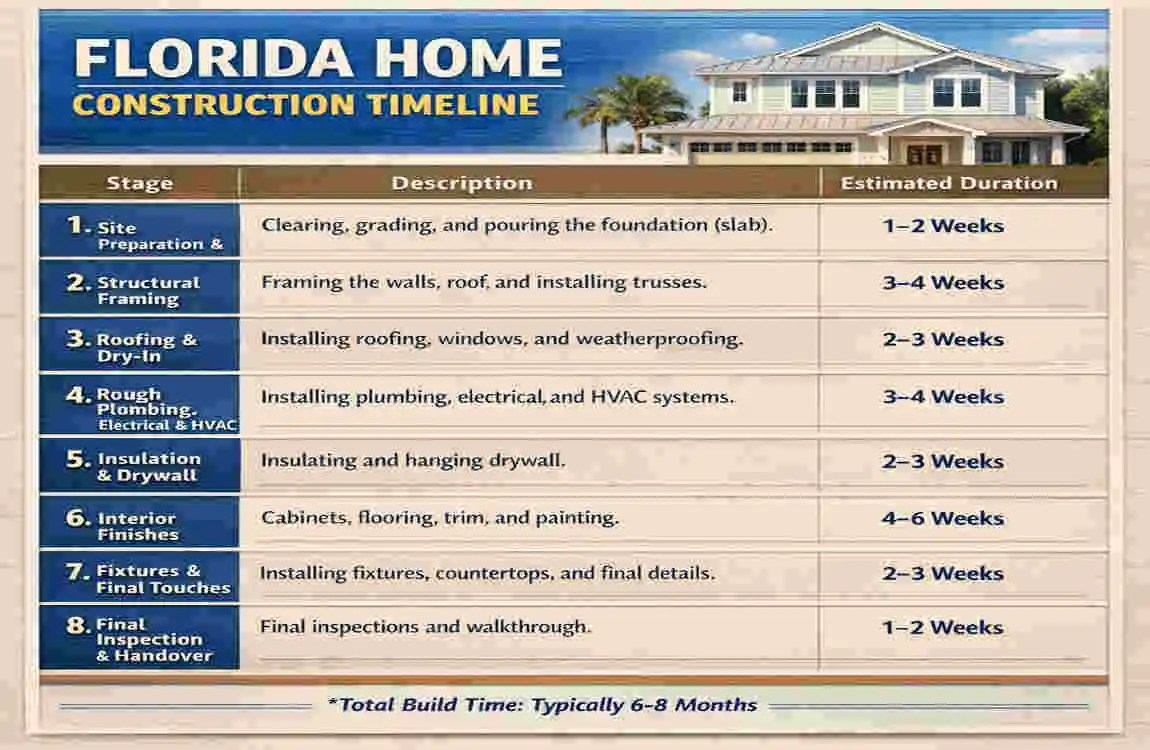
Phase Typical Duration Florida-Specific Factors
Pre-Construction (Design, Permits, Land) 3-12 months Hurricane codes, flood zone approvals, rainy season delays
Site Prep & Foundation 1-2 months Sandy soil engineering, elevation for floods
Framing & Rough-Ins 2-3 months Wind-resistant materials, supply chain issues
Finishes & Exteriors 3-5 months Humidity impacts drying, coastal regulations
Final Inspections & Close 1-2 months CO (Certificate of Occupancy) backlogs
Total (Custom Home) 12-24 months Custom vs. modular (4-6 months faster)

Understanding the Timeline by Home Type

how long to build a house in florida

Why the type of home changes the schedule

Not every house starts from the same place. Some homes are designed from scratch. Some follow a set floor plan. Some are built off-site and assembled later. As a result, the time required to finish the project can vary significantly.

When people ask how long it takes to build a house in Florida, it helps to first ask what kind of house they want. That one question can change the answer by many months.

Custom Homes: The 12–24 Month Investment

A custom home is usually the most personal option. You choose the design, layout, finishes, materials, and many of the small details that make the home feel like yours. That freedom is wonderful, but it also takes more time.

Custom homes often take 12 to 24 months from early planning to move-in. Sometimes they take even longer if the home is large, highly detailed, or built on a difficult lot.

Here is why custom homes move more slowly:

  • The design process takes time
  • Plans may need several revisions
  • Permitting can be more complex
  • Builders may need special materials
  • The site may require extra preparation

If you want a home that reflects your lifestyle exactly, this longer timeline may be worth it. You are not just building a structure. You are building a space that fits how you live every day.

Tract or Production Homes: The 9–12 Month Turnaround

Tract homes, also called production homes, usually move faster because builders often use pre-designed plans. The layout is already established, the materials are often standardized, and the builder may already know the workflow very well.

These homes often take 9 to 12 months to complete, though some can be finished faster if the lot is ready and materials arrive on time.

This is a good option if you want:

  • A faster move-in date
  • A simpler design process
  • More predictable costs
  • Fewer custom decisions

Production homes may not offer as much personal design freedom. Still, they usually provide a smoother and more efficient path from contract to closing.

Modular and Prefabricated Homes: The 4–6 Month Alternative

Modular and prefabricated homes often have the shortest build times. Many of the components are built off-site in a controlled environment, then transported to the lot for final assembly.

This process can shorten the timeline to about 4 to 6 months in many cases. That does not mean the project is instant, though. You still need land, permits, site work, utility connections, and inspections.

The big advantage here is speed. The controlled factory setting can reduce weather delays and help keep construction moving. For buyers who want a quicker path to homeownership, this can be a smart home choice.

Quick Comparison Table

Home TypeTypical TimelineMain AdvantageMain Drawback

Custom Home 12–24 months Full design freedom Longer timeline

Production Home 9–12 months More predictable schedule Less customization

Modular/Prefabricated Home 4–6 months Fastest build time Still needs site work and approvals

This table provides a useful starting point, but keep in mind that local conditions in Florida may change the final schedule.

The Pre-Construction Phase: Where the Timeline Really Begins

Why the beginning matters so much

Many people think the construction clock starts the day the foundation is poured. In reality, the project starts much earlier. The pre-construction phase can take 3 to 6 months, and sometimes longer if financing, land, or permits take extra time.

This stage is not flashy, but it is one of the most important parts of the entire process. If you rush it, you may create delays later. If you plan it carefully, you give the whole project a much better chance of staying on track.

Financing and Securing the Construction Loan

Before a builder can start work, most buyers need a construction loan or another financing plan. This step can take time because lenders typically require a comprehensive package of information before approving the project.

You may need to provide:

  • Income documents
  • Credit history
  • Land details
  • Builder information
  • A construction budget
  • Home plans and specifications

Lenders want to know that the project is realistic and that the home will hold its value. They also want to see that the builder is qualified and the budget makes sense.

If you are new to construction financing, this part can feel overwhelming. The best approach is to slow down and gather everything early. That way, you are not delaying the project later because of missing paperwork.

Land Acquisition and Site Selection

The lot you choose can shape nearly every part of the build. In Florida, site selection is especially important because the land itself can affect cost, design, insurance, and even the timeline.

Some lots are easy to build on. Others need extra work before construction can begin.

You may need to think about:

  • Flood zones
  • Soil quality
  • Drainage
  • Tree removal
  • Easements
  • Access to utilities

This is where Florida becomes unique. A lot that looks perfect on the surface may need additional tests or improvements before a builder can move forward. For example, low-lying land may require elevation work, and coastal areas may come with extra rules.

So when you ask how long to build a house in Florida, the lot itself is a big part of the answer.

Design, Planning, and Architectural Blueprints

Once the land and financing are in place, the design process begins. This is where the home starts to take shape on paper.

At this stage, you work through:

  • Floor plans
  • Room layout
  • Exterior style
  • Roof design
  • Window placement
  • Cabinet and finish choices

This part can move quickly if you already know what you want. But it can also stretch out if you keep changing your mind. And honestly, that is very common.

Many homeowners underestimate how many decisions they will need to make. The more custom the home, the more choices you will face. Every choice matters, because each one affects cost, schedule, and final appearance.

A clear plan helps reduce confusion later. It also helps your builder order materials sooner and avoid costly revisions during construction.

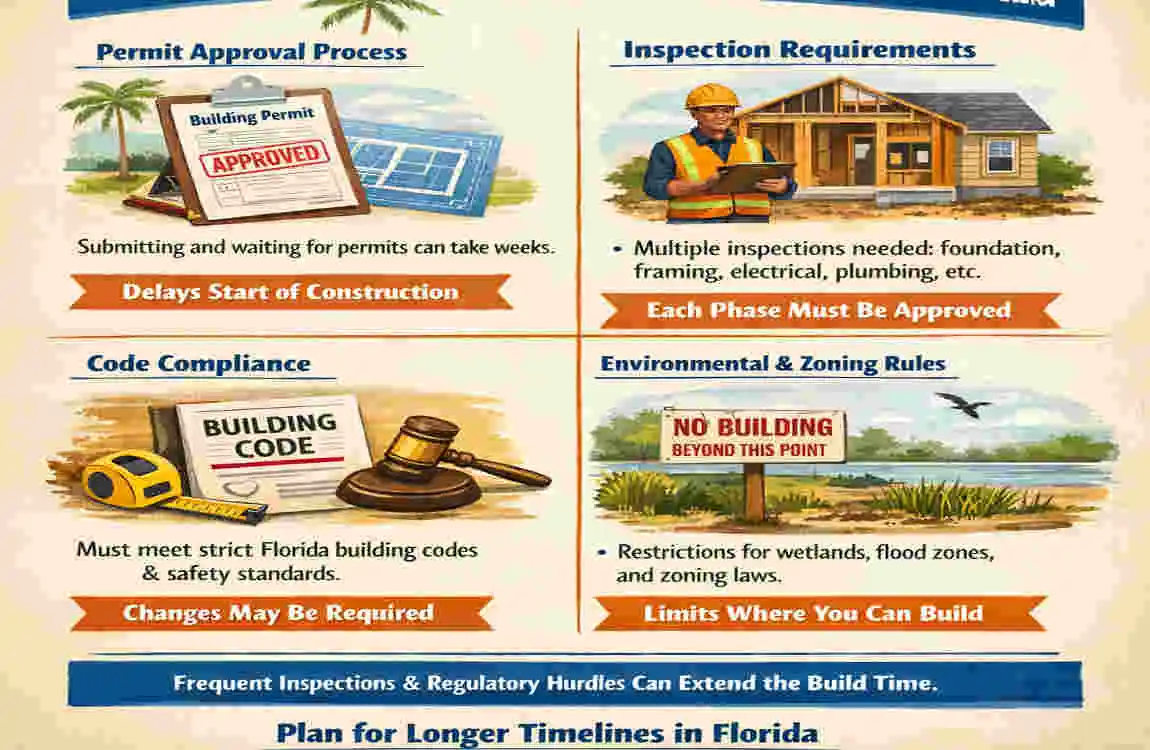
Navigating Permits and Local Building Department Backlogs

Permitting is one of the biggest wild cards in Florida home building. Every city and county has its own process, and some offices move much faster than others.

You may need permits for:

  • The foundation
  • Electrical work
  • Plumbing
  • HVAC
  • Site grading
  • Structural construction

In some areas, the permit process is smooth. In others, backlogs can create delays before work even begins. If your lot is near a coastal area or in a flood-prone zone, the review may take longer because the project must meet additional standards.

This is one of the reasons local experience matters so much. A builder who knows the local process can often prepare better paperwork, anticipate questions, and help avoid delays.

Pre-Construction Timeline at a Glance

Pre-Construction StepWhat It InvolvesTypical Time Impact

Financing Loan approval and paperwork 2–6 weeks

Land Selection Lot research and purchase 2–8 weeks

Design and Blueprints Plans, revisions, selections 4–10 weeks

Permits Local approvals and reviews 4–12+ weeks

These time frames can overlap, but they illustrate why the pre-construction phase can easily span several months.

The Construction Phase: Turning Plans Into a Real Home

Where the exciting part begins

Once permits are approved and site work is ready, the visible part of the project begins. This phase usually takes 6 to 12 months, depending on the size of the house, the type of home, and the property’s condition.

This is the stage where your empty lot becomes a real home. The process moves step by step, and each step depends on the one before it. If one stage slows down, the rest of the schedule can shift too.

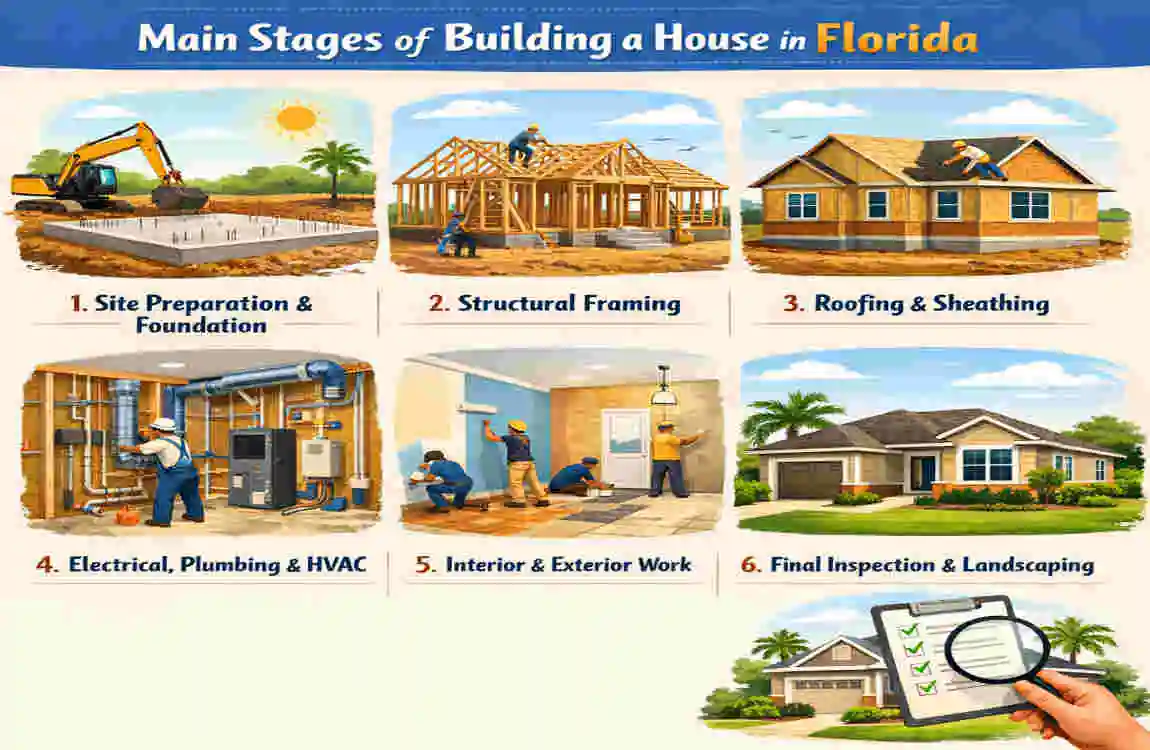
Site Preparation and Foundation Pouring

Before the foundation goes in, the builder has to prepare the site. That may mean clearing the land, leveling the ground, improving drainage, and making sure the lot is ready for construction.

In Florida, this step can be especially important because soil and water conditions can vary widely from one area to another. Some sites are stable and straightforward. Others may need extra care because of flood zones, soft soil, or drainage issues.

Foundation work may include:

  • Excavation
  • Grading
  • Footings
  • Slab work
  • Crawl space prep, depending on the design

The foundation is the base of everything. If this part is rushed or done poorly, problems can show up later in the build. That is why experienced builders take their time here.

Framing, Rough-Ins, and the Skeleton of the House

After the foundation cures, framing begins. This is when the house’s shape becomes visible. Walls go up. Roof lines form. The structure is starting to look like a home rather than a job site.

Then the rough-ins follow. This includes the behind-the-walls work for:

  • Plumbing
  • Electrical
  • HVAC

These systems must be installed before insulation and drywall go in. Once they are in place, inspectors usually review the work to make sure everything meets code.

This stage can feel slow if you are standing on the outside looking in, but it is one of the most important parts of the build. It is where the invisible systems that make the home functional are created.

Interior Finishes, Cabinetry, and Flooring Installation

Once the structure is closed in, the home starts to feel more complete. This is the part many homeowners love because the visual transformation becomes much more dramatic.

The finishing stage may include:

  • Drywall
  • Paint
  • Trim
  • Cabinets
  • Countertops
  • Flooring
  • Light fixtures
  • Tile work
  • Appliances

This is also the stage where design choices become very visible. The cabinet color you picked months ago now matters. The flooring selection begins to define the space’s mood. The house begins to look like your home.

This stage can move quickly if materials are ready and trades are available. But if there are supply delays or change orders, the schedule can slow down fast.

Final Walkthrough, Landscaping, and Certificate of Occupancy

The home is not finished just because the inside looks good. Before you can move in, the builder still has to complete final details and inspections.

The final phase often includes:

  • Punch-list corrections
  • Final inspections
  • Landscaping
  • Driveway finishing
  • Utility activation
  • Certificate of Occupancy approval

The Certificate of Occupancy, often called the CO, is the official document that says the home is safe and ready to live in. Without it, you usually cannot legally move in.

This last step can feel frustrating if you are close to the finish line and waiting on a few remaining approvals. Still, it is a critical part of the process and protects you as a future homeowner.

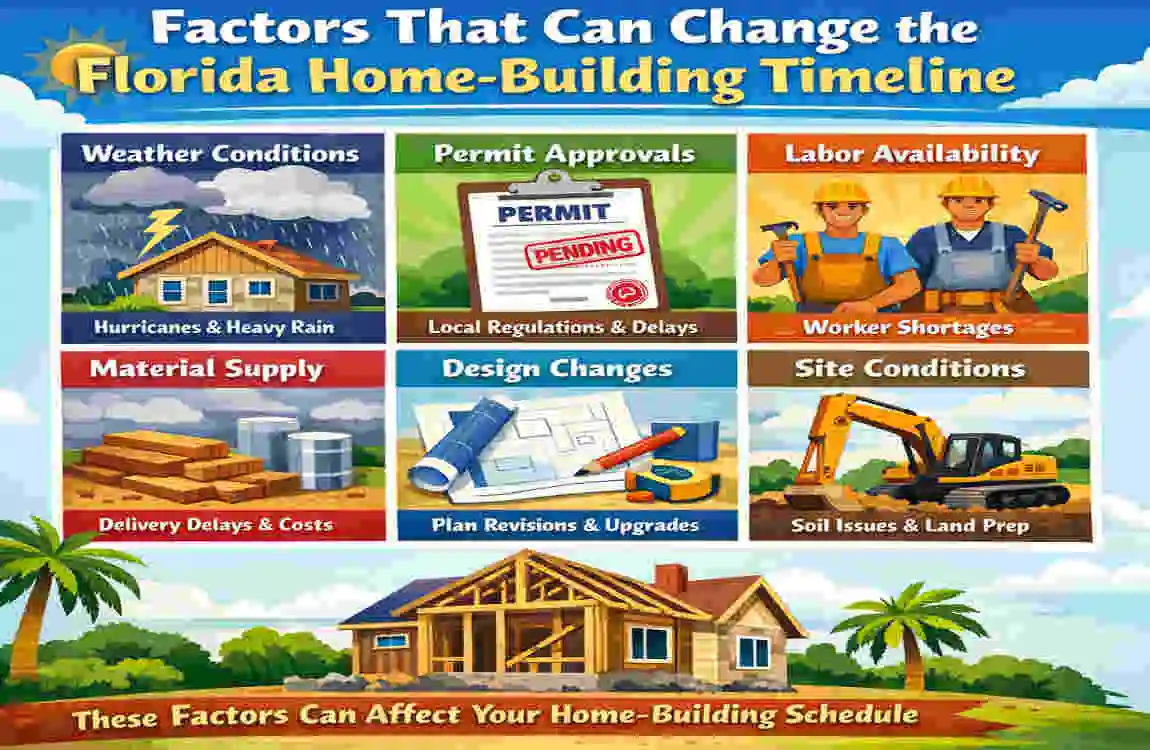
Factors That Delay Florida Construction

how long to build a house in florida

Why Florida builds can take longer than expected

Even the best-planned project can run into delays. In Florida, some of those delays are more common because of the climate, the rules, and the market itself.

If you want a realistic answer to how long it takes to build a house in Florida, you need to understand what can slow down the work.

Weather Impacts

Florida weather is beautiful, but it can also be unpredictable. Hurricane season, tropical storms, heavy rain, and intense humidity can all affect the timeline.

Weather can delay:

  • Site preparation
  • Foundation work
  • Roof installation
  • Exterior painting
  • Material drying and curing
  • Inspection scheduling

Humidity is a bigger issue than many people realize. Some materials need time to dry or cure properly, and wet conditions can interfere with that process.

If a storm is moving through the area, crews may pause work for safety reasons. That is not just a delay. It is part of responsible construction planning.

Regulatory Hurdles

Florida has strict building requirements, especially in coastal areas and flood-prone zones. These rules exist for a reason. They help protect homes from the state’s unique environmental risks.

Some projects may need extra attention for:

  • FEMA elevation checks
  • Coastal zone regulations
  • Wind-resistance standards
  • Floodplain requirements
  • Local code enforcement

These rules can add time, but they also help create safer homes. The key is to account for them early, rather than treating them as an unpleasant surprise.

Market Conditions

Construction is also affected by broader market forces. Even if your land is ready and your permits are approved, the project may still slow down because of labor or supply issues.

Common market-related delays include:

  • Labor shortages
  • Backordered home materials
  • High seasonal demand for contractors
  • Price changes for materials
  • Scheduling conflicts with subcontractors

Florida is a popular place to build, which means demand can rise quickly. In busy seasons, top contractors may already be booked. That can make it harder to start your project right away or keep every phase moving at full speed.

Common Delay Factors in One Table

Delay FactorHow It Affects the ProjectWhat You Can Do

Weather Pauses outdoor work and curing Build buffer time into the schedule

Regulations Extends permit and inspection time Work with a local expert

Labor Shortages Slows trade scheduling Lock in your builder early

Supply Issues Delays materials and finishes Order key items early

Seasonal Demand Increases competition for crews Plan your build schedule carefully

Expert Tips for Streamlining Your Build

How to keep your Florida home project on track

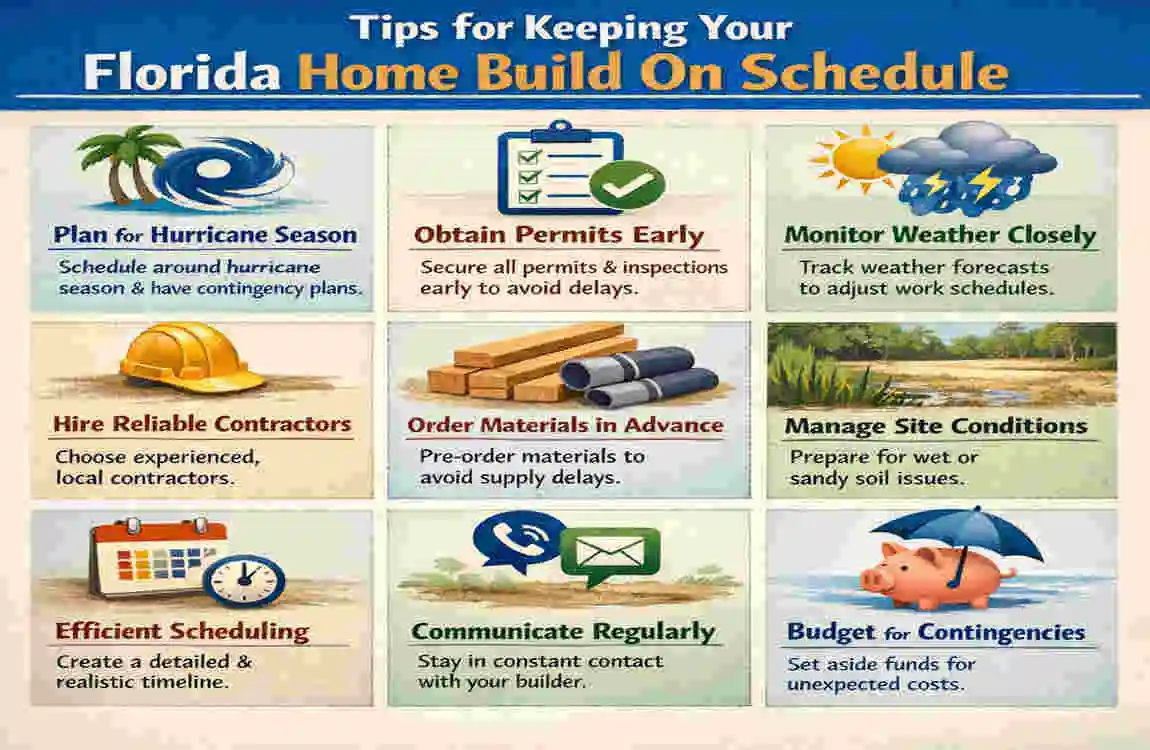
You cannot control the weather, nor can you force a permit office to move faster. But you can make smart choices that reduce stress and improve your odds of staying on schedule.

Choose an Experienced Local Builder

This is one of the most important decisions you will make.

A builder who works regularly in Florida understands the local permitting process, the weather risks, the code requirements, and the practical challenges that come with different types of land. That knowledge can save time and money.

A local expert can often:

  • Spot permit issues early
  • Recommend better lot solutions
  • Guide you through code requirements
  • Help you avoid costly mistakes
  • Coordinate trades more efficiently

If you want fewer surprises, local experience matters a lot.

Communicate Clearly About Material Lead Times

Material delays can create a ripple effect across the whole project. If cabinets arrive late, the finish stage slows down. If windows are backordered, the home may not close in before interior work can continue.

That is why clear communication matters so much.

Make sure you and your builder talk through:

  • Lead times for cabinets
  • Delivery timing for windows and doors
  • Appliance ordering
  • Flooring availability
  • Special-order finishes

The earlier you identify possible delays, the easier it is to adjust the schedule. A good builder will help you stay realistic rather than promising a timeline that sounds good but doesn’t align with the market.

Plan for Buffer Time

This is one of the smartest things you can do.

Even if your builder gives you a schedule, build in extra time for Florida-specific delays. That does not mean you should expect disaster. It simply means you should prepare for the unexpected.

A buffer helps with:

  • Weather disruptions
  • Permit slowdowns
  • Inspection delays
  • Material shortages
  • Change orders

If everything goes smoothly, great. You may finish earlier than expected. If something slips, you will already have breathing room.

A Simple Planning List for Homeowners

Here are a few practical habits that can help:

  1. Make decisions early. Delayed selections often become delayed construction.
  2. Stay in touch with your builder. Regular updates help you catch problems sooner.
  3. Review the budget often. Cost changes can affect choices and timing.
  4. Keep a flexible mindset. Construction almost always includes a few surprises.
  5. Ask questions right away. Small issues are easier to solve early.

This is your home, so stay involved. The more you understand the process, the more confident you will feel.

What Homeowners Often Get Wrong About the Timeline

Why expectations and reality do not always match

A lot of frustration in home building comes from one simple problem: unrealistic expectations.

People often assume that once the contract is signed, the house should start moving quickly. But building a home is not like buying something already sitting on a shelf. It is a layered process with many moving parts.

Thinking the build starts immediately

In reality, weeks or months may pass before actual construction begins. Financing, design, and permits all have to happen first.

Underestimating weather delays

Florida weather is not just a backdrop. It is a real factor in the schedule. One storm can push back several tasks, especially outdoor work.

Choosing finishes too late

Late selections create late orders. Late orders create slowdowns. To keep the project moving smoothly, finish selections as early as possible.

Ignoring the impact of the lot

Not every piece of land is ready to build on right away. Drainage, soil, elevation, and flood concerns can all affect timing.

Expecting a perfect schedule

Even well-run jobs face small changes. The goal is not perfection. The goal is progress, communication, and a finished home that meets your expectations.

How Long to Build a House in Florida: Realistic Expectations

The short answer and the honest answer

So, how long to build a house in Florida?

The short answer is:

  • Custom home: about 12 to 24 months
  • Production home: about 9 to 12 months
  • Modular home: about 4 to 6 months

The honest answer is that your timeline depends on many details. The location, the lot, the permits, the design, the weather, and the builder all play a role.

If you are hoping for a fast build, a modular or production home may be the better fit. If you want full customization, then a custom home may be the right choice, even if it takes more time. Neither path is better in every situation. It depends on your goals, your budget, and your patience.

Think of the timeline as a range, not a promise. That mindset will help you make better decisions and feel less stressed as the project unfolds.

Working With the Right Builder Makes a Big Difference

how long to build a house in florida

Why guidance matters so much

A strong builder does more than manage workers. A strong builder helps guide the whole project from start to finish. They help you understand what is happening, what is coming next, and where the risks are.

That kind of support matters because home building involves many decisions. Some are big, like the floor plan or the roof style. Others are small, like fixture choices or trim details. All of them affect the final result.

The right builder helps you:

  • Stay organized
  • Reduce delays
  • Understand the process
  • Solve problems faster
  • Feel more confident

If you are building in Florida, professional guidance is not a luxury. It is one of the best ways to protect your time, your budget, and your peace of mind.

FAQ: How Long to Build a House in Florida?

Q: How long does it usually take to build a house in Florida?
A: Most homes take about 12 to 24 months from start to finish, and the construction phase alone often takes 9 to 12 months .

Q: What if I’m building a custom home in Florida?
A: Custom homes commonly take 12 to 18 months in parts of Southwest Florida, though some projects can run longer depending on design, permits, and inspections .

Q: Are there faster options than a traditional build?
A: Yes. Modular homes can be much faster, and some timelines are reported at 5 to 7 months for modular builds .

Q: What usually slows down a Florida home build?
A: Permits, inspections, weather, and material delays are some of the biggest causes of delays in Florida construction.

Q: Can a home be built in under a year in Florida?
A: Yes, in some cases. Some builders report timelines of around 111 days for certain new homes, while other sources say well-built homes may take 6 to 9 months depending on the design and conditions .

Q: What is the safest timeline to plan for?
A: If you want a realistic buffer, plan for 12 to 24 months, especially for a custom home or a project that may face permitting or weather delays .

You may also like...

Leave a Reply

Your email address will not be published. Required fields are marked *