can you build a house on a-1 zoning
CONSTRUCTION

A-1 Zoning Explained: Can You Build a Home? Rules, Permits & Lot Size Guide

A parcel may look perfect on paper. It may be cheaper than residential land. It may have enough space for a custom home, a workshop, a garden, and a few animals. But if the county requires a larger minimum lot size, road frontage, a well permit, or special approval for a second dwelling, your dream build can slow down fast.

The good news is that A-1 land can still be a smart move. In fact, for many buyers, it offers one of the best ways to own a home in a rural setting without paying the premium often attached to fully residential-zoned lots. You get more space, more privacy, and often more freedom for agricultural or homesteading uses.

Still, the rules vary from one county to another and from one state to another. In some places, a single-family home is a permitted use by right. In others, it is allowed only if the parcel meets a minimum acreage requirement or passes health and access reviews.

What Is A-1 Zoning?

can you build a house on a-1 zoning

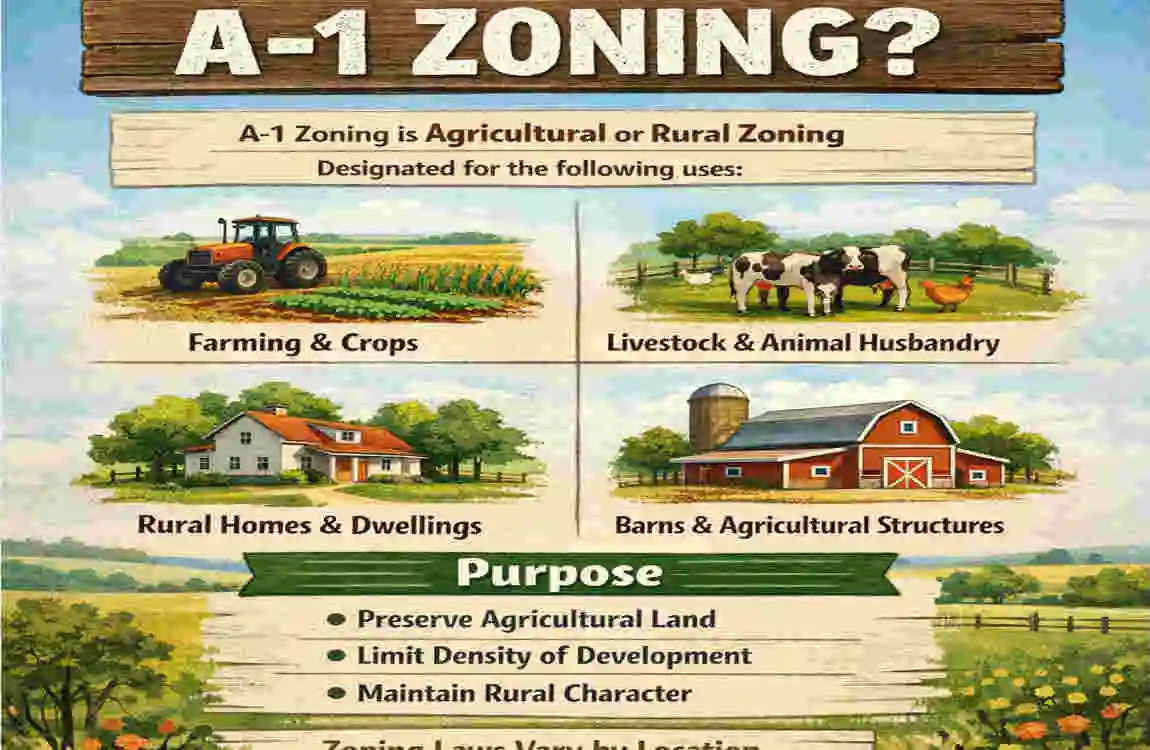
A-1 zoning usually refers to agricultural zoning. Depending on the county, it may be called Light Agricultural, General Agricultural, or even Prime Agricultural. The exact name changes by location, but the main idea stays the same: the land is reserved for rural, low-density, agriculture-focused use.

The main purpose of A-1 zoning

Counties use A-1 zoning to protect farmland and open land from being swallowed up by suburban growth. Without these zoning rules, productive rural land could quickly turn into dense housing tracts, strip development, or conflicting land uses.

So, A-1 zoning is meant to do a few important things:

  • Preserve farmland and agricultural activity
  • Prevent overcrowded rural development
  • Separate farming land from incompatible urban uses
  • Maintain larger lot sizes and open space

This is why A-1 zoning often comes with rules that feel stricter than regular residential zoning. The county wants to ensure the land remains rural, even if a home is built on it.

Why this zoning matters to homebuilders

If you want to build a house, A-1 zoning is not automatically a problem. In fact, many people build homes on agricultural land every year. The key is understanding that the home is often treated as a secondary use within an agricultural district, rather than the district’s main purpose.

That difference matters.

On a standard residential lot, the county expects a house. On A-1 land, the county may allow a house, but it will also ask questions such as:

  • Is the parcel large enough?
  • Does it have legal road access?
  • Can it support a septic system?
  • Does the proposed home interfere with nearby agricultural use?
  • Are you trying to build more homes than the zoning allows?

So, before you get excited about a scenic parcel, you need to read the zoning code and confirm the exact rules for that property.

A-1 zoning is not the same everywhere

This is one of the biggest sources of confusion.

Many buyers assume that if A-1 zoning allowed a home in one county, it must allow the same thing in another county. That is not always true. Zoning labels may look similar, but local rules can vary a lot.

For example, one county may allow a single-family home on a lot of around 35,000 square feet, while another may require 1 acre, 2 acres, or even 5 acres. Some places are flexible if public water and sewer are available. Others demand more land because the property must support a private septic system and well.

This is why you should treat A-1 as a category, not a universal rulebook.

What you can often do on A-1 land

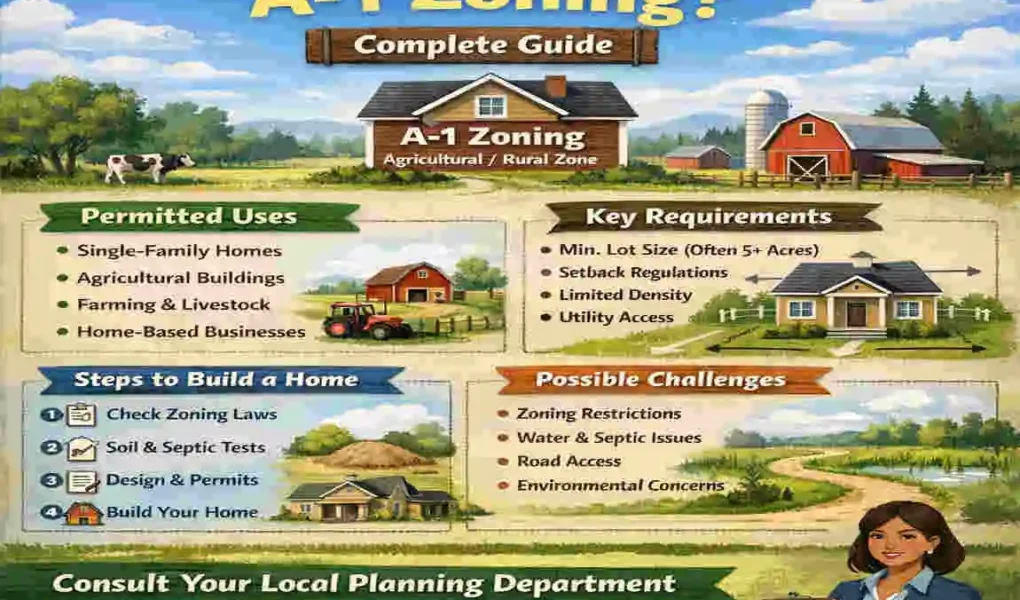
In many areas, A-1 zoning can allow a mix of rural uses, such as:

  • Farming or crop production
  • Small-scale livestock or animal keeping
  • Single-family homes
  • Barns, sheds, garages, and workshops
  • Farm employee housing in limited cases
  • Home-based agricultural activities

That can make A-1 zoning appealing if you want more than just a house. You may want a few chickens, a greenhouse, a large detached garage, or room for a garden and orchard. A-1 land often gives you that rural flexibility.

Still, flexibility does not mean no rules. And that brings us to the question most buyers really care about.

Can You Build a House on A-1 Zoning?

Yes, you can often build a house on A-1 zoning, but only if the local zoning code allows residential use on that parcel and you meet all the development requirements.

That is the real answer.

It is not a blanket yes for every property. But in many counties, a single-family home is either a permitted use or a conditionally permitted use on A-1 land.

When a house is usually allowed

A house is commonly allowed on A-1 land when:

  • The parcel meets the minimum lot size
  • The home will be a single-family dwelling
  • The property has legal access to a public or approved private road
  • The site passes septic, well, drainage, and building safety reviews
  • The house meets required setbacks, height limits, and lot coverage rules

In practical terms, a buyer may be able to build. But they must prove the land is suitable for rural residential development.

How many homes can you build?

This is where people often make expensive assumptions.

Many A-1 districts allow one primary single-family home. Some areas may also allow a second dwelling in a limited form, such as:

  • An accessory dwelling unit
  • A farmworker residence
  • A guest house
  • A duplex or second home, but only with special approval

In many cases, you cannot build multiple standard houses on a single parcel just because the land is large. Agricultural zoning is designed to keep density low. So even if you own 10 acres, that does not necessarily mean you can place three or four homes on it.

If your plan involves more than one home, always ask the planning department about:

  • Dwelling unit limits
  • Accessory dwelling rules
  • Special use permits
  • Subdivision rules
  • Minimum acreage per home

Why buyers like A-1 land

A-1 land can be very attractive for building a home. Here are some of the biggest advantages.

  • Land is often more affordable than fully residential-zoned property
  • Lots are larger, which gives you privacy and usable space
  • Agricultural uses may be allowed, such as gardens, barns, and animals
  • You may have fewer close neighbors
  • It can be ideal for homesteading, hobby farming, or a custom rural home

If your goal is a quiet property with room to spread out, A-1 zoning can be a strong fit.

The trade-offs you should know

At the same time, A-1 zoning comes with limits that some buyers underestimate.

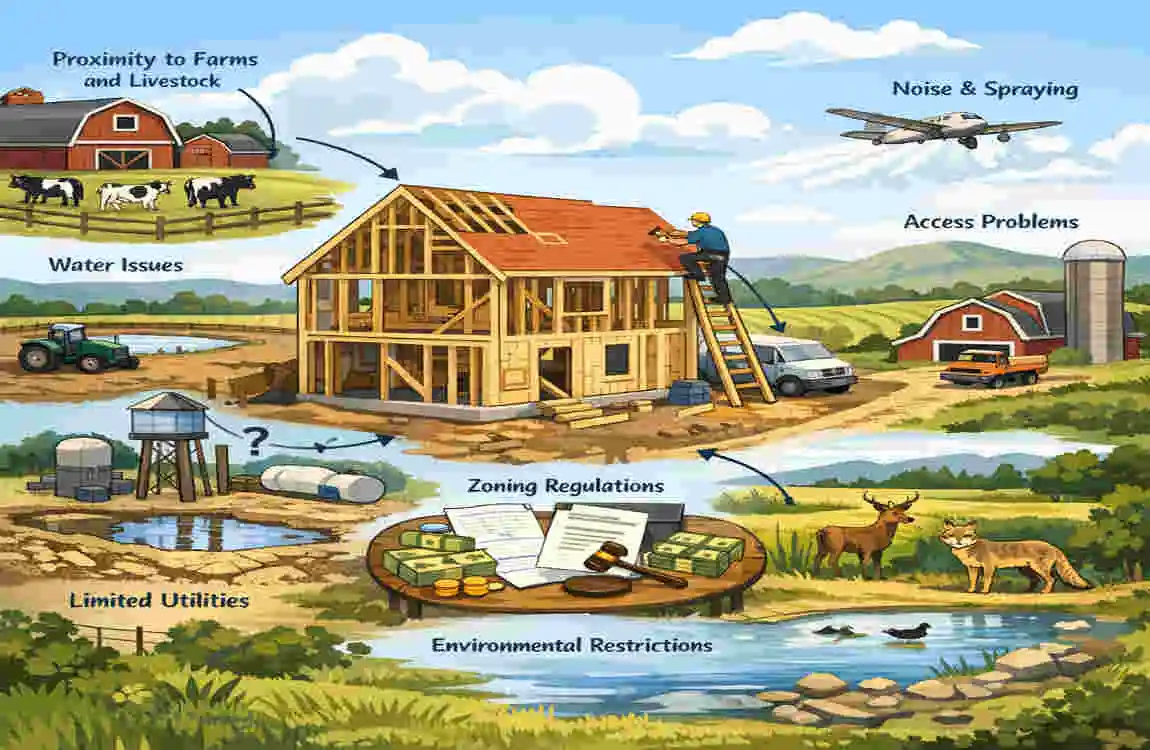
  • Utilities may be harder or more expensive to bring in
  • Septic and well requirements can add cost
  • Lot size rules are often stricter
  • You may face road frontage or access standards
  • Dense development is usually not allowed
  • Nearby farming activity may affect your living experience

That last point matters more than many people realize. Living on agricultural land can mean tractors, dust, livestock smells, irrigation equipment, and early-morning farm work nearby. If you want a perfectly polished suburban feel, A-1 land may not be the right match.

A-1 zoning vs. residential zoning

Here is a simple comparison to help you understand the difference.

AspectA-1 Zoning Residential (R-1) Zoning

Primary purpose Agriculture and low-density rural use Residential living

Typical lot size minimum Often around 1 to 5 acres, sometimes smaller depending on county Often much smaller lots

Homes allowed Usually 1 single-family home, sometimes a second dwelling with approval Single-family homes are typically expected

Density Low density Higher than agricultural land

Accessory structures Barns, sheds, garages, workshops often common Garages and sheds common, barns less common

Animals/agricultural use Often allowed or easier to permit Usually limited

Development flexibility More rural-use flexibility, but stricter on density Better for standard neighborhood housing

A-1 Zoning Rules and Restrictions

Once you know a house may be allowed, the next step is understanding the rules that control how and where you build.

Development standards usually accompany A-1 zoning. These standards are not there to make life hard. They are there to keep enough open space on rural land, protect neighboring properties, and reduce conflicts between homes and agricultural activity.

Setback requirements

A setback is the minimum distance your home or structure must sit from a road, side property line, or rear property line.

On A-1 land, setbacks are often larger than what you would see in a standard subdivision. In many places, front setbacks may be 50 feet or more, especially along rural roads. Side and rear setbacks can also be generous.

Why does that matter to you?

Because setbacks shrink your buildable area. A 1-acre lot may sound large, but once you remove setback areas, easements, flood zones, and septic fields, the actual spot where you can place a home may be much smaller than expected.

Height limits

Many agricultural districts cap residential structures at around 35 feet, though local rules vary. That usually allows a typical one-story or two-story house. Still, it may affect roof design, attic space, towers, or unusually tall custom homes.

If you are planning a home with a steep roofline or a large barn-style structure, check the height rule early. It is much easier to adjust a design before submitting plans than after.

Lot coverage limits

Lot coverage is the percentage of the parcel that can be covered by structures such as:

  • The house
  • Attached or detached garage
  • Barns
  • Workshops
  • Other buildings

Some A-1 districts are generous, while others limit building footprint to preserve open land. This matters if you want a large home, multiple outbuildings, a detached shop, or animal facilities.

Accessory structures are often allowed

One reason people like A-1 land is that it often allows useful rural structures. Depending on the county, you may be able to build:

  • A barn
  • A garage
  • A storage shed
  • A workshop
  • A greenhouse
  • Fencing and small utility buildings

However, there is often a catch here too. Accessory structures may need to be clearly secondary to the home or farm use. In some places, you cannot build a large shop first and call it your main improvement while delaying the house forever.

So if your dream is “shop first, house later,” ask the county if that order is allowed.

What is usually restricted or prohibited

A-1 land is not meant for every type of development. Common restrictions may include:

  • High-density housing
  • Apartment buildings
  • Large-scale commercial activity
  • Certain industrial uses
  • Too many dwellings on one parcel
  • Subdivision without approval

This is important if you plan to treat the land as an investment project. A-1 land can be great for a rural home, but it is not automatically a shortcut to a multi-home development.

Rural compatibility matters

Counties often want homes on A-1 land to fit the rural setting. That can affect driveway design, parking, fire access, drainage, and even how close structures can sit to neighboring farm operations.

In other words, you are not just building a house. You are building a house within an agricultural environment. The design has to make sense for the land and the surrounding area.

Minimum Lot Size for A-1 Zoning Homes

can you build a house on a-1 zoning

If there is one issue that decides whether a house can be built on A-1 land, it is often minimum lot size.

This rule tells you how big the parcel must be before a home is allowed. And in agricultural zoning, that minimum can be much larger than many first-time buyers expect.

Why lot size matters so much

A county does not set lot-size rules solely to control land ownership. On A-1 land, lot size connects directly to practical issues such as:

  • Space for a house and septic system
  • Safe distance from neighboring properties
  • Room for well separation
  • Preservation of rural density
  • Protection of agricultural land from overdevelopment

So when a county asks for a bigger lot, it is often trying to solve real land-use problems, not just paperwork problems.

Common A-1 lot size ranges

In many areas, minimum lot sizes for a home on A-1 land may range from:

  • Around 35,000 square feet
  • 1 acre
  • 2 acres
  • 5 acres
  • Even more in very rural locations

The exact rule depends on the county, the zoning ordinance, whether utilities are available, and whether the parcel is a legal lot of record.

That last phrase is important. A “legal lot of record” means the parcel was created lawfully under local land division rules. Sometimes an older parcel may be buildable even if it is smaller than current standards, but only if it qualifies under special grandfathering rules.

Lot size is not the only size rule

A parcel may meet the acreage minimum and still fail other dimensional standards.

For example, some counties also require:

  • Minimum road frontage
  • Minimum lot width
  • Minimum lot depth
  • A buildable area outside flood zones or easements

This means a long, narrow parcel may not work as well as a more balanced shape, even if both have the same acreage.

If the county requires a certain amount of road frontage and your parcel is landlocked or has only a narrow access strip, you may need additional approval before you can build.

Septic and well needs can push the required size higher

On rural land, homes often rely on private systems instead of city utilities. That changes everything.

If the property needs a septic system, the county or health department may require:

  • Soil testing
  • Percolation testing
  • A reserve drain field area
  • Distance between septic and wells
  • Distance from property lines and water features

This is why smaller parcels sometimes fail even when zoning seems to allow a house. The land has to be physically capable of supporting a safe onsite wastewater system.

How to check if your lot is large enough

Before you buy or build, confirm these points:

  1. What is the zoning district for the exact parcel?
  2. What is the minimum lot size for a dwelling in that district?
  3. Is the parcel a legal buildable lot of record?
  4. Does it meet frontage and width rules?
  5. Will it pass septic and well review?
  6. Are there floodplain, easement, or environmental limits?

You can often get much of this information from the county planning office, tax parcel records, GIS maps, and the health department.

What if you want to subdivide?

Many buyers think they can buy a large A-1 parcel, split it, build one home, and sell the rest. Sometimes that is possible. Sometimes it is not.

Subdivision on agricultural land often triggers extra review. The county may ask whether the split would create nonconforming lots, reduce farm viability, or violate frontage and access rules.

So if subdivision is part of your plan, never assume it will be approved. Confirm it in writing before closing on the property.

Permits Required to Build on A-1 Zoning

Once zoning and lot-size checks are complete, the next big issue is permits.

This is where many projects slow down. People think the hard part is buying the land. In reality, the hard part is often moving through the approval process in the right order.

Zoning verification or zoning clearance

Before you spend money on full construction plans, confirm what the county actually allows.

A zoning verification, clearance, or planning review usually confirms:

  • The parcel’s zoning district
  • Whether a single-family home is allowed
  • Basic setbacks and dimensional standards
  • Whether special approvals are needed

This first step is incredibly valuable because it tells you whether you are on the right track before incurring deeper expenses.

Building permit

The building permit is the main approval for the house itself.

To get it, you will usually need to submit:

  • A site plan
  • Building drawings
  • Structural information
  • Floor plans and elevations
  • Utility details
  • Septic or sewer approval
  • Well information, if needed
  • Driveway or access details

The county reviews the plans for code compliance, safety, and zoning consistency.

Septic permit or onsite wastewater approval

If the property is not connected to public sewer, you will likely need separate approval for the septic system. This often requires soil work and health department review.

This permit can make or break a rural home build. A parcel that cannot support septic may not be buildable for a standard home at all.

Well permit or water approval

If the home will use a private well, you may need permits for drilling and installation. In some places, water availability can be a major issue, especially in dry regions or areas with groundwater limits.

Even where a well is allowed, placement must usually respect separation distances from septic systems and property lines.

Driveway or access permit

Do not overlook this one.

On rural land, the county, road department, or state transportation office may require a permit for a new driveway connection. They may review:

  • Sight distance
  • Culvert installation
  • Road ditch impact
  • Width and surface requirements
  • Emergency access

A beautiful parcel can quickly become a problem if legal or safe access is not approved.

Grading, drainage, or floodplain permits

If your land is steep, low-lying, near a creek, or within a regulated floodplain, additional permits may be required. These can affect site design, fill placement, and even whether the house can be built in your preferred location.

Special use permit or variance, if needed

If your project does not fit the usual A-1 rules, you may need one of these:

  • A special use permit for a non-standard residential use
  • A conditional use permit
  • A variance if your parcel cannot meet a setback or dimensional rule
  • Approval for a second dwelling, duplex, or unusual structure

These reviews often take longer and may involve public notice or a hearing.

What documents should you prepare?

To keep the process moving, gather these early:

  • Survey or parcel map
  • Site plan
  • Soil or perc test results
  • Septic design
  • House plans
  • Utility plans
  • Access or driveway plan
  • Floodplain information, if relevant
  • Any HOA or private road documents, if applicable

What does it cost and how long does it take?

Costs vary a lot by region and project type. Still, permit and approval expenses for rural builds can add up faster than buyers expect. Beyond permit fees, you may also pay for:

  • Surveying
  • Engineering
  • Soil tests
  • Septic design
  • Driveway work
  • Utility extensions

The timeline can also stretch. In a smooth case, approvals may take a few months. In a more complex case, especially if special use approval is needed, it can take much longer.

The best approach is simple: start early and ask questions before you spend heavily on design.

Step-by-Step Guide: Building a Home on A-1 Land

If you want a clear roadmap, here is the process in plain language.

Confirm the zoning

Call or visit the county planning office and verify that the parcel is truly A-1. Then ask whether a single-family home is permitted by right, conditionally permitted, or restricted.

Check lot size and parcel status

Make sure the property meets minimum acreage, frontage, width, and legal lot requirements. Ask whether it is a recognized buildable parcel.

Test the land

Order soil and septic testing early. This one step can save you from buying land that cannot support a home.

Review access and utilities

Confirm how you will handle:

  • Driveway access
  • Power
  • Water
  • Septic or sewer
  • Internet, if that matters to you

Create a site plan

Work with a designer, engineer, or surveyor to place the house, septic field, well, driveway, and any accessory buildings in locations that meet setbacks and site conditions.

Submit permit applications

Apply for zoning clearance, building permits, septic approval, driveway permits, and any special approvals the county requires.

Wait for review and make corrections

It is normal for the county to ask for revisions. Do not panic. This is part of the process.

Begin construction after approval

Once permits are issued, build according to the approved plans. Inspections will likely happen at several stages.

Final inspection and occupancy

When the home is complete and all systems pass inspection, the county issues final approval or a certificate of occupancy.

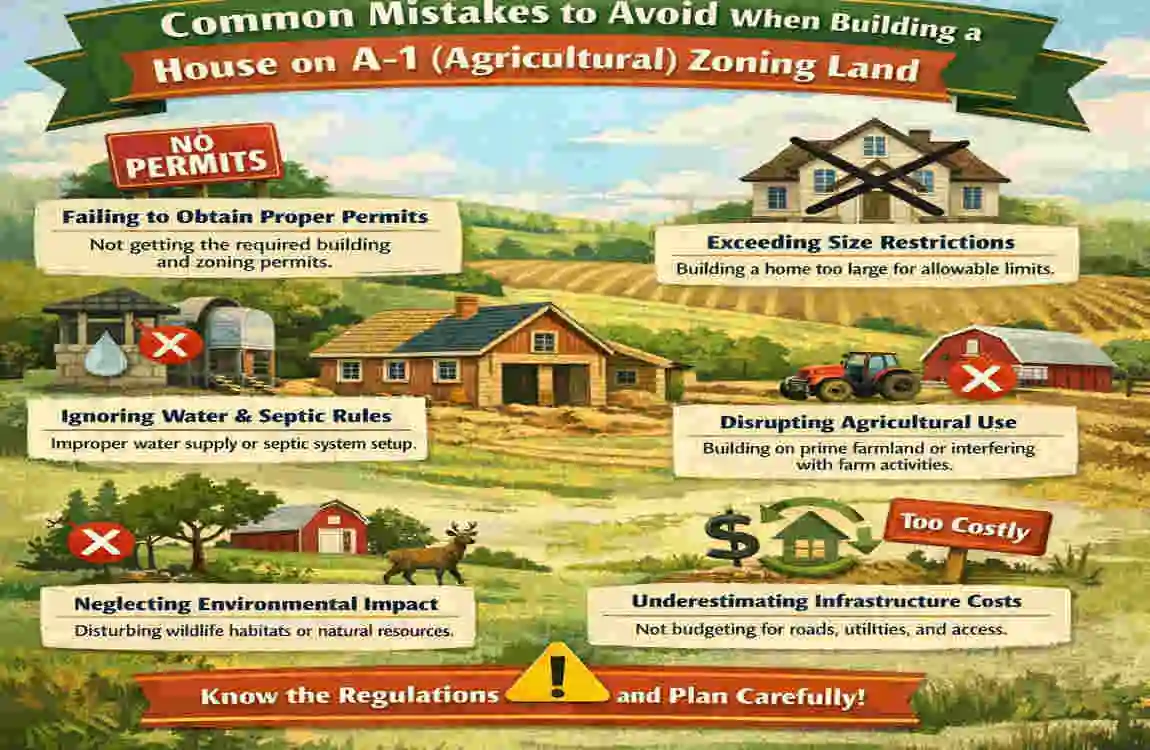
This process may sound long, but it becomes manageable when you break it into steps. The biggest mistake is skipping ahead before confirming zoning, lot size, and septic feasibility.

Common Challenges and How to Overcome Them

Building on A-1 land is very possible, but it is not always simple.

The county says no to your plan

The home may be too close to a setback line. You may want a second dwelling. The lot’s shapmay createe problem.

What to do: Talk with a local land-use planner, surveyor, or designer before filing a variance or redesigning the project. A small layout change can sometimes solve a big issue.

Utilities are limited

Rural land may not have easy access to public water, sewer, or even nearby power.

What to do: Price these items early. Sometimes a lower land price is offset by higher infrastructure costs. In some cases, off-grid or semi-off-grid options may be practical.

Septic issues

Poor soil, shallow rock, or drainage problems can limit your building options.

What to do: Test before you commit. Never rely on assumptions or neighbor stories. Each parcel is different.

Neighbor concerns

Agricultural areas can be close-knit. A new home build may raise questions about drainage, access, or future development.

What to do: Be proactive. A respectful conversation with nearby owners can reduce friction and avoid unnecessary complaints during review.

FAQs

Can you build a house on A-1 zoning?

In many places, yes. A single-family home is often allowed on A-1 land if the parcel meets the county’s lot size, access, septic, and setback rules.

What is the minimum lot size for an A-1 zoning home?

It varies widely. Some areas allow a home on a parcel around 35,000 square feet, while others require 1 acre, 2 acres, or 5 acres or more. Always check the local ordinance for the exact rule.

Do I need special permits to build on A-1 land?

You will almost always need a building permit and often zoning clearance. You may also need septic, well, driveway, grading, or special-use approval, depending on the property and your plans.

Can I build more than one house on A-1 zoning?

Usually not without extra approval. Many A-1 districts limit the number of dwellings and keep development density low.

Is A-1 zoning good for homesteading?

Often, yes. If your goal is a rural home with space for gardening, animals, storage buildings, or hobby farming, A-1 zoning can be an excellent fit.

Can I put a mobile or manufactured home on A-1 land?

Maybe. Some counties allow manufactured homes in agricultural zones if they meet installation and design standards. Others restrict them. Check local rules first.

Can I build a barn before I build the house?

Sometimes, but not always. Some counties allow accessory structures only if there is a primary residence or an active agricultural use. Ask before you apply.

You may also like...

Leave a Reply

Your email address will not be published. Required fields are marked *