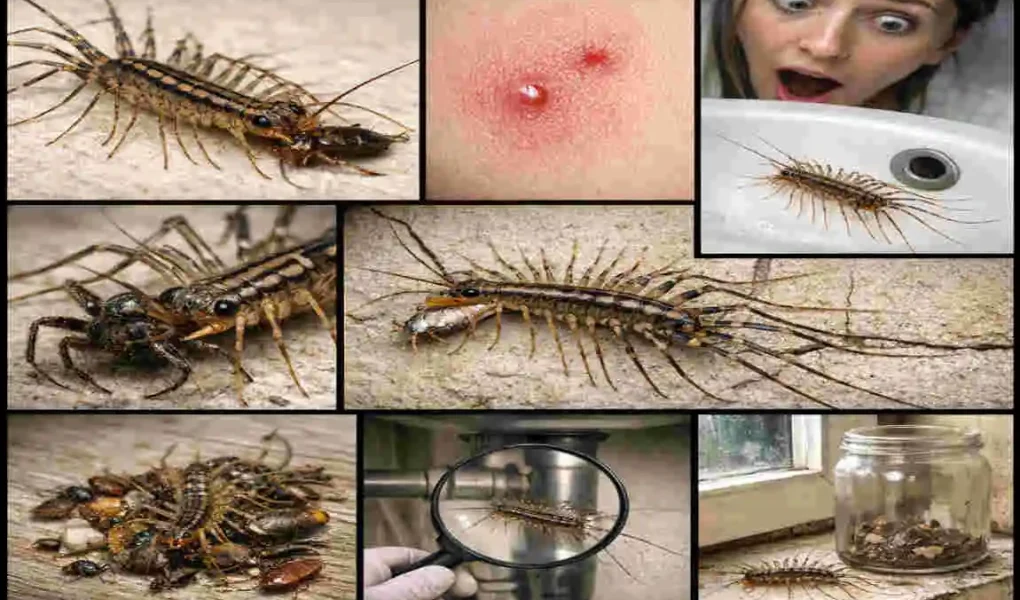
If you’ve had that reaction, you are definitely not alone. House centipedes look like something out of a nightmare. They have long antennae, a thin body, and what seems like an impossible number of legs moving at high speed. They don’t exactly make a great first impression.
These indoor centipedes are not the kind of pest that destroys your home, spreads disease, or actively hunts people or pets. In fact, they spend most of their time hiding from you and hunting the smaller bugs you probably dislike even more. That includes cockroaches, spiders, silverfish, ants, and other household pests.
A typical house centipede is about 1 to 1.5 inches long, though its long legs can make it look bigger. It belongs to a species known for being extremely fast, mostly active at night, and drawn to damp areas like bathrooms, laundry rooms, crawl spaces, and basements.
What Are House Centipedes?
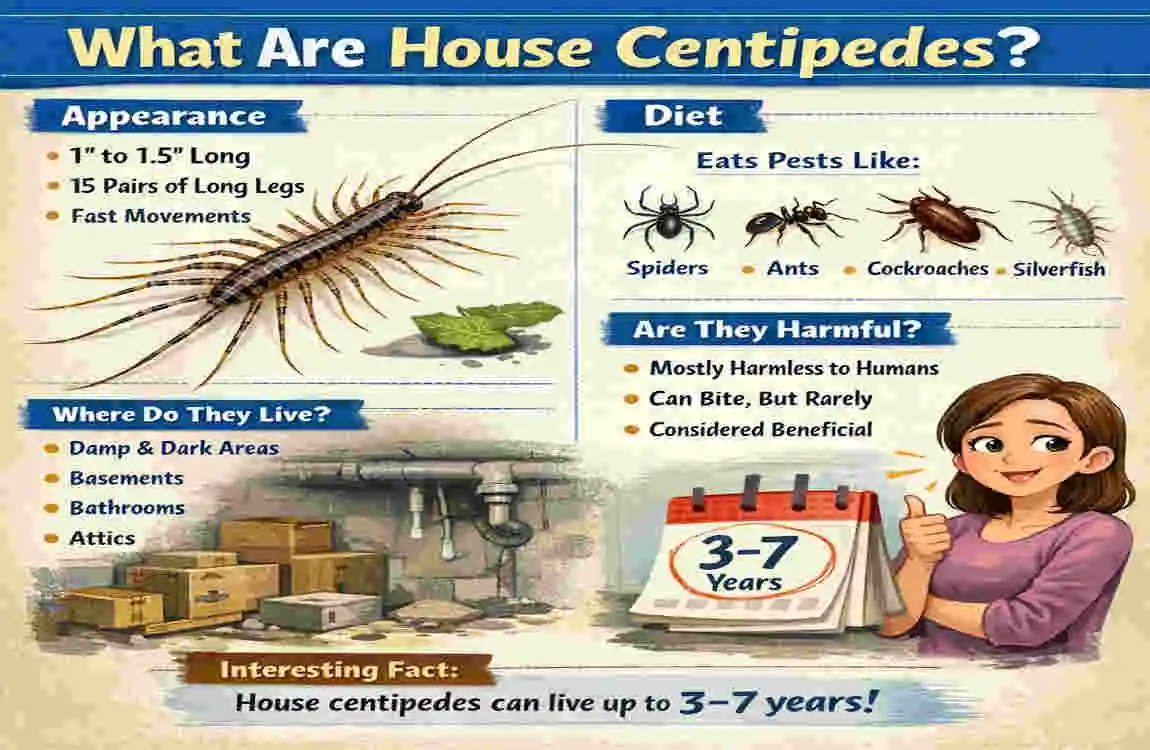
House centipedes are slender, fast-moving predators that live indoors and feed on other small insects. Even though they look dramatic, they are not interested in damaging your furniture, food, or walls.
They are hunters, not destroyers.
How to Recognize One
A house centipede has a yellowish to gray body with darker stripes and very long, delicate legs. Adult house centipedes have 15 pairs of legs, which is why they look so busy when they run.
Their bodies are fairly small, but their legs make them appear much larger. That visual can make them seem more dangerous than they really are.
A few features make them easy to identify:
- Very long legs compared to body size
- Long antennae that help them sense movement
- Fast, darting movement that can seem almost shocking
- Light brown, tan, or gray coloring with striping
- Mostly seen alone, not in large groups
If you spot one in a sink, tub, wall corner, or basement floor, it is likely a house centipede rather than some other type of centipede.
Where House Centipedes Live
House centipedes love moisture, darkness, and quiet hiding places.
That is why they often turn up in places like:
- Basements
- Bathrooms
- Laundry rooms
- Crawl spaces
- Under sinks
- Closets near plumbing
- Garages with damp corners
They also follow food. If your home has silverfish, ants, cockroaches, or other small bugs, house centipedes may move in because your home offers them a ready-made buffet.
In other words, the centipede is often not the first problem. It may be a sign of another pest issue or excess humidity.
Life Cycle and Daily Habits
House centipedes start as eggs and gradually develop into adults over time. They prefer stable indoor spaces where they can find moisture and prey.
They are nocturnal, which means they mostly hunt at night.
During the day, they stay hidden in cracks, behind baseboards, under boxes, or in damp corners. At night, they come out to feed. That is why many people only notice them when a light unexpectedly comes on.
Their behavior is more defensive than aggressive. If they sense motion, they usually run away rather than toward you.
Key traits at a glance:
- Fast movers
- Mostly active at night
- Drawn to damp spaces
- Feed on other bugs
- Prefer hiding over confrontation
Once you understand what they are, they start to feel a little less like monsters and a lot more like awkward little pest hunters.
7 Shocking Facts About House Centipedes
House Centipedes Are Venomous—But Rarely Bite
This is one of the biggest myths people want cleared up.
Yes, house centipedes are venomous. Like other centipedes, they use venom to subdue prey. But that does not mean they are a danger to people.
Their venom is meant for insects and tiny household pests, not for humans.
Why They Rarely Bite
House centipedes are shy. They prefer escape over conflict.
A bite usually happens only if one is trapped, handled, pressed against skin, or seriously threatened. In everyday life, that is uncommon. Most people never experience a house centipede bite.
They are not like mosquitoes that actively seek you out. They are not trying to feed on you, and they do not attack to defend territory.
They simply want to get away.
What a Bite Feels Like
If a bite does happen, it is often described as mild to moderate, similar to a small sting or minor pinprick. Some people feel little more than brief pain and slight redness.
Possible symptoms can include:
- Mild burning or stinging
- Redness
- Small swelling
- Temporary irritation
- Itching for a short time
Symptoms usually fade within a day or two for most healthy adults.
How They Compare to Larger Outdoor Centipedes
This part matters.
When people hear the word centipede, they often imagine large outdoor species with stronger bites. Some outdoor centipedes are more painful and more intimidating than indoor house centipedes.
House centipedes are different.
They are smaller, more delicate, and much less likely to break human skin in any serious way. So while the word “venomous” sounds scary, the real-world risk in a typical home setting is usually low.
The Bottom Line on Bites
If you’ve been asking, are house centipedes bad because they’re venomous? The honest answer is: not really.
They do have venom, but they rarely use it on people. And when they do, the result is usually mild.
That’s a big difference from the fear they create.
They Pose Very Little Danger to Humans or Pets
Many people worry that house centipedes are dangerous to children, dogs, or cats.
That fear makes sense. Anything that moves fast and looks strange tends to trigger an alarm.
But in most cases, house centipedes are not a real health threat.
Are House Centipedes Bad for Your Health?
For the average person, house centipedes are more creepy than harmful.
They do not chew on furniture. They do not contaminate food the way some pests can. They do not build destructive nests in walls. And they are not known for spreading disease around the home.
The main concern is a rare bite or irritation if handled.
What About Pets?
Most pets are more likely to chase or paw at a house centipede than be harmed by it.
If a curious dog or cat tries to play with one, a mild reaction is possible, but serious issues are uncommon. Usually, the bigger problem is your pet’s curiosity—not the centipede itself.
Still, if your pet seems to have swelling, unusual drooling, or clear discomfort after contact with any bug, it’s smart to call your veterinarian.
Allergic Reactions Can Happen, But They’re Uncommon
Like with bee stings or other insect contact, some people may react more strongly than others.
If a person develops:
- Trouble breathing
- Severe swelling
- Dizziness
- Hives
- Worsening pain
They should get medical help right away.
Those reactions are not typical, but it’s always wise to take allergic symptoms seriously.
House Centipede vs. Common Fears
FearReality
Poisonous to kids or pets. Usually causes only mild irritation if any contact happens.
Spreads diseases. There is no strong evidence that house centipedes spread disease in homes
They damage your house . They do not eat wood, fabric, paper, or walls
Will crawl into beds to attack . Very unlikely; they avoid people and prefer hunting small bugs
Means your house is filthy . Not necessarily; it often points to moisture or hidden prey insects
So if you’re still wondering, are house centipedes bad for your family? In most homes, the answer is no.
They are unsettling to look at, but they are not the same kind of threat as roaches, termites, or rodents.
They Hunt Worse Pests in Your Home
This is the fact that changes how many people see them.
House centipedes are actually beneficial predators.
They eat pests you probably do not want around your home. That includes insects and tiny invaders that are far more troublesome than the centipede itself.
What House Centipedes Eat
A house centipede may feed on:
- Cockroaches
- Silverfish
- Spiders
- Ants
- Bed bugs
- Moths
- Termites
- Small flies and similar pests
That means one of these fast little hunters could be quietly reducing a pest problem while you sleep.
They do not just wander around looking weird. They have a job.
Why This Matters to You
If you hate chemical sprays and would rather let nature do some of the work, house centipedes can actually be useful.
They act like free pest control.
Now, that does not mean you want dozens of them running around. But seeing one once in a while may be less alarming when you realize it is probably eating the bugs you never saw.
They Can Be a Sign of Another Issue
Here’s the twist.
If you see a house centipede, it may mean your home has enough prey to support it. In other words, the centipede may be telling you that other bugs are already there.
So instead of focusing only on the centipede, ask:
- Is there excess moisture in the home?
- Are there cracks or openings around doors and windows?
- Could there be silverfish, roaches, or ants nearby?
- Are there dark storage spaces where insects thrive?
The house centipede may be the messenger, not the main problem.
Seeing more than one house centipede every few days? That’s a good time to inspect for moisture issues and hidden pest activity before they become bigger problems.
Why Some Homeowners Leave Them Alone
Not everyone wants to kill a beneficial bug.
Some homeowners prefer to relocate house centipedes, while others simply leave them alone if sightings are rare. That approach makes sense if you are comfortable with them and your main goal is natural pest control.
So, are house centipedes bad or helpful?
In many homes, they are actually one of the better bugs to have around.
They’re Incredibly Fast and Mostly Active at Night
One reason house centipedes feel so alarming is their speed.
They don’t stroll. They sprint.
That sudden movement across a wall or floor can make them seem aggressive. Still, speed is really part of their survival strategy.
Why They Move So Fast
Their many long legs help them stay balanced and agile. That allows them to chase prey, avoid predators, and disappear into tiny cracks before you can react.
This speed is useful in two ways:
- They catch insects quickly
- They escape danger quickly
So when one races out of sight, it isn’t trying to scare you. It’s trying not to get squashed.
Why You Mostly See Them at Night
House centipedes are nocturnal hunters. They wait until the home becomes quiet and dark, then they go looking for prey.
That is why you may spot one when:
- You enter the bathroom late at night
- You turn on a basement light
- You move boxes in a dim storage room
- You check under the sink after dark
During the day, they stay hidden in protected areas where the air is a bit damp, and disturbance is less.
Why Homes Attract Them
House centipedes enter homes for two simple reasons:
- Moisture
- Food
If your home offers both, they may stick around.
This doesn’t mean your home is dirty. It usually means certain conditions are favorable for small insects, and the centipedes have followed that food source.
Their scary speed may be the most dramatic thing about them, but it is not a sign of danger.
House Centipede Bites Usually Look Worse Than They Feel
Let’s talk more directly about the house centipede bite, because this is where a lot of fear comes from.
The good news is that most bites are minor.
What a Typical Bite Looks Like
If a bite happens, the area may show:
- Mild redness
- Slight swelling
- A small raised bump
- Temporary soreness or itching
For many people, it looks worse than it feels. The appearance can make you think something serious happened, but the discomfort is often limited and short-lived.
What You Should Do After a Bite
Basic care is usually enough.
A simple response may include:
- Wash the area with soap and water
- Apply a cold compress or ice pack wrapped in a cloth
- Use an over-the-counter antihistamine if itching develops
- Avoid scratching the area
- Watch for unusual symptoms
Most reactions improve pretty quickly.
When to Worry
You should take a bite more seriously if you notice:
- Severe swelling
- severe pain that keeps getting worse
- Difficulty breathing
- A widespread rash
- Signs of infection, such as pus or heat
Those symptoms are not common, but they deserve attention.
Why the Fear Gets Overblown
Part of the problem is simple psychology.
A bug with many legs seems more threatening than a tiny ant or mosquito, so people assume the bite must be extreme. In reality, house centipedes are not built to take down large animals. Their bite is mainly for soft-bodied prey.
So if you’ve heard stories that make them sound dangerous, it helps to separate appearance from actual harm.
They look dramatic. Their bite usually is not.
They’re Not Truly Invasive—They’re Just Drawn to Damp Spaces
Some people panic after seeing two or three house centipedes and assume the home is under attack.
Usually, that’s not what is happening.
House centipedes are not like termites that invade and steadily destroy a structure. They are opportunists. If the environment suits them, they stay. If it doesn’t, they leave or die off.
Why They Show Up
They are drawn to conditions like:
- High humidity
- Leaky plumbing
- Condensation
- Cluttered storage areas
- Dark corners
- A healthy supply of insects to eat
This is why basements and bathrooms are common places to find them.
Signs You May Have Too Many
House centipedes are often solitary, so heavy activity is less common. But signs of a larger issue may include:
- Frequent nighttime sightings
- Shed skins in hidden areas
- Ongoing moisture problems
- Other insects appear alongside them
In most cases, the real root cause is humidity or another pest infestation.
The Good News
That means control often starts with the environment, not with panic spraying.
If you make your home drier and less bug-friendly, house centipedes usually become much less common. They are there because the conditions work for them—not because they are trying to take over your house.
Prevention Is Usually Better Than Trying to Kill Everyone
When people ask how to get rid of house centipedes, they often imagine sprays, stomping, or immediate extermination.
But the smartest approach is usually prevention.
Why?
Because if your home still has moisture and prey insects, more centipedes may keep showing up even after you remove the ones you see.
Why Prevention Works Better
House centipedes need a few basic things to survive:
- Water or humidity
- Hiding spots
- Small insects to eat
- Entry points into the home
Take those away, and the problem often shrinks on its own.
Focus on the Root Cause
Instead of chasing each centipede one by one, focus on:
- Fixing leaks
- Drying damp spaces
- Sealing wall cracks
- Reducing clutter
- Controlling other pests
This not only reduces house centipedes, but also improves your entire pest-control strategy.
DIY or Professional Help?
If sightings are rare, DIY prevention may be enough.
If sightings are frequent, or if you suspect roaches, termites, or another hidden pest problem, professional help may save you time and frustration.
That’s because the centipedes may be only the visible part of a much larger issue.
If your home has both moisture problems and recurring bug sightings, it may be time to call a pest control professional for a full inspection.
Why You Might Want to Keep House Centipedes Around
This idea surprises many people.
You may actually benefit from having the occasional house centipede in your home.
That doesn’t mean you have to like them. It just means they aren’t always the enemy.
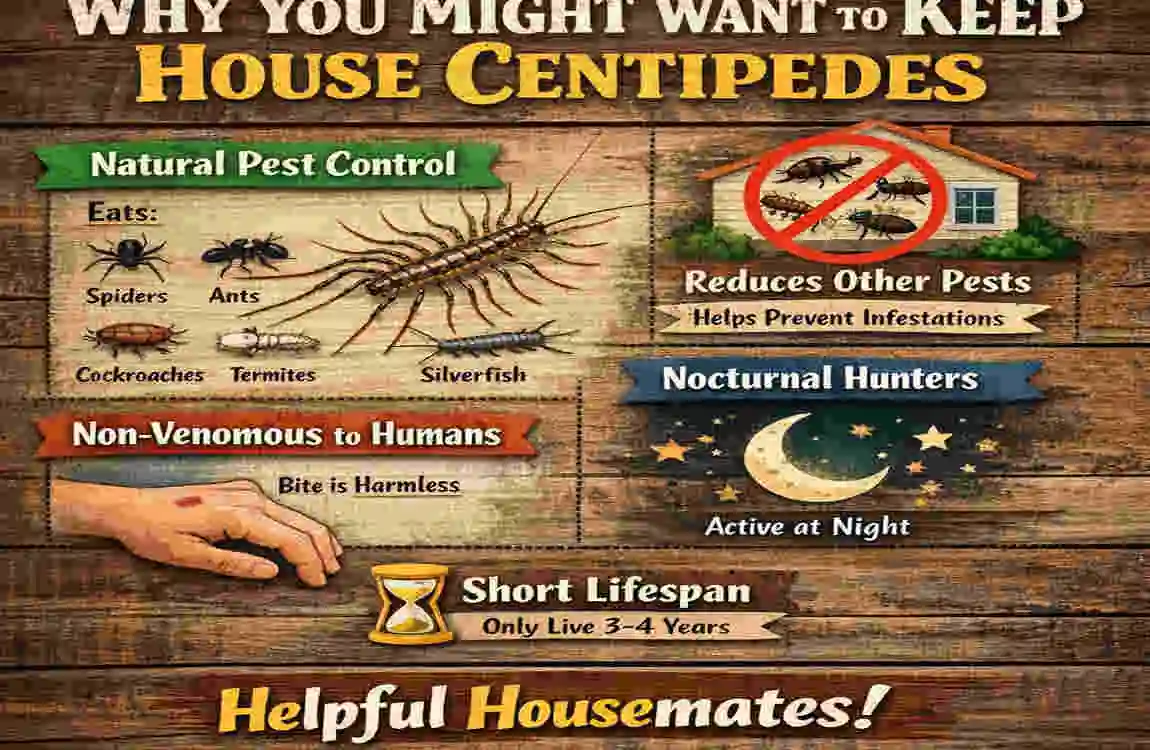
They Are Natural Pest Hunters
House centipedes reduce populations of insects that are more destructive, more annoying, or less sanitary.
A centipede does not chew your pantry items, stain fabrics, or multiply in the same troubling way some pests do. It hunts the bugs that might.
They Reduce the Need for Chemicals
If you are trying to use fewer chemical sprays indoors, house centipedes can help maintain a more natural balance.
Of course, you still want a clean, dry home. But a rare centipede sighting may not be a disaster. It may simply mean nature is doing some quiet cleanup work.
They Usually Keep to Themselves
Unlike some pests that swarm, aggressively nest, or contaminate surfaces, house centipedes are more independent and tend to hide.
They want darkness, prey, and safety. They do not want attention.
It’s Okay If You Still Don’t Want Them
Let’s be honest.
Even after hearing all the benefits, many people still do not want them indoors. That’s understandable. A helpful bug can still be a deeply unwelcome roommate.
But if you’re asking, are house centipedes bad, the balanced answer is this: they are often beneficial, even if they are unsettling to look at.
That’s an important distinction.
How to Safely Remove House Centipedes
If you have decided you don’t want house centipedes indoors, the safest and smartest approach is to remove them without making the problem worse.
Here’s a practical step-by-step plan.
Reduce Moisture First
This is the most important step.
Use a dehumidifier in damp areas. Fix leaky pipes. Improve ventilation in bathrooms and laundry rooms. Dry out basements and crawl spaces as much as possible.
No moisture means a much less welcoming space.
Vacuum the Ones You See
If you spot a house centipede and want it gone immediately, vacuuming is one of the easiest ways to get rid of it.
It’s fast, direct, and avoids the mess of crushing one.
Use Sticky Traps in Problem Areas
Place sticky traps along baseboards, behind toilets, near floor drains, in storage rooms, or in basement corners.
These help monitor activity and show you where movement is happening most.
Seal Cracks and Entry Points
Check for small gaps around:
- Windows
- Doors
- Pipes
- Baseboards
- Foundation cracks
Sealing these spaces helps reduce access for both centipedes and the insects they eat.
Cut Down Their Food Supply
This step matters more than people realize.
If you eliminate silverfish, ants, roaches, or other indoor bugs, house centipedes lose their food source. Once that happens, they are much less likely to stay.
Try Low-Toxicity Options Carefully
Some people use natural products such as diatomaceous earth in dry areas where pests travel. Used correctly, it may help with some crawling insects.
Just make sure any product is used safely, especially around children and pets.
Call a Professional for Larger Problems
If the centipedes keep coming back, the real issue may be hidden moisture, rotting wood, wall void pests, or a more serious insect population.
A professional can inspect the home more thoroughly and help create a long-term plan.
Removal Methods Comparison
Method Effectiveness Cost Eco-Friendly
Vacuuming High for visible centipedes Low Yes
Sticky traps are good for monitoring and reducing activity . Usually, they are low.
Dehumidifying Very high for long-term prevention Medium Yes
Sealing cracks High for prevention Low to Medium Yes
Pesticides Mixed results if root cause remains Medium No
Professional service Highest for full diagnosis and treatment High Varies
The key is simple: don’t just remove the bug—remove the reason it came inside.
FAQs
Are house centipedes bad for my home?
No. House centipedes do not damage wood, clothing, furniture, or walls. They are predators, not destructive pests.
Are house centipedes dangerous?
In most cases, no. They are mostly harmless to humans and pets and are far less dangerous than many of the insects they eat.
What does a house centipede bite feel like?
A house centipede bite is usually mild, often compared to a small sting or irritated pinprick. Redness and slight swelling may happen.
How do I treat a house centipede bite?
Wash the area, use a cold compress, and monitor for unusual symptoms. If swelling becomes severe or breathing problems occur, get medical help right away.
Do house centipedes jump?
No, they do not truly jump. But they move so fast that it can look like they suddenly launch themselves.
Why do I keep finding house centipedes in my bathroom?
Bathrooms often have moisture, darkness, and tiny insects, which makes them attractive to house centipedes.
Should I kill house centipedes or leave them alone?
That depends on your comfort level. If sightings are rare, you may choose to leave them since they hunt pests. If you dislike them, focus on moisture control and prevention rather than just killing the ones you see.
Does one house centipede mean I have an infestation?
Not always. One sighting may simply mean one wandered in. But repeated sightings can point to humidity issues or other bugs in the home.