How to Turn On the Heater in Your House
Home Improvement

How to Turn On the Heater in Your House: Easy Tips for Fast and Safe Home Heating

Winter heating is not just about comfort. It is also about safety, savings, and better daily living. When temperatures drop, many families rely on heaters every night, early in the morning, or during cold spells. If you do not know how to turn on the house heater correctly, you may waste energy, damage the unit, or create a safety risk.

In homes across Lahore and other cooler parts of Pakistan, people often switch on heaters after months of no use. That is when problems most often occur. Dust builds up, filters clog, batteries die, and gas appliances may need a quick check before they are used again. A little preparation can save you from a lot of trouble.

Knowing how to turn on the house heater also helps you stay calm. Instead of guessing, you can follow a simple process and get warm air flowing faster. That means less stress, better sleep, and a more comfortable home for your family.

There is another big benefit too: efficient heating. When a heater starts correctly, it usually runs more smoothly. That can help reduce energy waste and keep your bills more manageable through the season.

Safety First: Pre-Checks Before You Turn On the Heater in House

Before you press a button or turn a dial, take a few minutes to inspect the unit and the room around it. These small checks are the heart of safe home heating. They help you avoid accidents and make the heater work better from the start.

If you want to turn on house heater safely, do not skip this part. A quick check now is much better than a repair later.

 Inspect the heater for visible damage

Look closely at the heater body, vents, cords, and controls. Check for cracks, rust, bent parts, or loose panels. If you see damage, do not force the heater on. A damaged unit can be unsafe, especially if it is a gas model or has exposed electrical parts.

Test smoke and carbon monoxide detectors

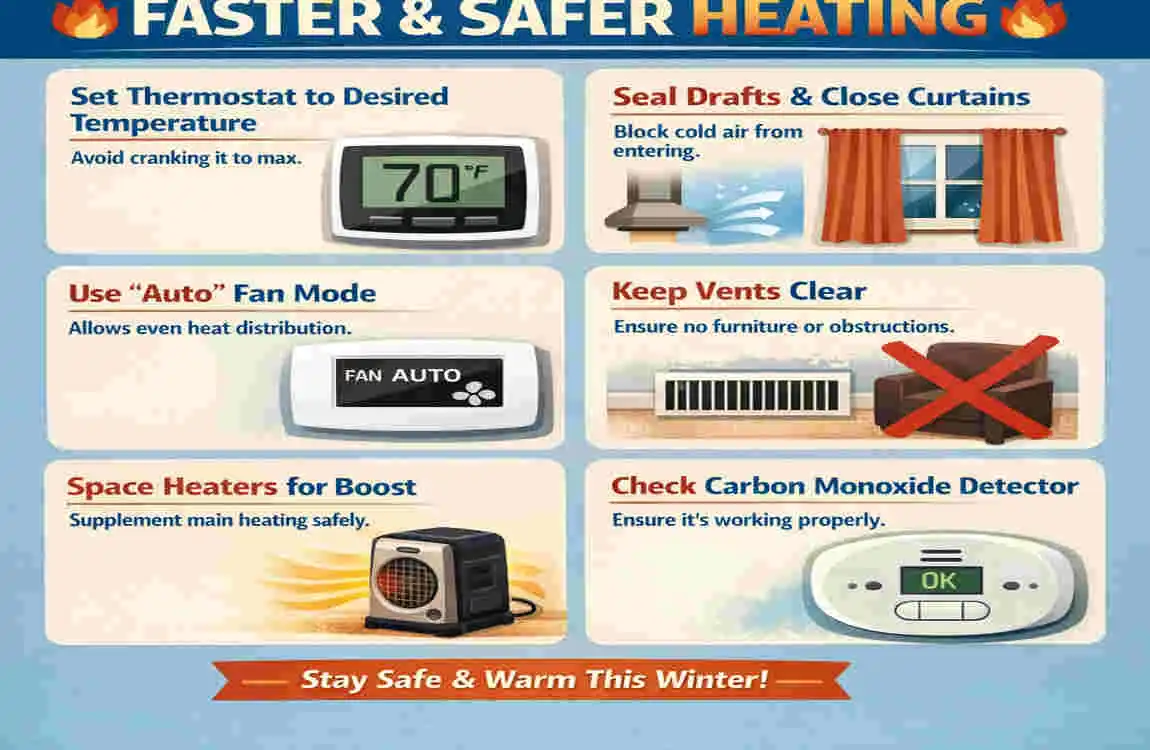
This is one of the most important steps in any heater startup guide. Make sure your smoke detector and carbon monoxide detector are working. Test the buttons, and replace weak batteries if needed. If you do not already have these detectors in your home, it is a smart idea to install them before the season gets colder.

Clear vents, grilles, and filters

Dust and blockage can make a heater struggle. Check the air vents, return grilles, and filters. If they look dirty, clean them before turning on the unit. A vacuum can remove loose dust, and some removable parts can be washed gently with mild soap and water if the manufacturer allows it.

Clean airflow is a big part of turning on the house heater the right way. When air moves freely, the heater warms the room faster and works less hard.

Check fuel or power supply

For gas heaters, confirm that the gas supply is available and that the valve is in the correct position. For electric heaters, make sure the outlet is working and the plug is fully inserted. If your heater uses a fuel tank or propane supply, check the level before starting.

Look at the pilot light or ignition system

Older gas heaters may use a pilot light. Newer systems often use electronic ignition. If your model has a pilot light, check whether it is on before starting. If it is out, follow the manufacturer instructions carefully or call a professional if you are unsure.

Check the thermostat

Sometimes the heater is fine, but the thermostat is not set correctly. Make sure it is not on cool, fan-only, or set too low to trigger heat. A minor setting mistake can make you think the heater is broken when it isn’t.

Inspect electrical outlets and cords

For electric heaters, look at the cord and plug. Do not use a heater with frayed wires, a loose plug, or a damaged outlet. If the unit draws heavy power, it should be plugged into a suitable wall socket, not an overloaded extension board.

Schedule annual service if needed

If your heater has not been checked in a long time, an annual service is a wise step. A technician can clean internal parts, inspect safety components, and spot problems before they grow. This is especially useful before the cold season starts.

Take these pre-checks seriously. They are the easiest way to turn on house heater safely and start the season with confidence.

Step-by-Step Guide: How to Turn On a Gas Heater in Your House

How to Turn On the Heater in Your House

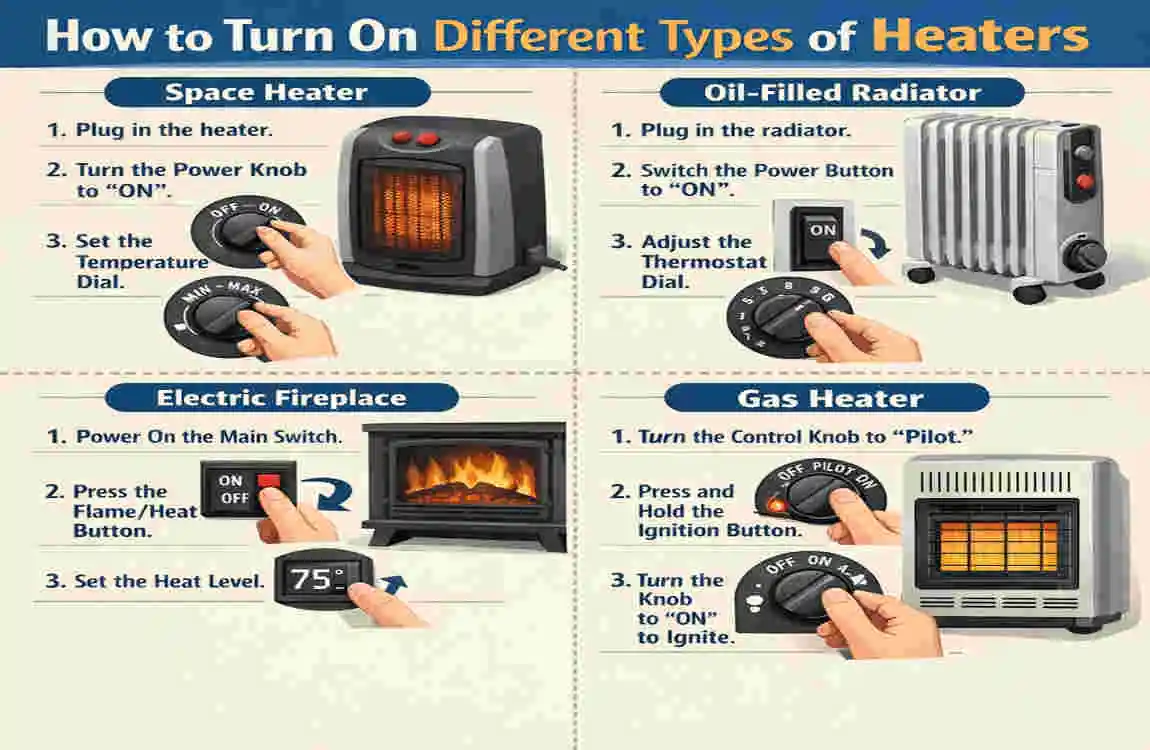
If you are learning how to turn on gas heater in house, take it slow and follow the steps in order. Gas heaters can be very effective, but they must be used with care. Always follow the manual for your exact model, because controls can differ from one unit to another.

Before you begin

Make sure the room is well ventilated, the heater is clean, and there is no gas smell. If you smell gas, stop immediately, leave the area, and call a qualified professional.

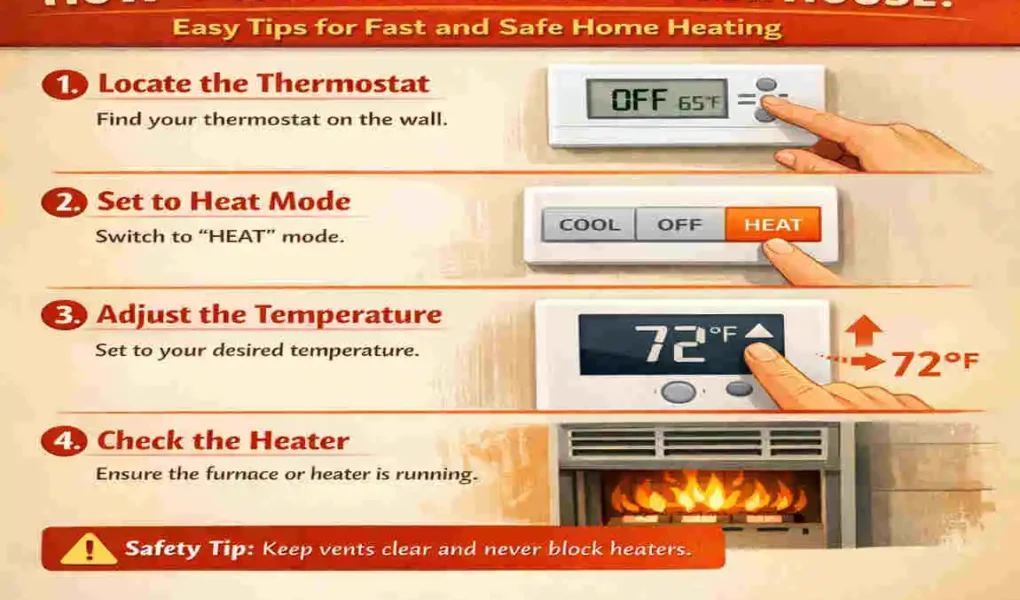
Locate the thermostat and main controls

Find the thermostat, power switch, gas valve, and any control knobs. On some systems, these are on the heater body. On others, the thermostat is mounted on a wall. Before you do anything else, identify each control so you know what it does.

Set the thermostat to “off” for a few minutes

If the heater has been unused for a while, set the thermostat to off for a short time before starting. This can help the system reset and allows air to clear from the line in some models. Do not rush this step.

Check the pilot light or ignition

If your heater has a pilot light, check whether it is lit. A small, steady flame usually means it is working. If the pilot is out, follow the instructions on the unit. Many models have a marked pilot position and an ignition button.

If your heater uses electronic ignition, you may not see a pilot flame at all. That is normal. In that case, the heater will spark or click during startup.

Turn the gas valve to “on”

Once you are sure everything is ready, move the gas valve to the on position. Do this gently and only as instructed by the manufacturer. If the valve feels stuck or unclear, do not force it.

Switch the system to “heat”

Now set the thermostat to heat and raise the temperature slightly above the room temperature. A small increase is enough to trigger the heater. You do not need to set it very high.

Listen for ignition

You may hear a click, a soft whoosh, or the blower starting up. That usually means the system is lighting and beginning to heat. Stay nearby for a moment so you can confirm everything is working normally.

Watch for steady warm airflow

After a few minutes, warm air should begin flowing through the vents or into the room. If the heat feels weak, uneven, or delayed, check the filter, thermostat, and vent openings.

 Check for unusual smells or noises

A light burning-dust smell can happen when a heater starts for the first time in a season. That is often normal for a short time. But strong gas smells, sharp electrical odors, popping sounds, or loud banging are not normal. If you notice those, turn the heater off and inspect it carefully.

Confirm the room warms evenly

Walk around the room and the surrounding area. If one side feels cold and another side feels warm, there may be airflow issues, a clogged filter, or a duct problem. This is one of the most common clues when how to turn on the heater in the house seems to work, but the system still doesn’t feel right.

Troubleshoot if the heater will not start

If the heater does not respond, check the thermostat, gas valve, breaker, and filter again. Sometimes the issue is simple. Sometimes it needs a trained technician.

Common gas heater startup problems

  • No flame or ignition: The pilot may be out or the ignition part may be dirty.
  • Weak heat: The filter may be dirty or airflow may be blocked.
  • Frequent shutdowns: The thermostat may be faulty or the system may be overheating.
  • Odd smell: Dust may be burning off, but a gas smell needs immediate attention.

Learning how to turn on gas heater in house is mostly about patience and safe habits. When in doubt, do not guess. A professional can help you avoid damage and keep your home safe.

Easy Steps to Turn On an Electric Heater in Your House

how to turn on the heater in house

Electric heaters are often simpler than gas systems. They are popular in apartments and smaller homes because they warm up quickly and usually need less setup. Still, you should use them carefully to avoid electrical problems or overheating.

If your goal is to learn how to turn on the house heater with the least complexity, an electric unit is often the easiest place to start.

Place the heater on a flat surface

Before plugging it in, place the heater on a flat, stable surface. Keep it away from curtains, bedding, furniture, and anything that can catch fire. Good spacing matters more than people think.

Check the cord and plug

Look at the power cord for cuts, bends, or exposed wiring. Make sure the plug fits snugly in the wall socket. Never use a damaged cord, and avoid running the cable under rugs or heavy furniture.

Plug the heater directly into the wall

Many electric heaters work best when plugged directly into a wall outlet. This reduces the risk of overheating that can happen with weak extension cords or overloaded power strips. If your heater manual says not to use an extension board, follow that advice.

Set the thermostat or heat level

Most electric heaters have a dial or digital control. Set the temperature to your comfort level. Start with a moderate setting, then adjust if needed. You do not need to max it out right away.

Switch the power on

Turn the power switch to on. Some units also have fan-only, low heat, and high heat options. If you are warming a small room, start on a lower setting.

Choose the fan mode if available

Some heaters let you choose whether the fan runs continuously or only when heating. If your room needs a quick warm-up, fan mode can help spread heat more evenly.

Watch the heater for the first few minutes

Stay nearby after turning it on. Check for unusual sounds, sparks, burning smells, or overheating. Most modern units have auto-shutoff features, but it is still smart to monitor the heater at startup.

Use a timer for better energy control

A timer can help you heat the room only when you need it. This is one of the easiest ways to make electric heater activation steps more efficient. If you use the heater at bedtime or early in the morning, a timer can save energy and keep things more convenient.

Reset the breaker if needed

If the heater does not turn on, check the breaker box in your home. Sometimes the breaker trips because the circuit is overloaded. If that happens often, do not keep resetting it without understanding the cause. A qualified electrician can help you figure it out.

Turn it off before leaving the room

This may sound obvious, but it is important. Electric heaters should not be left running unattended for long periods unless the manual says otherwise and the unit is designed for it. Safety comes first.

Common electric heater issues

  • No power: outlet problem or tripped breaker
  • Unit shuts off quickly: overheating protection may be triggered
  • Weak heat: wrong mode or damaged heating element
  • Noise from fan: dust buildup or a loose part

If you are looking for how to turn on the heater in your house without dealing with gas lines or pilot lights, electric models are often the easiest option. But they still need respect and care.

Activating Central Heating: How to Turn On Your House Furnace

how to turn on the heater in house

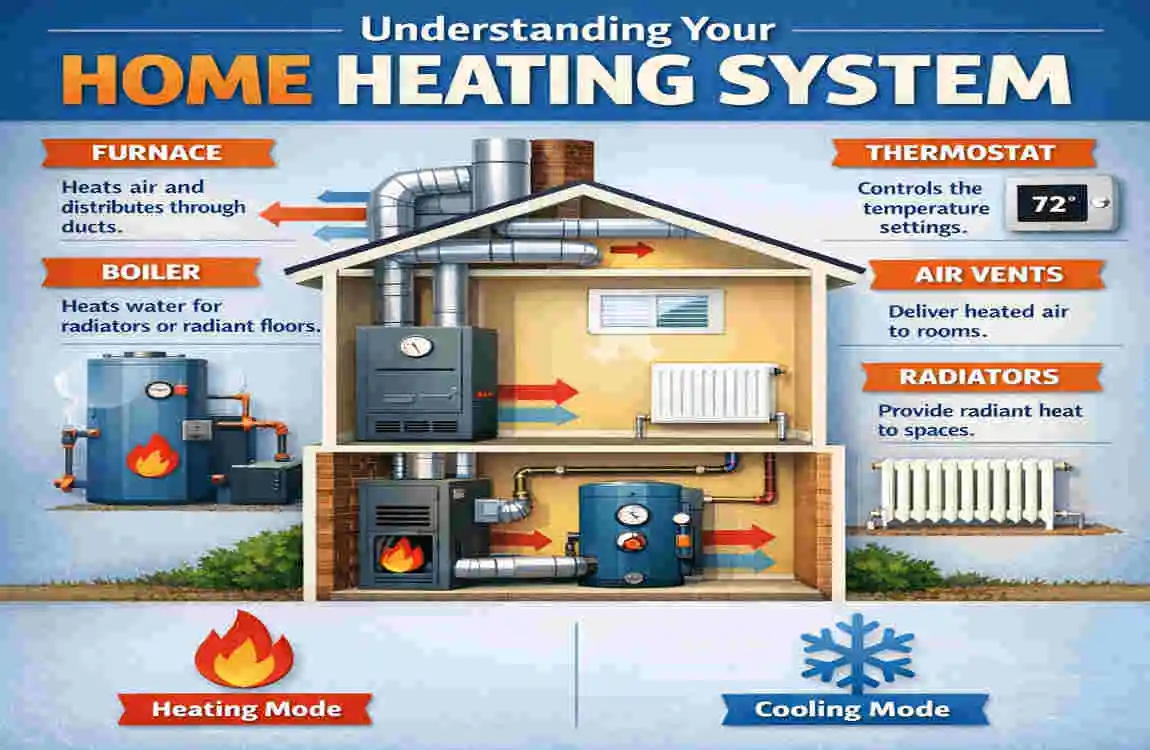
Central heating systems are common in larger homes and villas. They can be very comfortable because they heat multiple rooms at once. The process is a little more detailed, but once you know the basics, it becomes easy to manage.

If you want to learn how to turn on the house heater when the entire home depends on a single system, this section is for you.

 Find the furnace or heating unit

The furnace may be in a utility room, basement, storage area, or another service space. If you are not sure where it is, check the areas where major home systems are usually installed.

Make sure the power switch is on

Most furnaces have a separate power switch nearby. It may look like a regular wall switch. Confirm that it is in the on position.

Check the circuit breaker

If the furnace still does not respond, look at the breaker panel. A tripped breaker can stop the smart system from starting. Reset it only if it has clearly tripped and you know which circuit controls the furnace.

Replace the air filter if needed

A dirty air filter is one of the biggest reasons a furnace struggles. If the filter is clogged, airflow drops and the heater may overheat or shut down. Replace the filter if it looks dusty or old.

Set the thermostat to heat

Set the thermostat to heat and set the temperature slightly above the current room temperature. This tells the furnace to start.

Listen for the startup sequence

A central heating system may click, hum, or begin blowing air after a short delay. Some systems use electronic ignition, while older ones may use a standing pilot. The exact sound depends on the model.

Check the vents in each room

Walk through the house and feel the vents. Warm air should begin coming out gradually. If some rooms stay cold, the issue may be a blocked vent, a dirty filter, or a ductwork balancing problem.

Bleed radiators if you have hydronic heating

If your home uses hot-water radiators instead of forced-air heating, trapped air can prevent heat from circulating properly. Bleeding the radiator may release that air and improve heating. If you are unsure how to do it, a technician can show you the safe method.

Consider a smart thermostat

A smart thermostat can make daily heating easier. It can help you schedule warm-up times, reduce waste, and keep temperatures more steady. For many homeowners, this is one of the best upgrades for comfort and control.

Monitor the first cycle

Stay aware during the first heating cycle of the season. If the furnace stops early, makes unusual sounds, or smells strange, turn it off and inspect the system. A small issue now can become a bigger repair later if ignored.

Helpful furnace reminders

  • Replace filters regularly
  • Keep the area around the unit clear
  • Do not store boxes or cloth near the furnace
  • Schedule service before winter gets intense

Central heating can feel complicated at first, but it becomes easier once you learn the process. After that, turning on the house heater is simply part of your seasonal routine.

Troubleshooting: What If Your Heater Won’t Turn On?

How to Turn On the Heater in Your House

Sometimes everything looks right, but the heater still refuses to start. That can be frustrating, especially on a cold morning. The good news is that many heating problems are simple to diagnose.

If you are stuck and searching for solutions when your house heater won’t turn on, use this quick guide.

Common issues and simple fixes

Issue Possible Cause What You Can Try

No power Tripped breaker or unplugged unit Check breaker, plug, and switch

Weak heat Dirty filter or blocked vent Clean or replace the filter

Strange noise Loose part or fan issue Turn it off and inspect carefully

Gas smell Possible leak Leave the area and call a professional

Heater starts then stops Thermostat issue or overheating Reset thermostat, check airflow

No warm air Wrong mode or low setting Make sure it is on “heat”

Start with the simplest checks

Before assuming the heater is broken, check the basics:

  • Is the unit plugged in?
  • Is the breaker on?
  • Is the thermostat on heat?
  • Is the filter clean?
  • Is the gas valve open?
  • Is the room temperature set correctly?

These quick checks solve many problems.

Watch for warning signs

Some problems should never be ignored. If you notice a gas smell, burning wires, smoke, repeated breaker trips, or loud banging sounds, turn off the heater and stop using it. Safety always comes before comfort.

When to call a professional

Call a qualified technician if:

  • the heater still will not start after basic checks
  • the pilot light will not stay lit
  • the system keeps shutting off
  • you hear grinding, rattling, or popping
  • the electrical outlet or breaker keeps failing
  • you suspect a gas leak

This is where many people get stuck when learning how to turn on the house heater. The truth is, not every problem should be solved at home. Some issues need expert help, and that is okay.

Pro Tips for Efficient and Safe Home Heating All Winter

how to turn on the heater in house

Once you know how to turn on the heater in house, the next step is learning how to use it wisely. A few smart habits can make your home warmer, your system safer, and your energy use more manageable.

Heat only the rooms you use

If you spend most of your time in one or two rooms, focus your heating on those rooms. Close doors to unused spaces when possible. This helps the heater work where it matters most.

Seal common drafts

Cold air often enters through gaps around windows, doors, and vents. You do not always need expensive materials. Simple weather stripping, door sweeps, or draft blockers can make a big difference.

Keep the thermostat steady

Constantly changing the temperature can make your heater work harder than needed. A steady, comfortable setting is often better than turning the system up and down all day.

Use blankets and layers too

A heater should support your comfort, not do all the work on its own. Thick blankets, curtains, socks, and layered clothing can help you stay warm without raising the heat too much.

Clean your heater regularly

Dust buildup can affect airflow and create strange smells. Wipe the outside of the unit, clean filters on schedule, and keep the surrounding area clear.

Use the timer or schedule feature

If your heater has a timer, use it. Warm the room before you wake up or return home, rather than running the smart system all day.

Lower the temperature when sleeping or away

Even a small thermostat change can reduce energy use over time. Lowering the heat at night or while you are out is a simple habit that often pays off.

Keep a seasonal maintenance routine

Here is a simple maintenance plan you can follow:

Time What to Do

Monthly Check filters, vents, cords, and thermostat

Start of winter Test detectors, inspect heater, clean dust

Mid-season Watch for odd noises, weak airflow, or smell

End of season Clean unit, switch off safely, schedule service if needed

Good winter habits make it easier to turn on the heater in the house every year. They also help your equipment last longer.

How to Turn On the Heater in House FAQ

How long does it take to turn on a house heater safely?

Most heaters start within a few minutes to around 15 minutes, depending on the type. Electric heaters are usually fastest, while central systems can take longer. Safety checks should always come first.

Is gas or electric heating better for homes in Pakistan?

It depends on your home and your usage. Electric heaters are simple and quick to use in smaller rooms. Gas heaters can be good for larger spaces, but they require greater safety precautions. The best choice depends on your room size, budget, and power availability.

What should I do if I have not used the heater all summer?

Do a full pre-check before turning it on. Clean dust, inspect cords or lines, test detectors, and make sure the thermostat is set correctly. This is the safest way to restart a heater after a long break.

Can I leave the heater on overnight?

Some heaters are designed for longer use, but you should always check the manual. Even when a heater is safe to use for long periods, it should still be placed away from bedding, curtains, and other flammable items.

Why does my heater smell strange when I turn it on?

A light dusty smell can happen at the beginning of the season. That is often normal for a short time. But if you smell gas, burning plastic, or strong electrical odor, turn it off and check the unit immediately.

What is the easiest way to learn how to turn on the heater in house?

Start with your specific heater type. Read the manual, do the safety checks, and follow the startup steps slowly. Once you do it a few times, it usually becomes routine.

Why does my heater blow cold air first?

Many systems run a short fan cycle before warm air starts moving. That does not always mean something is wrong. If it keeps blowing cold air for too long, check the thermostat, filter, and heating mode.

You may also like...

Leave a Reply

Your email address will not be published. Required fields are marked *