Have you ever heard a gurgling sound from a sink after flushing the toilet? Or maybe you noticed a bad smell coming from the bathroom even though everything looked clean? Many homeowners deal with these problems and assume the drain is just a little slow or partially blocked.
In many cases, the real cause is not the drain itself. It is the venting system behind the scenes. That is where VTR in plumbing comes in.
So, what does VTR stand for in home plumbing? The short answer is Vent Through Roof. It is one of the most important parts of a home plumbing vent system, even though most people never think about it until a problem starts.
A VTR is a pipe that carries air and sewer gases safely out of the house through the roof. You may not see it often, but your drains depend on it every single day. Without it, water may drain slowly, traps may lose their water seal, and unpleasant odors can enter your living spaces.
| Issue | Cause | Fix |
|---|---|---|
| Slow Drains | Blocked or undersized VTR | Clean vent stack; upgrade pipe |
| Sewer Odors | Dry P-trap from poor venting | Pour water in trap; inspect VTR |
| Gurgling Noises | Pressure imbalance | Check roof vent for obstructions |
What Does VTR Stand for in Home Plumbing?
VTR means Vent Through Roof
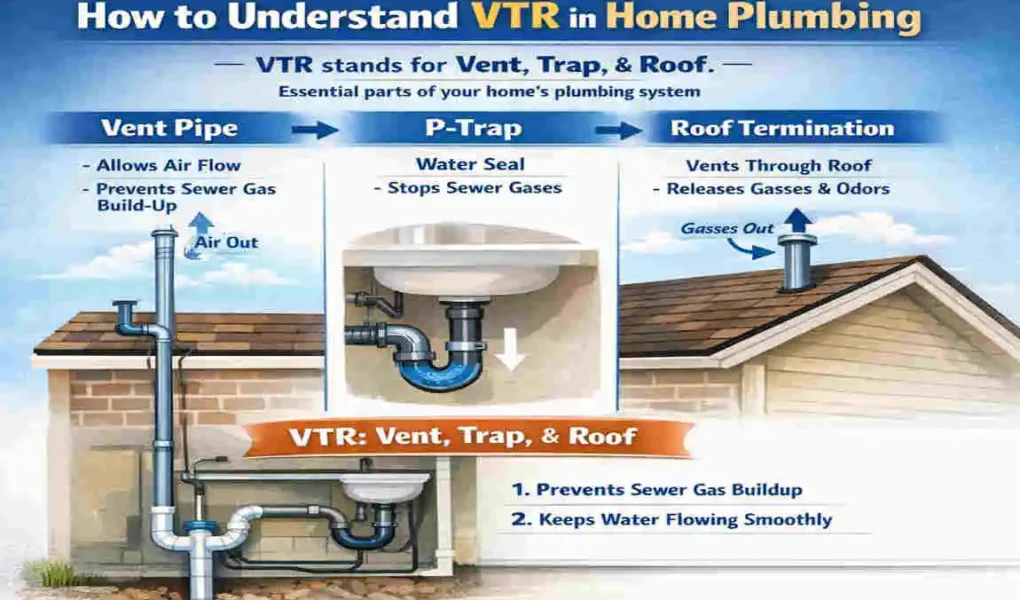
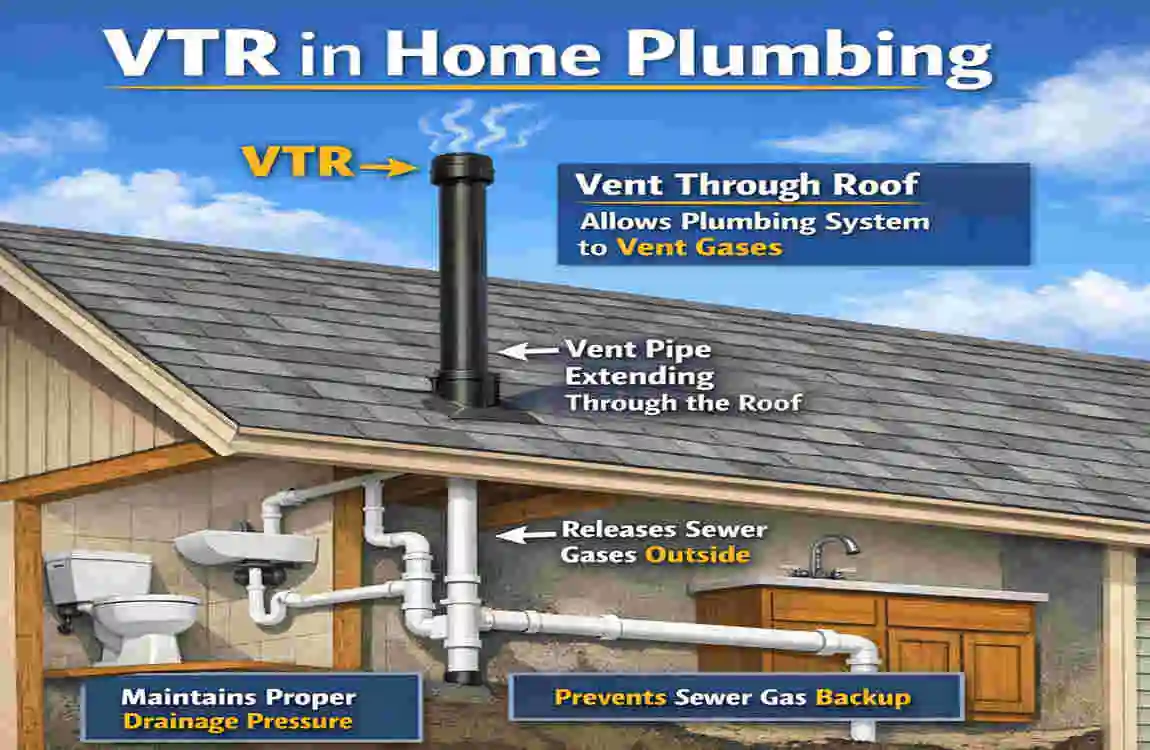
In plumbing, VTR stands for Vent Through Roof. Sometimes you may also see it written as Vent-Thru-Roof or plumbing vent through roof. All of these terms refer to the same idea: a vent pipe that rises from the drainage system and exits through the roof.
This pipe is not there to carry water like a supply line. It is there to let air move in and let bad gases move out. That is the whole job, but it is very important.
If you are searching for what does vtr stand for in home plumbing, this is the answer you need to remember: VTR = Vent Through Roof.
Why the term can be confusing
The letters VTR can mean other things outside plumbing. For example, many people may think of Video Tape Recorder first. That is why the term can feel confusing at the beginning.
But in a plumbing context, VTR has a very specific meaning. It always refers to the sanitary vent pipe that passes through the roof. It is part of the drainage and venting system, not a TV gadget, not a water line, and not a heating vent.
What VTR is not
Many homeowners mistake the VTR for something else. It is helpful to know what it is not:
- Not a water supply pipe
- It does not bring fresh water into the home.
- Not a trap
- The trap is the curved pipe under your sink or floor drain.
- Not a chimney or HVAC vent
- It may look similar from a distance, but it serves a different purpose.
A simple way to think about it
The easiest way to understand it is to think of the VTR like a chimney for plumbing gases. A chimney sends smoke out of a house. A VTR vents sewer gases from the plumbing system.
You can also think of it like the breathing tube of the drainage system. It helps the system “breathe” so water can move smoothly.
In many countries, including Pakistan, India, and parts of the Middle East, proper venting is a serious part of plumbing design. Terrace homes, flat roofs, and service shafts make the VTR especially common in these buildings. Local building rules may also require specific vent sizes and roof placements for compliance.
Where Is the VTR Located in a House?
The basic location
A VTR is usually a vertical pipe that starts in the drainage system inside the house and rises until it passes through the roof slab or terrace. In many homes, it is made of PVC or cast iron, depending on the age of the building and plumbing style.
You may find it near:
- the soil stack
- the waste stack
- a service shaft
- a bathroom wall
- a utility corner
- the roof terrace
It usually rises above the roof level by a small amount so it can vent safely into the open air.
How it is usually arranged
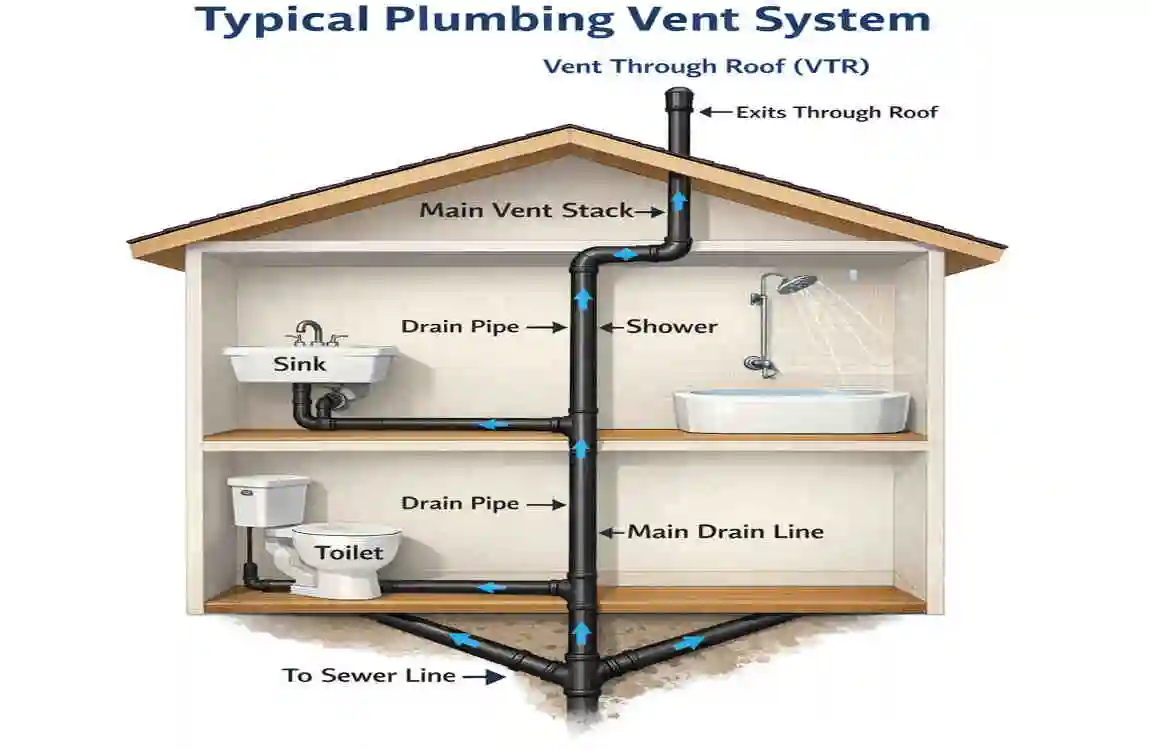
Here is a simple way to picture its path:
- It starts at the main drainage line under the house.
- It connects with horizontal branch lines from bathrooms and kitchens.
- It rises vertically through walls or a service chase.
- It passes through the roof slab or terrace.
- It ends with a proper weather-protected opening above the roof.
Common rooftop positions
On the roof, the VTR may be seen:
- near a roof corner
- close to a parapet wall
- beside a service duct
- near other plumbing pipes, but not mixed with rainwater pipes
The important thing is that the opening should stay clear and open. Homeowners should never block or cover the VTR opening. If you do, you may trap sewer gas in the system, causing drainage problems inside the house.
A practical visual clue
If you stand on the roof and see a pipe sticking out of the slab, usually with a small open end, that may be the VTR. It is often easy to overlook because it is not a decorative part of the house. Still, it has a very important job.
How Does a VTR Work in Home Plumbing?
Why drains need air
To understand how a VTR works, you first need to understand what happens when water moves through pipes.
When water flows down a drain, it does not move alone. It pushes air ahead of it and also creates a vacuum-like pull behind it. This pressure change can cause problems if the system lacks a proper air path.
Without venting, the drain line may struggle to move water smoothly. The result can be:
- slow drainage
- gurgling sounds
- trap seal loss
- sewer odors inside the house
That is why the home plumbing vent system is so important.
The two main jobs of a VTR
The VTR has two major functions:
Pressure equalization
A VTR allows air to enter the drainage system. This balances pressure so water can flow freely. When pressure is stable, the drain works smoothly and quietly.
This helps prevent:
- bubbling in sinks
- gurgling toilets
- water backing up into fixtures
- suction that pulls water out of traps
A good vent system makes the whole plumbing system feel calmer and more reliable.
Gas venting
The VTR also carries sewer gases away from the house. These gases can include methane and Hydrogen’s sulfide, which smell bad and can be harmful in high concentration.
The pipe lets those gases rise above the roof and escape into the open air, where they are diluted safely.
That is why the VTR is often described as a breathing pipe for the plumbing system.
The role of P-traps
Under sinks, showers, and floor drains, you will usually find a P-trap. This U-shaped pipe holds a small amount of water. That water acts as a barrier, blocking sewer gas from entering the room.
The trap is only effective if the water stays inside it.
If venting is poor, the suction from draining water can pull water out of the trap. Once that water seal is lost, bad smells can come through the drain.
So, the VTR helps protect the trap seal. It keeps the water in the trap where it belongs.
A simple analogy
Think about drinking through a straw. If you cover the top completely, the liquid can behave oddly. But if there is a little air movement, the drink flows more smoothly.
That is similar to plumbing. The air supplied by the VTR helps water move without fighting against pressure changes.
Why it matters in daily life
You may never think about this pipe when everything is working well. That is exactly how it should be. A good VTR is silent, hidden, and easy to ignore. But when it fails, the whole drainage system can start acting up.
That is why understanding VTR in home plumbing is so useful. It helps you recognize a problem before it turns into a bigger repair.
Why Is VTR Important in Home Plumbing?

The main benefits
A properly installed VTR supports the plumbing system in several important ways. The table below gives a quick overview.
BenefitWhy It Matters
Smooth drainage Helps water move freely and reduces slow draining fixtures
Odor control Keeps sewer gases from entering living spaces
Health and safety Lowers exposure to unpleasant and potentially harmful gases
Less pipe stress Reduces pressure changes that can affect joints and seals
Code compliance Helps the home meet plumbing and inspection rules
Smooth drainage makes daily life easier
No one enjoys a sink that takes forever to empty. A properly working vent makes drainage smoother and more predictable.
When the system is vented well, water leaves the fixture in a steady flow. You do not hear that annoying glugging sound. You do not need to wait for the water to clear. Everything feels normal.
Odor control protects the home
Bad smells are one of the most obvious signs of a plumbing problem. Sewer gas should never be part of your indoor air.
The VTR helps send those gases out through the roof instead of letting them build up in bathrooms, kitchens, or utility areas. That is a huge reason why the plumbing vent through roof is so important.
Health and comfort
Beyond the smell, sewer gases can also create an unhealthy indoor environment. A good vent system helps lower that risk.
Even if the gas concentration is low, no one wants their home to smell like wastewater. Your home should feel clean, safe, and comfortable. A working VTR supports that.
Long-term protection for the plumbing
Venting also helps reduce stress on the plumbing system. Pipes, joints, and seals last longer when pressure is balanced. That means fewer surprises later and fewer repairs caused by repeated strain.
What can happen without a proper VTR
If a home does not have correct venting, or if the VTR becomes blocked, you may notice:
- bad smells from drains
- gurgling sounds
- slow draining sinks
- toilets that behave oddly
- water seal loss in traps
- recurring plumbing complaints
Over time, this can also lead to wall moisture, corrosion, and more expensive repair work.
For property owners, poor venting can even create problems with inspections, occupancy approvals, or resale value. That is why this hidden pipe matters more than most people realize.
VTR vs. Other Plumbing Vents
VTR is one type of vent, not the only one
It is important to know that VTR is a major part of the venting system, but it is not the only type of vent used in plumbing.
Some homes also use:
- AAV / Studor vent
- loop vent
- wet vent
Each one has a different use, depending on the building design and local code.
Comparing VTR and AAV
Here is a simple comparison table.
FeatureVTR (Vent Through Roof)AAV / Studor Vent
Installation Passes through the roof slab Installed inside walls or under fixtures
Visibility Visible on the roof Hidden inside the building
Maintenance Can be inspected from the roof Needs mechanical inspection
Reliability Very high when installed properly Depends on a mechanical valve
Code acceptance Widely preferred in many homes Allowed only where codes permit
Why VTR is often preferred
In many residential buildings, VTR remains the preferred solution because it is simple and reliable. It does not rely on a moving part. Once installed correctly, it can work for years with very little trouble.
It also releases gases higher above the building, which helps keep odors away from windows, balconies, and outdoor living areas.
When other vents are used
Sometimes a builder cannot run a pipe all the way to the roof because of structural limitations or renovation constraints. In those cases, other vent types may be considered.
Still, in many homes, especially larger houses or multi-story properties, a single Vent Through Roof plumbing line can serve several bathrooms and fixtures. That makes it a central part of the whole system.
Practical takeaway
If someone asks you about VTR meaning in plumbing, you can say it is the main roof-level vent pipe that helps the drainage system breathe. Other vents may exist, but VTR is often the backbone of the system.
Common VTR-Related Problems in Homes
Signs that something is wrong
A blocked or faulty VTR often shows its problems through everyday symptoms. These can be easy to miss at first, but they become more obvious over time.
Watch for these signs:
- gurgling sounds from sinks or toilets
- slow drainage even when no full clog is visible
- sewer-like odors in bathrooms or kitchens
- bubbling water in toilet bowls or floor drains
- smell near the roof opening or terrace
These signs do not always mean the VTR is the only issue, but they are strong clues that venting should be checked.
Physical causes of VTR problems
The pipe itself can also develop issues. Some of the most common ones are:
- bird nests or debris blocking the opening
- leaves, plastic, or construction material entering the pipe
- cracks in the pipe
- loose joints or separated fittings
- roof flashing problems causing leaks
- pipe size or layout mistakes during construction
How remodeling can create trouble
Sometimes people make changes during renovation without understanding the vent system. For example, someone may hide a vent pipe behind a false ceiling, shorten it incorrectly, or reroute it, thereby weakening the entire drainage system.
These changes can cause serious problems later. A vent pipe is not just a spare pipe that can be moved anywhere. It is part of a balanced system.
A simple self-check list
If you suspect trouble, ask yourself:
- Can I see the VTR pipe on the roof?
- Is the opening free of plastic, cloth, or debris?
- Are there any cracks on the pipe?
- Is there water staining around the vent base?
- Do drains gurgle more than they should?
If the answer to any of these is yes, the system may need attention.
Why the problems should not be ignored
A blocked vent may seem minor at first. You might think it is just a strange noise or a temporary odor. But over time, the issue can grow.
What starts as a nuisance can become a repeat drain problem, a ceiling leak, or a foul smell that never goes away. That is why early inspection matters.
How to Inspect and Maintain a VTR
Why maintenance is worth doing
A VTR does not need constant care, but it does need basic preventive maintenance. The good news is that the maintenance is usually simple.
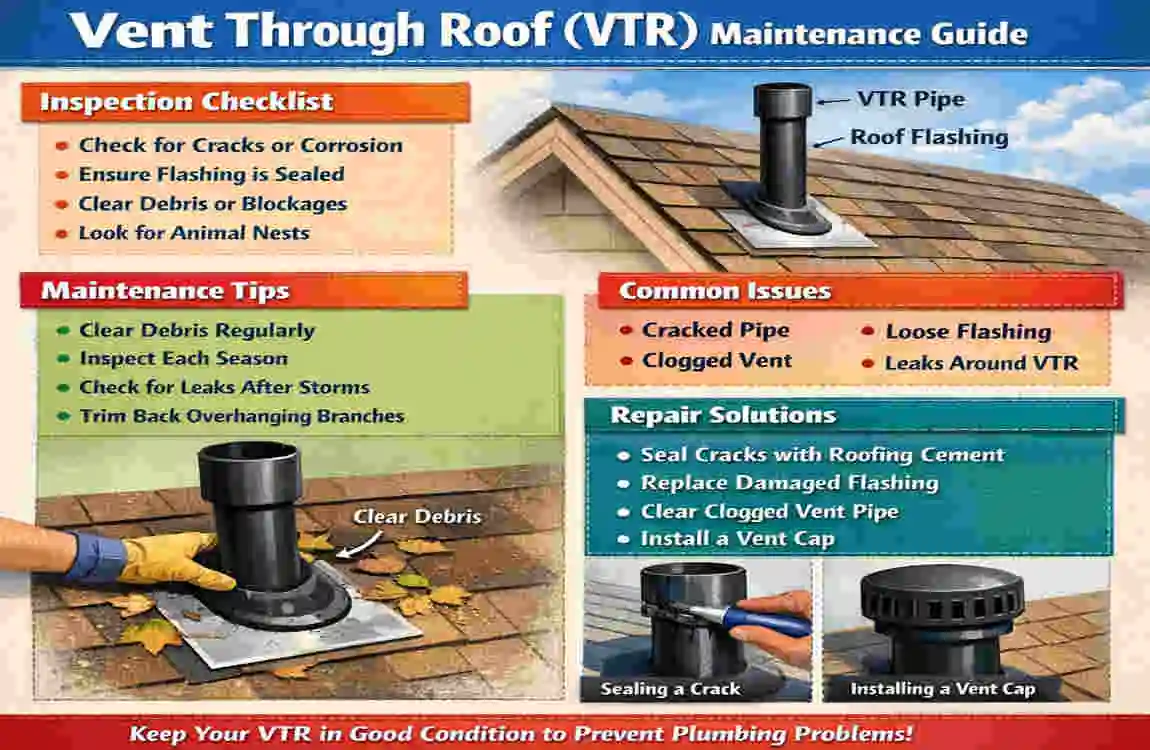
A quick visual inspection every 3 to 6 months is a smart habit, especially after heavy rain, strong winds, or during the monsoon season.
What to look for
During inspection, check for:
- debris in the roof opening
- nesting material
- cracks in the vent pipe
- loose pipe joints
- signs of leakage around the base
- damp patches on the roof slab or nearby ceiling
A simple roof inspection routine
If it is safe to access the roof, follow these steps:
- Access the roof carefully, wearing proper footwear and maintaining safety awareness.
- Locate the VTR pipe and its roof sleeve or flashing.
- Use a flashlight to look into the opening.
- Remove visible leaves or light debris with a long stick or similar tool.
- Check the surrounding roof for water stains or dampness.
- If you see damage, stop using DIY methods and call a plumber.
Safety always comes first
Roof work can be risky. Never go up if the roof is wet, slippery, or unstable. Do not work alone on a high building without proper safety precautions.
If the property is multi-story or the vent is hard to reach, it is much safer to hire a professional than to guess.
When deeper maintenance is needed
Sometimes the issue is not visible from the roof. In those cases, a plumber may use tools such as a CCTV drain camera to inspect the vent and the connected lines.
Annual drainage inspections are a wise choice for larger homes, apartment buildings, or properties with repeated odor complaints.
Good maintenance habits
You do not need to overcomplicate this. The goal is simple: keep the opening clear, keep the pipe intact, and deal with problems early.
That small amount of attention can prevent a lot of stress later.
DIY vs. Hiring a Plumber for VTR Work
What homeowners can safely do
There are a few tasks that a careful homeowner can handle without special tools.
You can:
- visually inspect the VTR from the roof
- remove light debris like leaves or twigs
- notice and report smells or gurgling early
- take photos of cracks or leaks for a plumber
These are simple and useful actions.
What should be left to professionals
Some jobs need proper plumbing knowledge and experience. A licensed plumber or a qualified contractor should do these:
- cutting or replacing the VTR pipe
- changing the pipe route
- extending the vent line
- repairing roof flashing and waterproofing
- modifying the soil stack connection
- fixing internal branch vent lines
Why professional work matters
A wrong repair can create bigger problems than the original issue. If the vent system is altered incorrectly, you may lose code compliance, create odors, or even cause drainage failure in several fixtures at once.
That is why VTR work should be handled carefully.
What to ask a plumber
When hiring help, choose someone who understands terrace-level homes, high-rise buildings, and local plumbing conditions. That matters a lot in regions where roof access and slab layouts are common.
You can ask:
- What is causing the vent problem?
- Is the VTR blocked, damaged, or incorrectly sized?
- Will the repair comply with local plumbing regulations?
- Can you show me photos of the work before and after?
These questions help you stay informed and avoid guesswork.
A practical rule
If the task is about looking, you may be able to do it yourself. If the task is about cutting, replacing, sealing, or rerouting, hire a professional.
Building Design and Code Tips Around VTR

VTR planning starts before construction ends
The best time to think about the VTR is during design and construction. A good layout makes future plumbing much easier.
Builders, architects, and renovators should think about where the vent will go before the roof slab is finished.
Important design points
Some key planning points include:
- keeping the VTR away from windows and balconies
- making sure the opening is not too close to air-intake points
- placing it where it can be accessed later
- leaving room for future inspection and repair
- ensuring proper pipe diameter and length
Why size and placement matter
If the vent pipe is too narrow, too long, or badly routed, it may not vent properly. That can lead to slow drainage or pressure problems.
Proper design improves the performance of the entire home plumbing vent system. It also helps the building pass inspection and reduces future headaches.
Roof height considerations
Many codes require the vent to rise a certain amount above the finished roof level. The exact number varies by local rules, but the idea is always the same: the opening must stay safely above the roof surface so gases can escape properly.
Good access is part of good design
A vent pipe should not be hidden in a way that makes future maintenance difficult. If the roof is hard to reach or the pipe is boxed in, even a small repair can become expensive.
That is why smart design always thinks one step ahead.
Work with the right experts
If you are building or renovating, it is wise to consult a plumbing engineer, civil engineer, or an experienced plumber who understands local standards. That small step can save money and trouble later.
Practical Tips for Homeowners
Keep these habits in mind
To protect your plumbing system, remember these simple points:
- inspect the roof vent from time to time
- keep the opening free of debris
- call a plumber if the house smells like sewer gas
- do not block or shorten the vent
- treat gurgling drains as an early warning sign
The top warning signs of a blocked VTR
If you want a quick summary, these are the top 3 signs to watch for:
- Gurgling drains
- Bad smells inside the house
- Slow drainage without a clear clog
If all three occur simultaneously, the vent system should be checked promptly.
What to ask your plumber
Before work begins, ask:
- Is the VTR blocked or damaged?
- Is the pipe size correct?
- Is the roof opening sealed properly?
- Will the repair follow local plumbing codes?
FAQ: What Does VTR Stand for in Home Plumbing?
Q: What does VTR stand for in home plumbing?
A: VTR means Vent Through Roof.
Q: What does a VTR do?
A: It lets air enter the drain system and sends sewer gases out through the roof.
Q: Why is VTR important?
A: It helps prevent gurgling drains, bad smells, and slow drainage.
Q: Can I cover the VTR pipe on the roof?
A: No. It must stay open and clear to work properly.
Q: What if the VTR is blocked?
A: You may notice foul odors, bubbling drains, or flushing problems. A plumber should inspect it.