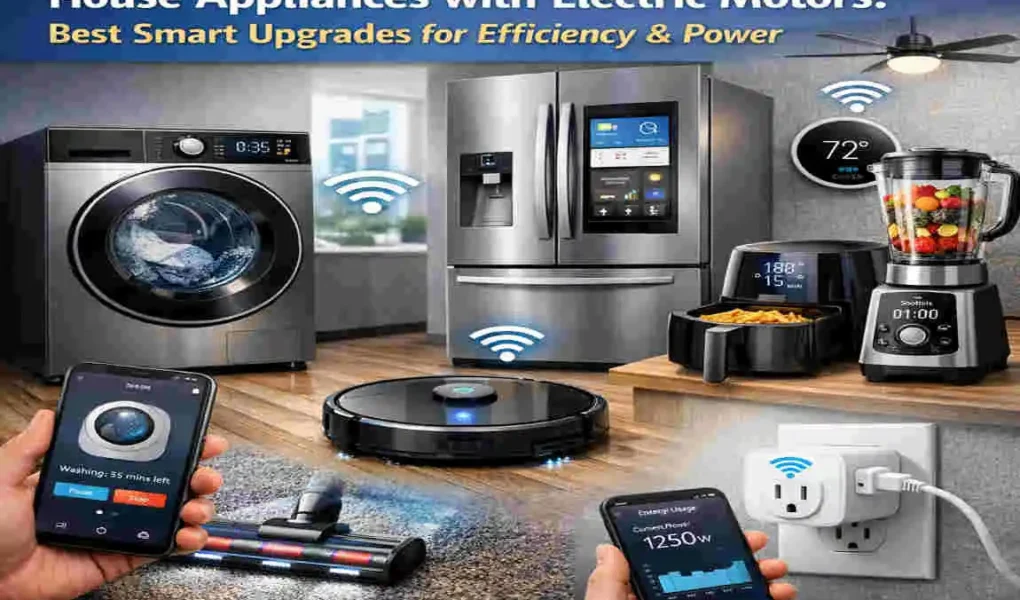
Have you ever stopped to listen to the hum of your home? From the gentle whir of the refrigerator in the kitchen to the powerful spin of the washing machine in the laundry room, your house is alive with motion. But what exactly is driving all that activity? The answer lies in household appliances with electric motors.
Believe it or not, electric motors are the unsung heroes of modern living. They account for roughly 60% of the energy used by your household appliances. Whether it’s the suction in your vacuum or the cooling fan in your oven, these motors are working overtime to make your life easier. However, there is a catch. If you are using older models, those motors might be “energy vampires,” sucking up more electricity than necessary and driving up your monthly bills.
The Heart of the Machine: Core Components of Electric Motors
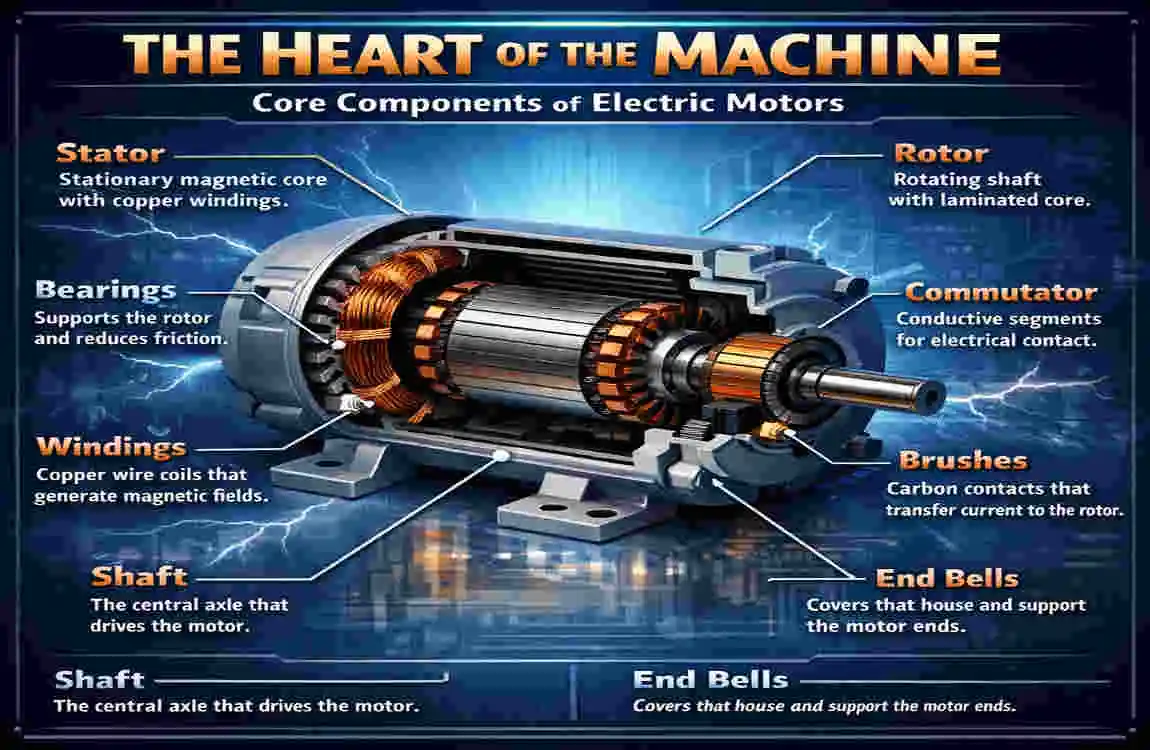
Before we talk about the latest smart gadgets, let’s take a second to understand what’s happening under the hood. You don’t need a degree in engineering to get the basics. Most household appliances with electric motors rely on a few key parts that work together to convert electrical energy into mechanical motion.
The Stator: The Stationary Powerhouse
Think of the stator as the foundation. It’s the part of the motor that stays still. Its main job is to create a magnetic field. When electricity flows through the stator’s coils, it generates a magnetic force that pushes against the moving parts. In high-end smart appliances, the stator is often designed to handle variable speeds, allowing the appliance to run only as fast as needed.
The Rotor: Where the Action Happens
If the stator is the foundation, the rotor is the athlete. This is the part that actually spins. In a blender, the rotor might spin at a staggering 10,000 RPM to crush ice into a smoothie. A washing machine provides the heavy-duty torque needed to tumble wet towels. Modern energy-efficient appliance motors use precision rotors to reduce vibration, which makes your machines run smoother and last longer.
Brushes vs. Brushless Technology
In older motors, “brushes” were used to deliver electricity to the spinning rotor. The problem? Brushes create friction, heat, and noise. They eventually wear out.
This is where smart electric motors shine. Most top-tier upgrades now use Brushless DC (BLDC) motors. These motors use electronic commutation instead of mechanical brushes to control power. They are incredibly efficient—often exceeding 90%—and much quieter. If you want an appliance that lasts a decade without a motor failure, brushless is the way to go.
Bearings: The Silent Supporters
Bearings are small metal rings that allow the rotor to spin with as little friction as possible. When you hear a “screeching” sound from an old dryer, it’s usually the bearings crying for help. High-quality bearings in modern appliances ensure quieter operation and prevent overheating.
Quick Look: Motor Components and Smart Benefits
Component Function in Appliances Smart Upgrade Benefit
The stator generates the magnetic field , enabling variable speed control for energy savings
A rotor converts energy into rotation. Provides higher torque for heavy-duty tasks
Bearings reduce friction during spin , ensuring whisper-quiet operation and longevity
Controller manages power flow , allows for IoT connectivity, and app-based monitoring
Common Household Appliances with Electric Motors
You might be surprised at just how many things in your home rely on a motor. Let’s look at the heavy hitters and see how they use power to get the job done.
Washing Machines: The Torque Kings
The washing machine is perhaps the most motor-dependent tool you own. Most standard washers use induction motors (usually between 400W and 800W). These motors need to be incredibly strong to spin a drum full of heavy, wet clothes.
When you upgrade to a smart washer, you’re often getting a Direct Drive motor. Instead of using a belt to turn the drum, the motor is attached directly to it. This reduces the number of moving parts, meaning less can go wrong and the machine operates with much higher efficiency.
Refrigerators: The 24/7 Workers
Your fridge is the only appliance that never takes a nap. Inside, a motor drives the compressor, which moves refrigerant through the coils to keep your milk cold.
Older fridges use “on/off” motors. They blast at full power until the fridge is cold, then shut off. This constant starting and stopping wastes a ton of energy. Modern kitchen appliances with electric motors now use Inverter Compressors. These motors stay on at a very low, consistent speed, adjusting only slightly when you open the door. This keeps your food at a more stable temperature and slashes your electric bill.
Vacuum Cleaners: Suction and Speed
Vacuums rely on universal motors to create high-speed suction. These motors are designed to spin very fast to pull dirt out of your carpet. However, they are traditionally very loud and inefficient.
The latest “stick” vacuums use digital pulse motors. These are tiny, lightweight, and spin at speeds that would make a jet engine jealous. Because they are so efficient, cordless vacuums can deliver incredible suction power without dying after five minutes of use.
Dishwashers: The Multi-Taskers
A dishwasher actually uses two different types of motors. One drives the pump that sprays water onto your dishes, and the other handles the drainage. Smart dishwashers use sensors to tell the motor exactly how much water pressure is needed based on how dirty your plates are. This “smart sensing” prevents the motor from working harder than necessary.
Why Should You Upgrade to Smart Versions?
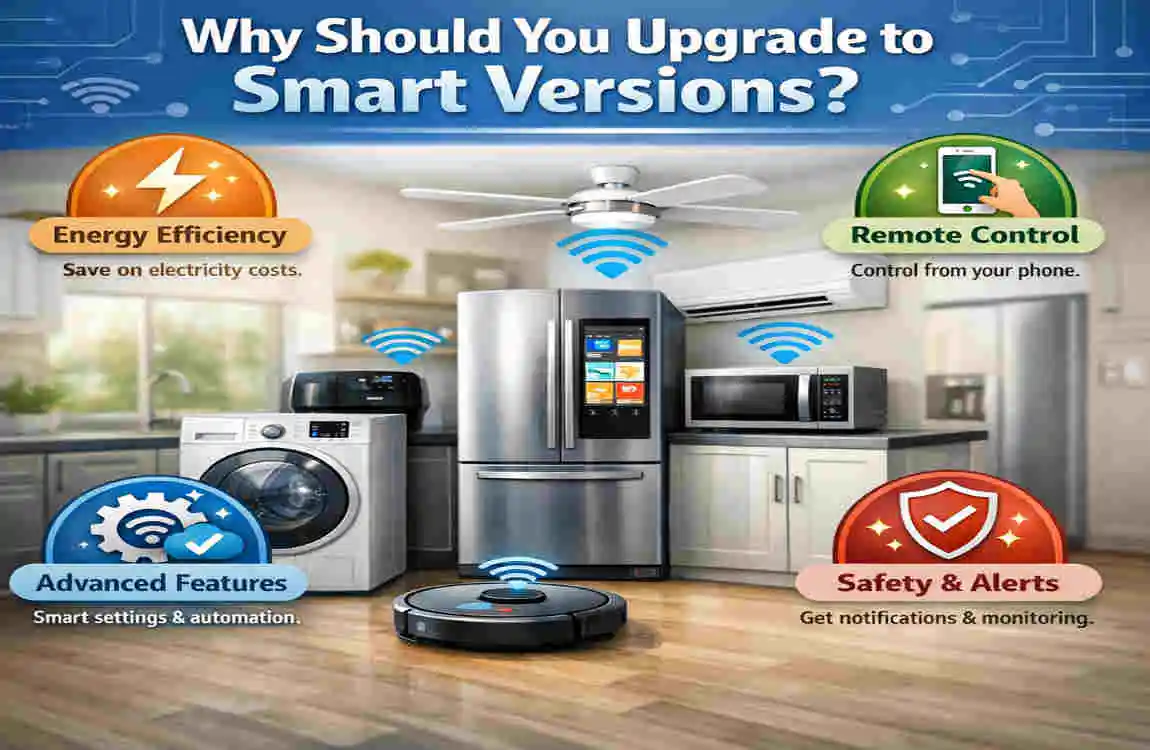
You might be thinking, “My old washer still works, so why should I spend money on a new one?” It’s a fair question. But the shift toward smart house appliances with electric motors isn’t just about fancy touchscreens—it’s about the tech inside the motor itself.
Massive Energy Savings
The biggest reason to upgrade is the inverter technology. By allowing the motor to run at variable speeds, smart appliances avoid the “power spikes” that occur when a motor is turned on and off. This can lead to a 30% reduction in energy use for things like air conditioners and refrigerators. Over two or three years, the savings on your utility bill can actually cover the price difference for the upgrade.
Predictive Maintenance and IoT
Imagine if your dryer sent a text to your phone saying, “Hey, my motor bearings are getting hot. You should check the lint filter before I break.” That is the power of IoT (Internet of Things) integration. Smart motors are equipped with sensors that monitor heat, vibration, and power draw. By catching small issues early, you avoid the $400 repair bill that comes when a motor completely burns out.
Increased Power and Performance
Smart motors aren’t just “smarter”—they are stronger. Many modern motors use rare-earth magnets. These magnets allow the motor to produce about 20% more torque (turning power) while being smaller. This means your blender can handle tougher frozen fruit, and your power tools can cut through denser wood without bogging down.
Best Smart Upgrades by Appliance: Our Top Picks
If you’re ready to make the switch, where should you start? We’ve analyzed the market to find the best house appliances with electric motors that offer the best “bang for your buck” in terms of efficiency and smart features.
Smart Washing Machines
When it comes to laundry, the Samsung AddWash series is a standout. It features a Brushless DC (BLDC) motor that Samsung claims provides a 25% to 30% efficiency gain over traditional models.
Another great option is the LG Inverter Direct Drive. This machine uses AI to “feel” the weight and softness of your fabric. It then adjusts the motor’s motion to deliver the best cleaning with the least wear and tear on your clothes.
Model Motor Type Key Benefit Estimated Price
Samsung AddWash BLDC 30% Energy Savings $850 – $1,100
LG Inverter AI Direct Drive Fabric Protection $750 – $950
Bosch 800 Series EcoSilence Ultra-Quiet Operation $900 – $1,200
High-Efficiency Refrigerators
For the kitchen, the Whirlpool Smart Compressor fridges are hard to beat. They use adaptive cooling technology. Instead of the motor just being “on” or “off,” it scales its power up and down in tiny increments. This results in 90% motor efficiency, which is almost unheard of in older appliances. Plus, you can use an app to get diagnostics if the cooling ever dips.
The Gold Standard of Vacuums
If you want to see what a high-tech motor looks like, look at the Dyson V15 Detect. It uses a “Hyperdymium” motor that spins at up to 125,000 RPM. It’s small enough to fit in the palm of your hand but creates suction powerful enough to pull microscopic dust out of deep floorboards. It’s a prime example of how smart electric motors are getting smaller and more powerful at the same time.
Dishwashers and Blenders
Don’t overlook the smaller motors. The Bosch 800 Series dishwasher uses “Eco Pump” technology. These motors are so quiet that the company had to add a light on the floor so you could tell the machine was actually running!
In the blender world, the Vitamix Explorian series uses smart speed sensors. If the motor senses that the blades are hitting a “tough spot” (like a big chunk of frozen kale), it automatically boosts the power to maintain a consistent speed.
Efficiency & Power Optimization Tips
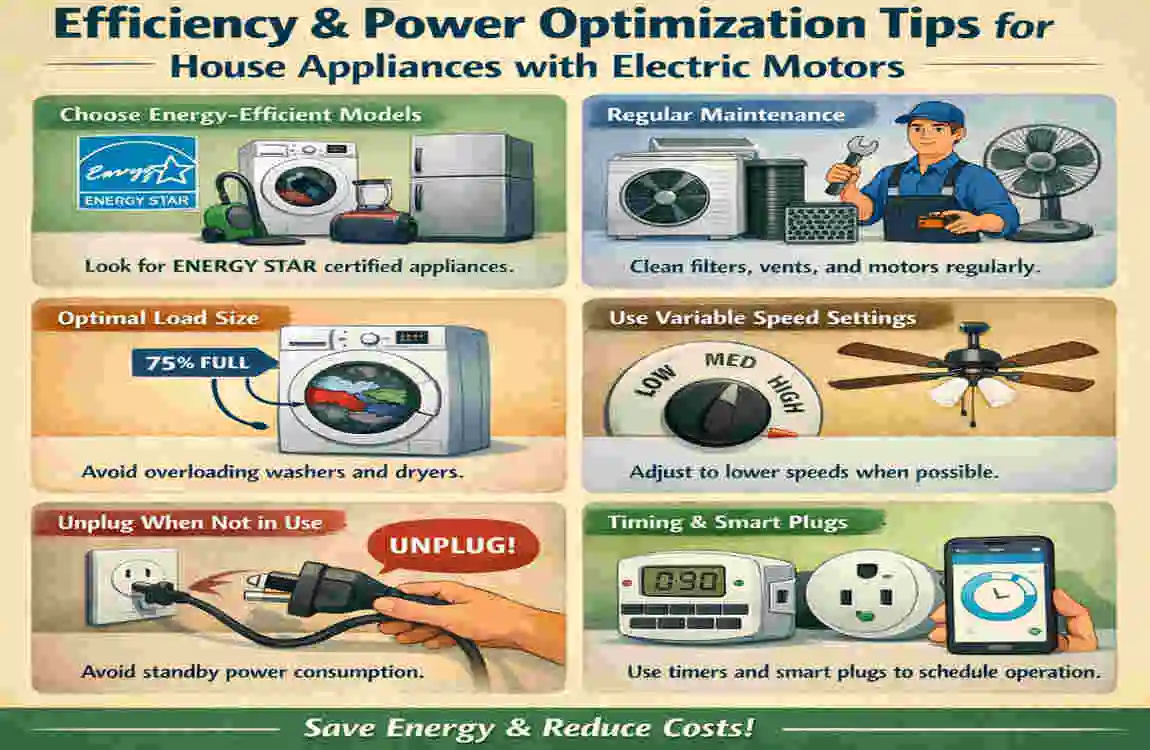
Even if you aren’t ready to buy a brand-new appliance today, there are things you can do to make your current household appliances with electric motors run better. Here is how you can optimize your home for maximum power and minimum waste.
The 90% Efficiency Rule
When you go shopping, look for appliances that are EU Ecodesign-compliant or have a high Energy Star rating. You want motors that operate at 90% or higher efficiency. Anything less is simply wasting electricity as heat.
Don’t Skip Maintenance
Motors hate two things: Heat and Friction.
- Clean your fridge coils: If they’re dusty, the motor has to work twice as hard to dump heat, which shortens its lifespan.
- Check vacuum filters: A clogged filter makes the motor spin faster and run hotter to maintain suction.
- Level your washer: If your washing machine isn’t level, the motor has to fight against gravity and vibration, which wears out the bearings.
Use Smart Plugs for Monitoring
If you have an older appliance and want to know if it’s “dying,” plug it into a smart plug (like a TP-Link Kasa). These plugs have energy monitoring features. If you notice your fridge motor suddenly using 20% more power than it did last month, it’s a sign the motor is struggling and might need repair.
Calculate Your ROI
Before you balk at a $1,000 price tag for a smart washer, do the math. If a new energy-efficient appliance motor saves you $50 a year in electricity and $20 a year in water, and it lasts 10 years, that’s $700 back in your pocket. Suddenly, that “expensive” upgrade looks like a very smart investment.
Market Trends: What’s Next for Home Motors?
The world of household appliances with electric motors is moving fast. Experts predict the market for these motors will hit $15 billion by 2025. So, what should you look out for in the next few years?
- Miniaturization: Motors are getting smaller without losing power. This means more room inside your fridge for groceries and more room in your washer for clothes.
- Embedded AI: Future motors won’t just be “smart”; they will be “learning.” Your dishwasher motor will learn that you usually do a heavy load on Sundays and will pre-configure itself for maximum torque.
- Sustainability: We are seeing a move away from rare-earth magnets toward “ferrite” magnets and other sustainable materials to make motors more eco-friendly from the factory to your home.
By 2030, it’s estimated that 80% of all household appliances will feature some form of smart motor technology. Getting ahead of the curve now ensures your home is future-proof.
Frequently Asked Questions (FAQ)
What are the most common household appliances with electric motors?
The most common ones are washing machines, refrigerators, vacuum cleaners, dishwashers, and air conditioners. Smaller appliances like blenders, fans, and food processors also rely heavily on electric motors.
How do smart upgrades actually save energy?
Smart upgrades use inverter technology and Variable Frequency Drives (VFD). This allows the motor to adjust its speed to match the task. Instead of running at 100% power all the time, it might only run at 20% power for light tasks, saving a significant amount of electricity.
Which motor type is best for power and longevity?
Brushless DC (BLDC) motors are generally considered the best. Because they don’t have physical brushes rubbing together, they produce less heat and friction. This makes them more powerful, more efficient, and much longer-lasting than traditional motors.
Are smart appliances harder to repair?
While the electronics can be more complex, the motors themselves are often more reliable. Many smart appliances also feature self-diagnostics, which can tell a technician exactly what is wrong, often saving you money on “diagnostic hours” during a service call.
Is it worth upgrading if my current appliance still works?
It depends on the age. If your appliance is over 10 years old, a new smart model could pay for itself in energy savings within 3 to 5 years. If your appliance is relatively new, you might want to wait, but keep an eye on its energy consumption using a smart plug.