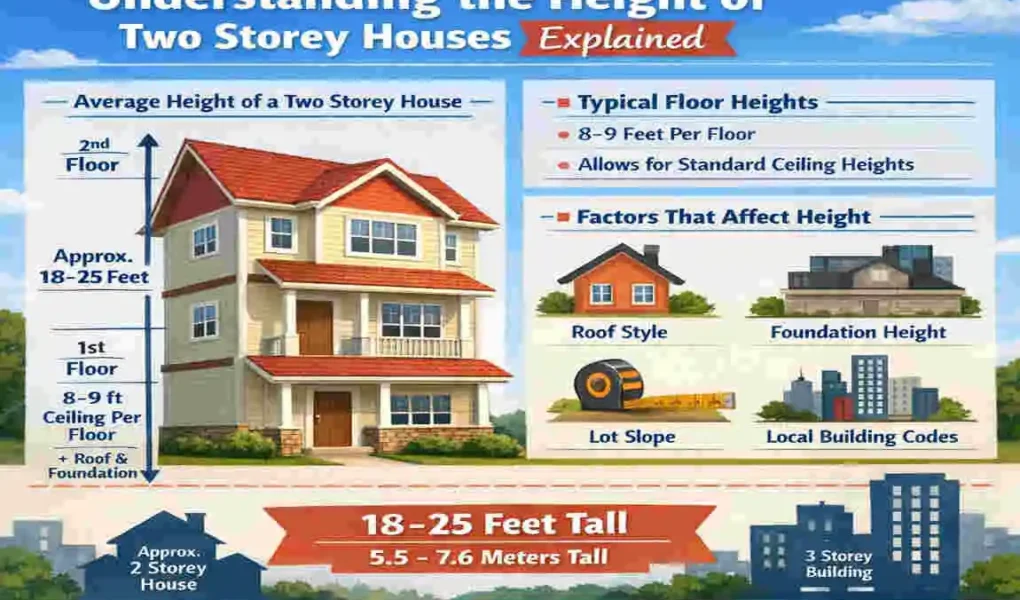
Understanding how high a two-story house is helps homeowners, builders, and buyers make smarter decisions. The overall height influences design choices, costs, energy use, and even resale value. In most cases, a two‑storey home measures between 18 – 25 feet (5.5 – 7.6 m), but ceiling heights, floor structures, and roof styles can shift that number.
| Feature | Typical Measurement |
|---|---|
| Total house height | 18–25 feet |
| Total height in meters | 5.5–7.6 meters |
| Ground-floor ceiling height | 8–9 feet |
| First-floor ceiling height | 8–9 feet |
| Roof height | Varies by roof design |
| Flat-roof house | Often shorter overall |
| Pitched-roof house | Usually taller at the highest point |
| Main factors affecting height | Ceiling height, floor structure, roof design, and foundation |
| How to measure | From the relevant ground level to the roof’s highest point |
What Is the Typical Height of a Two‑Storey House?
Defining a Two‑Storey Home
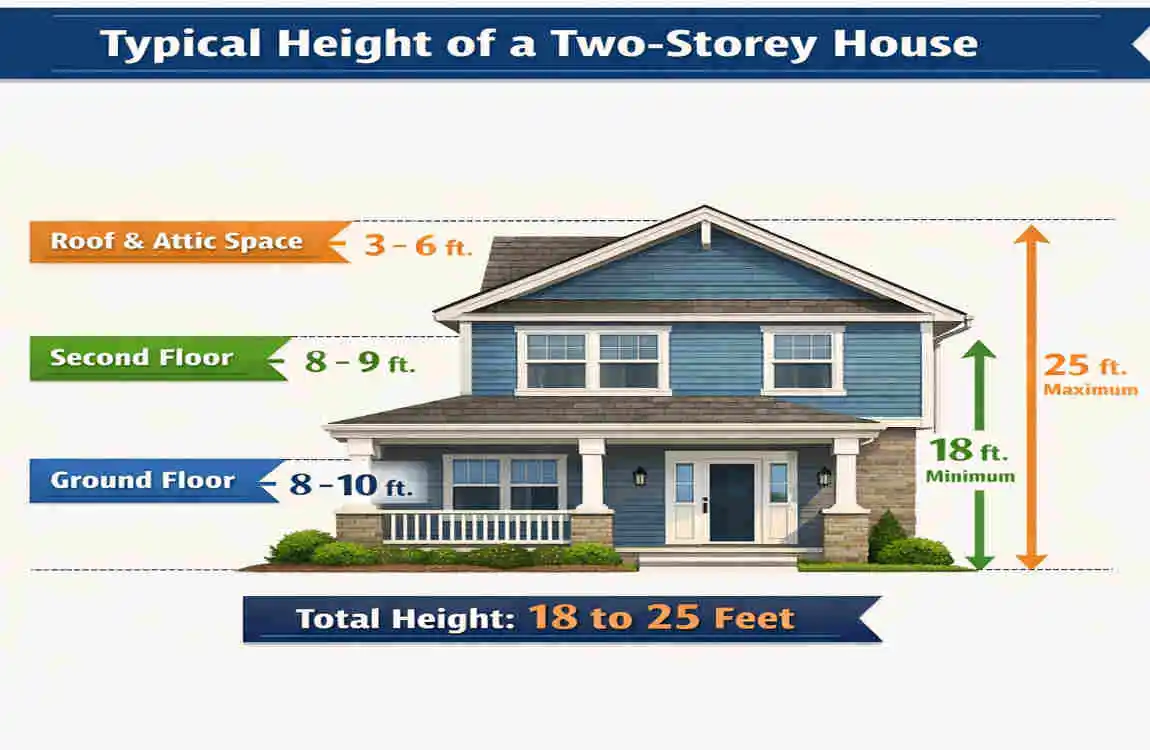
A two‑storey house has two full levels above the ground floor. Each level is counted as a “story,” regardless of the attic or basement.
Typical Height Range
Most modern homes fall in the 18‑25 feet (5.5‑7.6 m) band. The exact figure depends on ceiling height and the roof style the designer chooses.
Ceiling Height vs. Total Height
- Ceiling height – the distance from the floor to the interior ceiling.
- Total building height – measured from the ground to the highest point of the roof.
These two measurements differ; a house with tall ceilings will naturally be taller overall.
Influence of Standards & Style
Building codes, regional traditions, and architectural trends all shape the final height. For instance, classic colonial homes often feature slightly higher ceilings than minimalist modern designs.
What Factors Affect the Height of a Two‑Storey House?
Ceiling Height
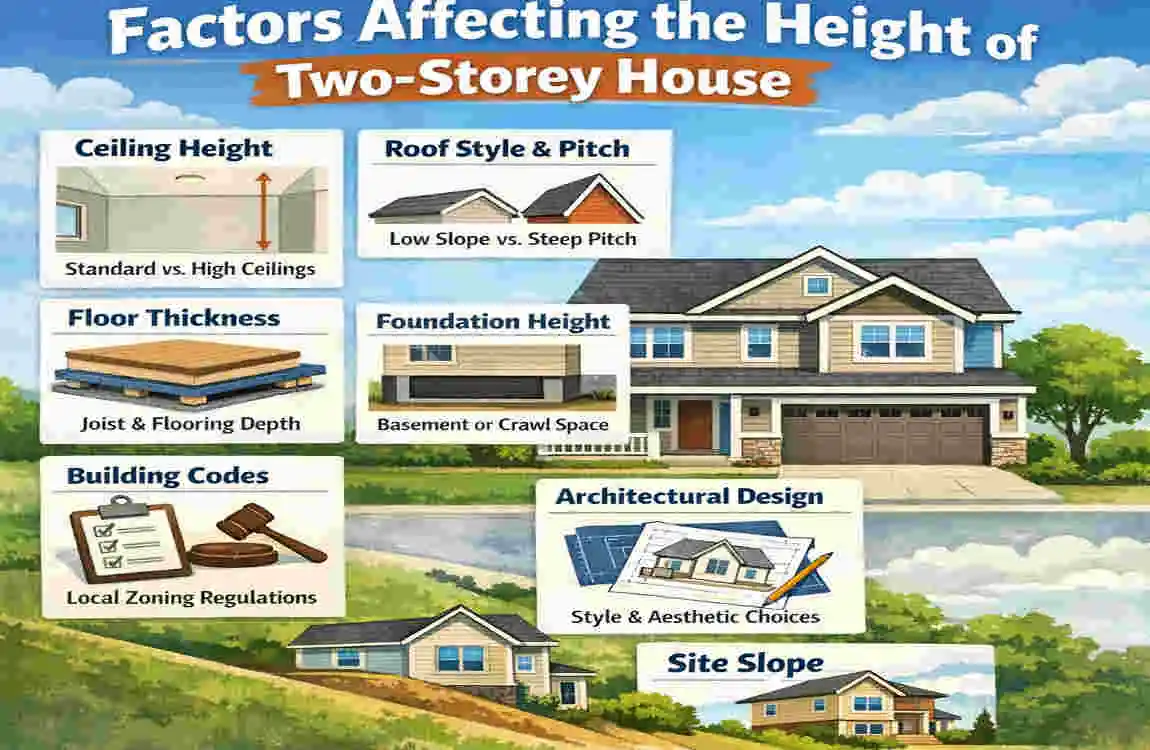
Typical ceilings range from 8 ft (2.4 m) to 9 ft (2.7 m) per floor. Luxury homes may go even higher.
Floor & Ceiling Structures
Joists, concrete slabs, and insulation add a few inches between floors. A solid concrete slab can add 4‑6 in (10‑15 cm) to the total height.
Roof Design
- Flat roofs – add minimal height, usually just the roof membrane and a parapet.
- Pitched roofs – raise the peak, sometimes adding 3‑5 ft (1‑1.5 m).
- Gable roofs – combine slopes on two sides, creating a classic silhouette.
Foundation & Ground Level
A raised foundation or a sloping site can lift the visible height of the house without changing the internal dimensions.
Local Building Regulations
Many municipalities set a maximum building height to protect sightlines and neighborhood character. Always check the local code before planning house.
How to Calculate the Height of a Two‑Storey House
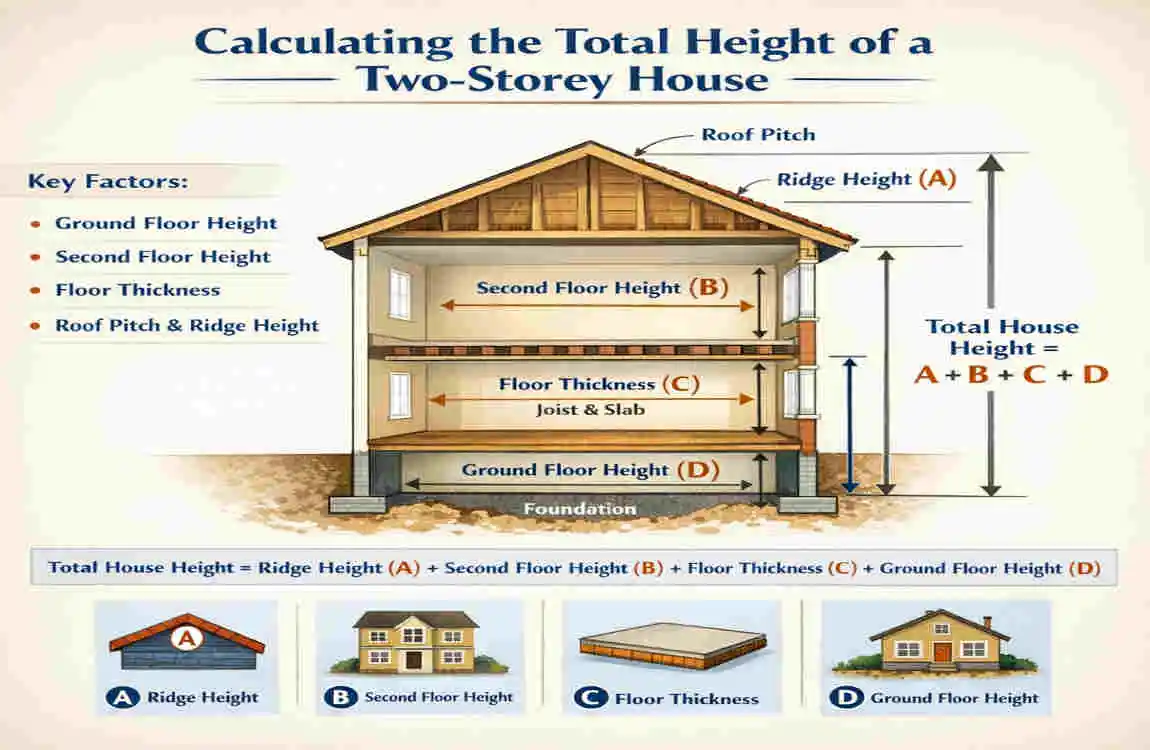
- Start with ceiling heights – add the interior ceiling height for each story.
- Add floor structure thickness – include the depth of joists or slabs between floors.
- Factor in the roof – measure the pitch or add the flat‑roof thickness.
- Include any parapets or cornices – these decorative elements add a few inches.
Simple Example
- Ground floor ceiling: 8 ft
- First floor ceiling: 8 ft
- Floor structure (between floors): 0.5 ft
- Roof pitch (average): 3 ft
Total height = 8 + 0.5 + 8 + 3 = 19.5 ft (about 5.9 m).
Remember, actual on‑site measurements may vary due to material tolerances or custom design features.
How Two‑Storey House Heights Vary by Design and Location
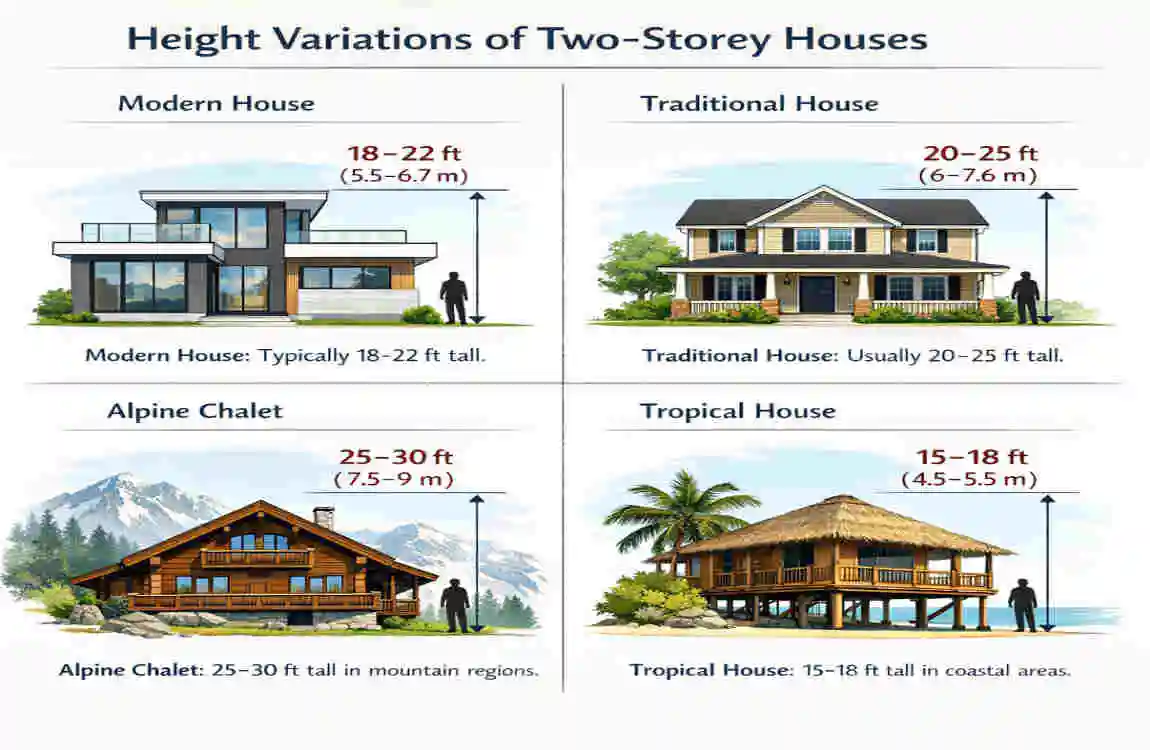
Design Style Typical Height RangeRoof TypeClimate Influence
Traditional 18‑22 ft Gable / pitched Cooler climates favor steeper roofs for snow shedding
Modern 19‑24 ft Flat or low‑pitch Warm regions often use flat roofs for rooftop living
Contemporary 20‑25 ft Mixed (flat + pitch) Adaptive designs respond to both aesthetic and weather needs
- Traditional homes often keep a modest profile, while modern houses may stretch higher to accommodate open‑plan interiors.
- In rainy or snowy zones, pitched roofs dominate, adding extra height.
- Urban areas sometimes impose strict height caps, squeezing designs into tighter vertical envelopes.
Why the Height of a Two‑Storey House Matters
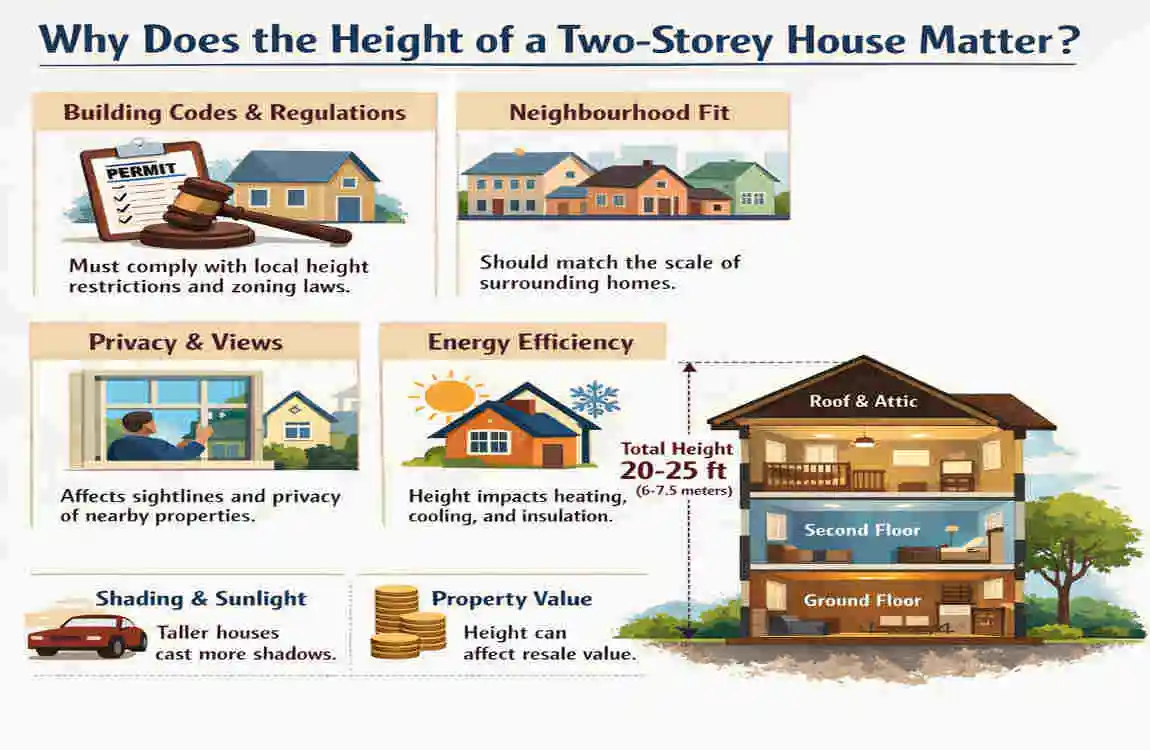
Construction Costs
More height means more material, longer scaffolding runs, and higher labor costs. Even an extra foot can add noticeable expense.
Heating & Cooling
Higher ceilings increase the volume of air that must be conditioned, which can affect energy bills. Insulation strategies must adjust for taller spaces.
Natural Light & Ventilation
Tall rooms can capture more daylight and allow better airflow, but they also require larger windows or additional ventilation strategies.
Property Value & Appearance
Well‑proportioned homes—neither too squat nor overly tall—tend to attract buyers and command higher prices. The visual balance between ground and roof is key.
Renovations & Extensions
Understanding the existing height helps plan loft conversions, roof additions, or second‑storey extensions while staying within local height limits.
Frequently Asked Questions About Two‑Storey House Height
How high is a two-story house in feet?
Usually 18 – 25 ft, though some designs fall outside this range.
How high is a two-story house in meters?
Roughly 5.5 – 7.6 m from ground to the roof’s highest point.
What is the standard ceiling height in a two‑storey house?
Typically 8 – 9 ft (2.4 – 2.7 m) per floor, but luxury homes may go higher.
Does a two‑storey house include the roof in its height?
Yes—total height is measured to the roof’s peak, following local measurement rules.
Is a two‑storey house always taller than a single‑storey house?
Generally, but a single‑storey home with a steep roof can measure taller than a compact two‑storey design.
How can I measure the height of my two‑storey house?
Use a laser distance measurer or hire a surveyor to record the vertical distance from ground level to the roof’s highest point.
Can a two‑storey house be 20 feet tall?
Absolutely—many compact designs sit right around 20 ft.
What is the difference between two‑storey house height and ceiling height?
Ceiling height is the interior vertical space per floor, while house height includes both floors, structural layers, and the roof.