Installing shower plumbing fixtures might sound like a job only professionals can handle. Still, with patience and the right approach, many homeowners can do it themselves. Whether you’re upgrading an old showerhead or replacing a worn-out valve, understanding how the pieces fit together makes the whole process far less intimidating.
| Shower Fixture / Step | What It Does | Key Installation Point | Common Issue |
|---|---|---|---|
| Water Supply | Provides hot and cold water | Turn off water before starting | Water pressure remains in pipes |
| Shower Valve | Controls water flow and temperature | Connect hot and cold lines correctly | Incorrect connections or leaks |
| Valve Body | Houses the mixing mechanism | Install at the manufacturer’s recommended depth | Poor alignment |
| Shower Arm | Connects the showerhead to the wall | Seal the threaded connection properly | Dripping at the joint |
| Showerhead | Delivers water for showering | Hand-tighten and secure carefully | Low flow or leakage |
| Trim Plate | Covers the valve opening | Fit it securely against the wall | Gaps around the plate |
| Control Handle | Adjusts water flow and temperature | Align according to fixture instructions | Handle feels loose |
| Pipe Connections | Carry water between components | Use compatible fittings and seal connections correctly | Leaks |
| Leak Test | Confirms installation is watertight | Restore water slowly and inspect joints | Hidden leaks |
| Final Check | Ensures the shower works properly | Test flow, temperature, and controls | Uneven flow or incorrect temperature |
Understanding Shower Plumbing Fixtures
Before you pick up a wrench, it helps to understand what you’re actually working with. Shower plumbing fixtures are the visible and hidden parts that control and deliver water in your shower. Getting the installation right matters because even a small mistake can lead to leaks, water damage, or poor water flow.
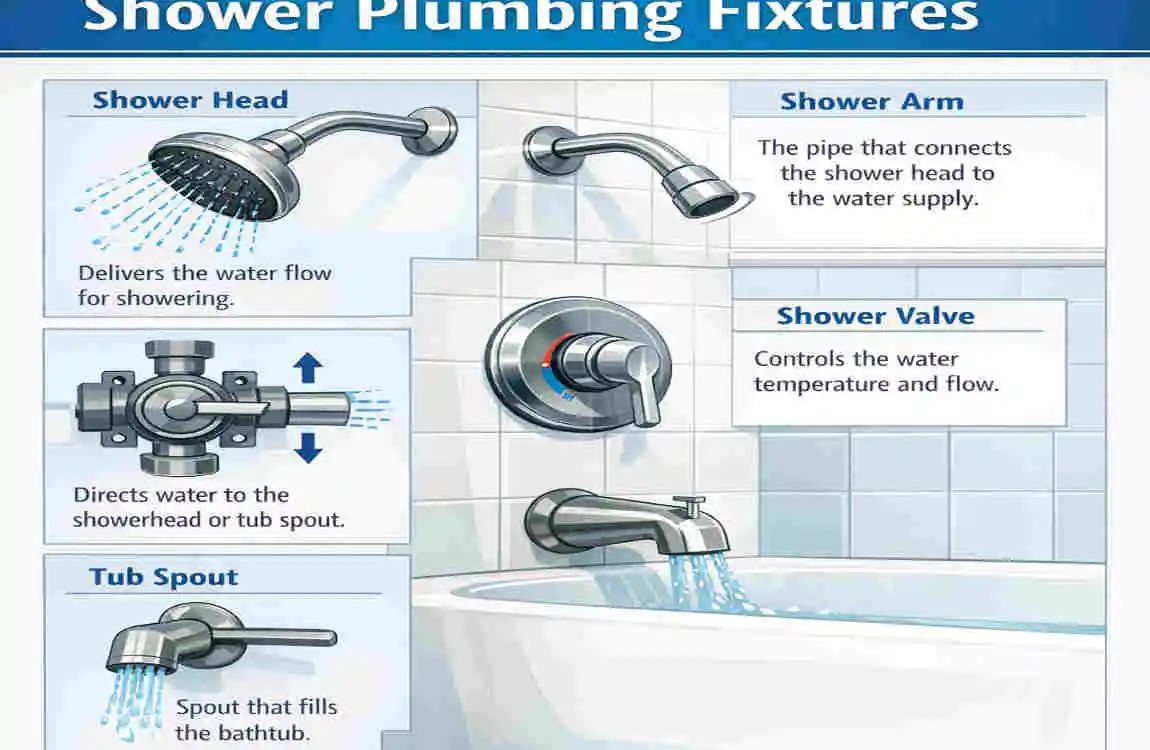
The main components you’ll work with include the shower valve, showerhead, shower arm, trim plate, and handles. Each part plays a role, and when they all work together correctly, you get a smooth, reliable shower experience.
Common Shower Fixtures
Let’s break down what each fixture does so you know exactly what you’re installing.
The shower valve is the heart of the system. Hidden behind the wall, it mixes hot and cold water and regulates the temperature. If your water suddenly runs too hot or too cold, the valve is usually involved.
The shower arm is the curved pipe that sticks out from the wall. It connects the plumbing inside the wall to the showerhead. The showerhead attaches to the end of this arm and sprays water onto you.
The trim plate is the decorative cover that hides the valve and the hole in the wall. It gives your shower a clean, finished look. Finally, the handles are what you touch to turn the water on and off and adjust the temperature.
When installed properly, these parts connect seamlessly to your home’s water supply, delivering water at the right pressure and temperature every time you step in.
Tools and Materials
You don’t need a huge toolbox to get started, but having the right supplies on hand makes everything smoother. Here are the basics most homeowners will need:
- An adjustable wrench for tightening connections
- Plumber’s tape (also called Teflon tape) to seal threaded joints
- A screwdriver for handles and trim plates
- A level to make sure fixtures sit straight
- The correct fittings and connectors that match your new fixtures
You may also want a bucket and towels nearby to catch any leftover water. Always check your fixture’s packaging, since some products come with their own specialty parts or require specific adapters.
Preparing for the Shower Plumbing Installation
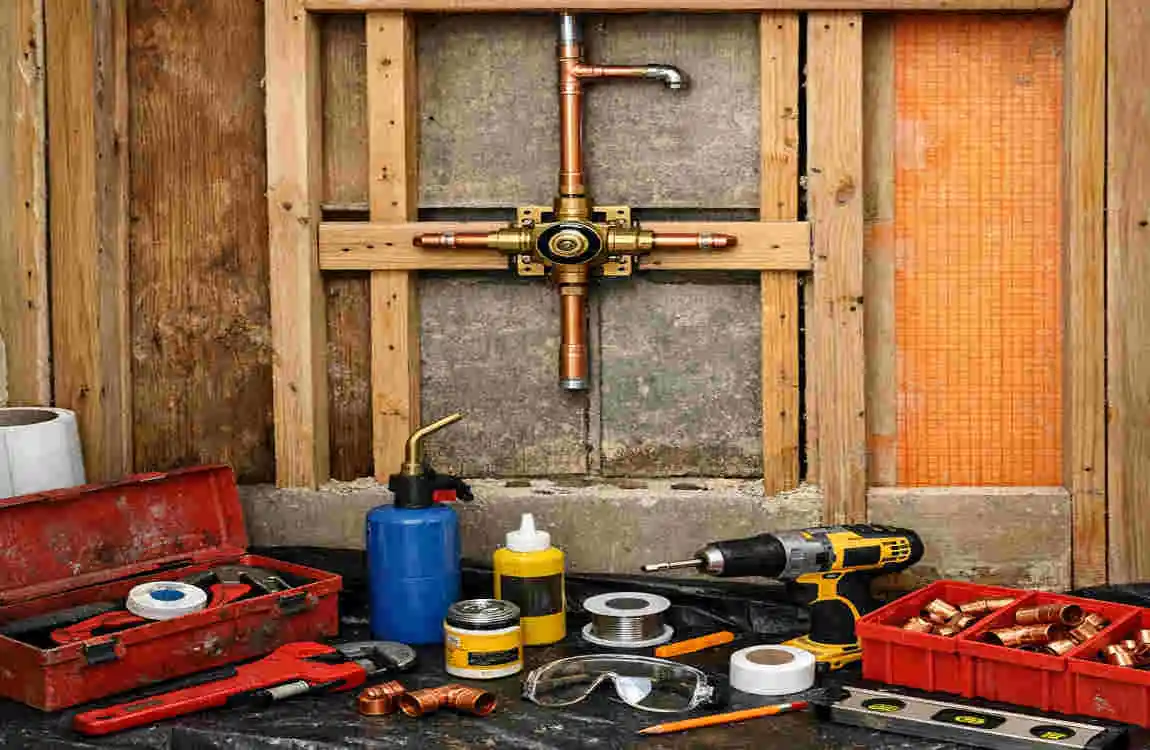
Good preparation is what separates a smooth installation from a frustrating one. Rushing in without proper setup is one of the most common reasons projects go wrong. So let’s take a few minutes to get everything ready.
The single most important step here is to turn off the water supply. Never start disconnecting fixtures while water is still flowing. Once you’ve shut off the water, open the shower controls to release any leftover pressure and drain the lines. Confirm that no water comes out before you begin working.
This simple step protects you from unexpected sprays and prevents flooding in your work area.
Check the Existing Plumbing
Before installing anything new, take a good look at your current plumbing. Inspect the hot- and cold-water lines for rust, corrosion, or damage. If the existing pipes look worn or brittle, you may need to address them before adding new fixtures.
Also confirm that your current plumbing is compatible with the new fixtures you’ve purchased. Different fixtures may require different connection types or sizes. Checking this early saves you a frustrating trip back to the store later.
Measure the Installation Area
Measuring might feel like an extra step, but it’s worth it. Compare your new fixtures’ specifications with the space you have available. Check the valve placement, shower-arm height, and handle position.
Accurate measurements ensure your new fixtures line up with existing openings and connections. This helps you avoid gaps, misalignment, or the discovery that a part doesn’t fit where it needs to go.
How to Install Shower Home Plumbing Fixtures
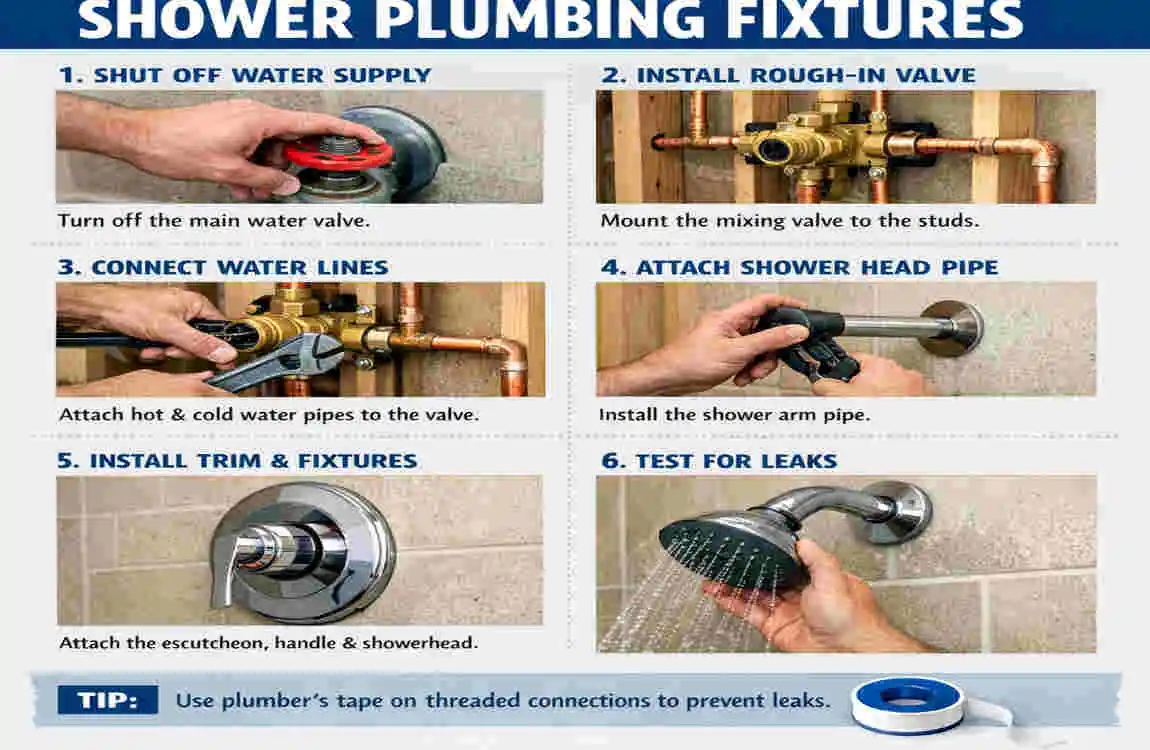
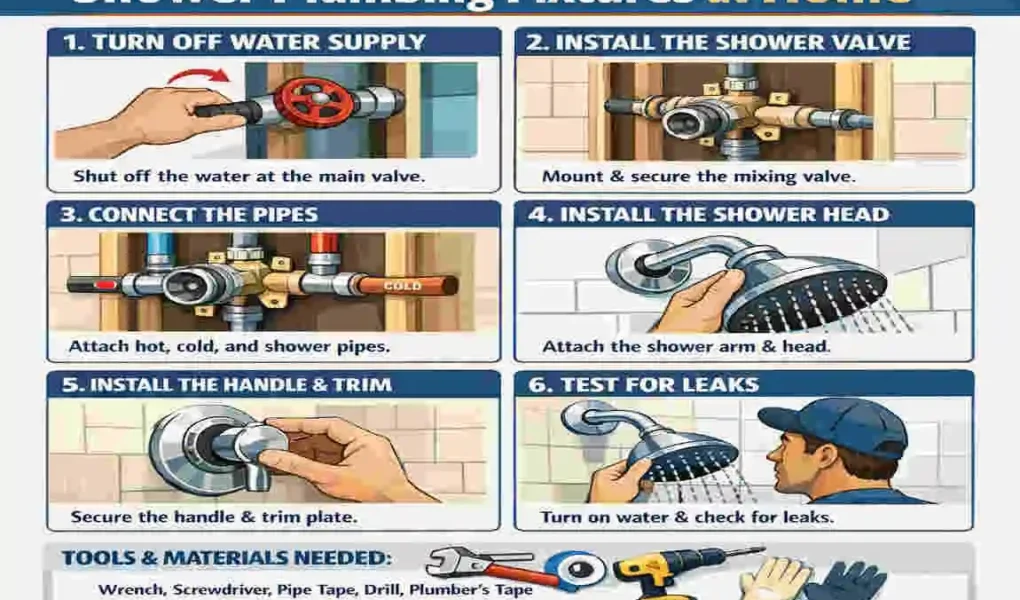
Now for the main event. This is where you’ll actually learn how to install shower home plumbing fixtures step by step. The good news is that once you understand the flow, the process is quite logical.
In simple terms, you’ll start by installing or connecting the valve, then attach the shower arm, fit the showerhead, and finish with the handles and trim. Let’s go through each part carefully so you don’t miss anything.
Install the Shower Valve
The valve is your starting point since everything else connects to it. Position the valve behind the wall where it will control your water flow. Connect it to the hot- and cold-water supply lines, making sure the hot and cold sides match correctly. Reversing these is a common mistake that leads to confusing temperature controls later.
Because valve designs vary widely, follow the manufacturer’s installation instructions for exact placement and connection methods. These instructions will tell you how deep to set the valve and how to align it with your finished wall surface. Getting this right now saves major headaches later.
Attach the Shower Arm and Head
With the valve in place, you can move on to the shower arm. Start by preparing the threaded connections. Wrap plumber’s tape around the threads or apply a suitable thread sealant to help create a watertight seal. This small step goes a long way toward preventing leaks.
Screw the shower arm into the wall fitting and tighten it carefully. Then attach the showerhead to the end of the arm. Be firm but gentle when tightening, since applying too much force can damage the threads or crack the fixture. Hand-tightening followed by a slight turn with your wrench is usually enough.
Install the Handles and Trim
Once all plumbing connections are secure, add the finishing touches. Fit the trim plate over the valve to cover the wall opening and give your shower a polished look. Most trim plates slide into place and secure with a few screws.
Next, attach the control handles. These usually screw onto the valve stem and let you operate the water flow and temperature. Make sure they sit snugly and turn smoothly. With the trim and handles in place, your shower starts to look complete and ready to use.
Testing the New Shower Fixtures
You’re almost there, but don’t skip this crucial phase. Testing confirms that your hard work paid off and catches any small issues before they become big problems.
Start by slowly restoring the water supply. Turning the water back on gradually helps you spot leaks without creating a sudden mess. As the water flows back into the lines, keep a close eye on all your new connections.
Check for Leaks
With the water back on, carefully inspect every joint and connection. Look at the threaded joints, the shower arm, and the areas around the valve. Run your fingers along the connections to feel for moisture, and watch for any drips.
If you spot a leak, turn off the water, tighten the connection, or reapply sealant as needed. A small leak now can lead to hidden water damage over time, so it’s worth being thorough here.
Test Water Flow and Temperature
Finally, turn on the shower and observe how the water behaves. Check that the water flows steadily from the showerhead without sputtering or weak pressure. Then test the temperature controls by adjusting from cold to hot.
Make sure the hot and cold controls respond correctly and that you can reach a comfortable temperature. If the controls feel reversed or the water doesn’t heat up properly, you may need to revisit your valve connections.
Common Installation Mistakes to Avoid
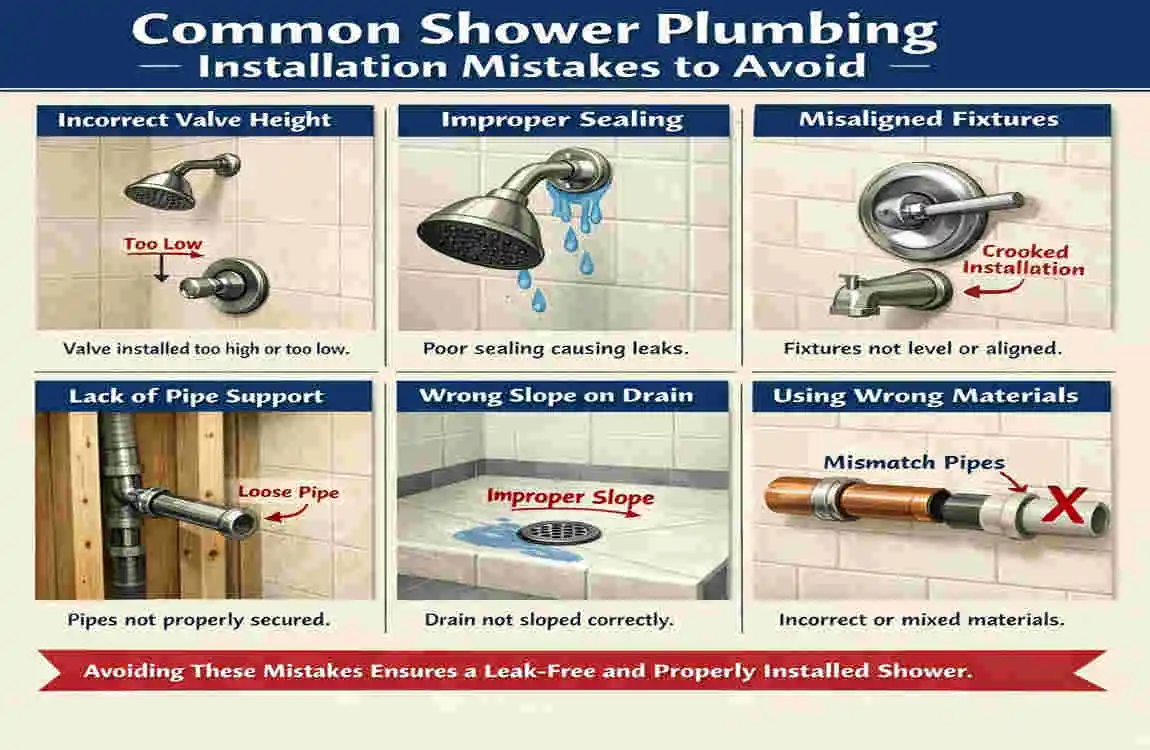
Even careful homeowners can slip up during installation. Knowing the common pitfalls ahead of time helps you avoid them.
Here are the mistakes that most often cause trouble:
- Overtightening fittings, which can crack fixtures or strip threads
- Making incorrect connections, such as reversing hot and cold lines
- Skipping leak tests, allowing small leaks to go unnoticed
- Ignoring the manufacturer’s instructions, which leads to improper installation
Avoiding these errors keeps your shower working well and saves you from redoing the job later. When in doubt, slow down and double-check your work.
When to Call a Plumber
While many fixture installations are DIY-friendly, some situations really do call for a professional. If your project requires opening walls, you’ll likely want expert help to avoid damaging pipes or structural elements.
You should also consider calling a plumber if you need to change supply lines, modify drainage, or work with an unfamiliar plumbing system. These tasks carry more risk and often require specialized knowledge. There’s no shame in bringing in a pro when the job goes beyond a simple swap. It can save you money and stress in the long run.
Frequently Asked Questions
Here are quick answers to some of the most common questions homeowners ask about installing shower fixtures.
Can I install shower plumbing fixtures myself?
Yes, in many cases you can. Simple fixture replacements, like swapping out a showerhead or updating handles, are often manageable for experienced DIY homeowners. However, more involved work that touches the pipes or valve inside the wall may be better left to a professional.
How long does it take to install shower fixtures?
It depends on the type of job. A straightforward replacement might take under an hour, while installations that require plumbing modifications can take much longer. The more complex the work, the more time you should set aside.
Do I need to turn off the main water supply?
Always shut off the water supply to the relevant plumbing system before disconnecting any existing fixtures. This prevents leaks and sprays while you work. In some homes, this means turning off a local shutoff, while in others it may involve the main supply.
What tools do you need to install a showerhead?
For a basic showerhead, you’ll usually need an adjustable wrench and plumber’s tape. That said, requirements vary by fixture, so check the instructions that came with your product for any special tools.
Why is my new shower fixture leaking?
Leaks often come from loose or damaged connections, incorrect sealing, or worn components. Double-check that your connections are snug and that you applied plumber’s tape or sealant where needed. If the leak persists, a part may be faulty and need to be replaced.