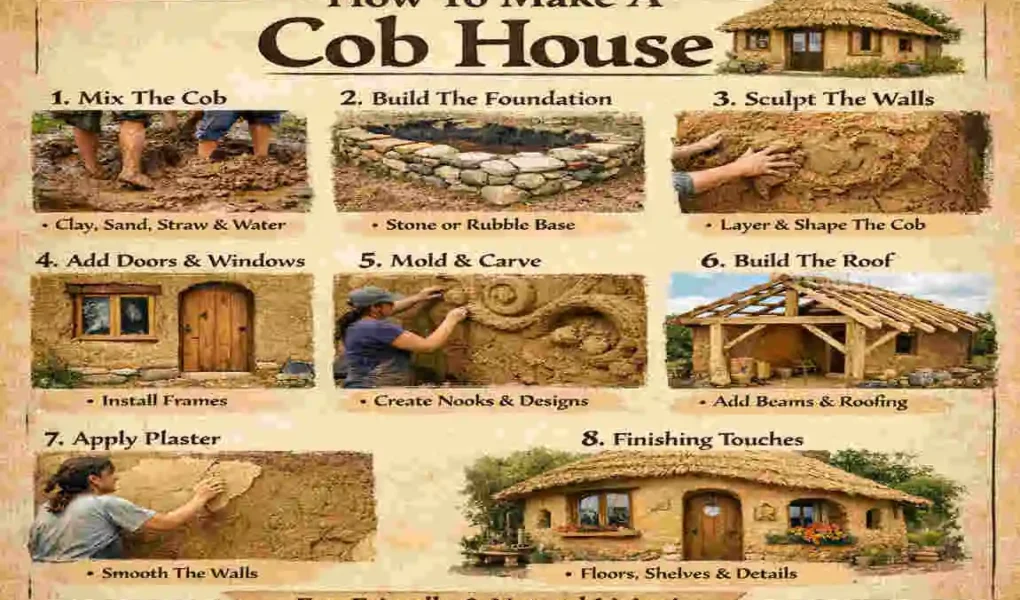
A cob house is a natural building made from clay, sand, straw and water. Builders mix these earth-based materials and shape them into thick walls that store heat, breathe, and look beautiful.
What Materials Do You Need to Make a Cob House?
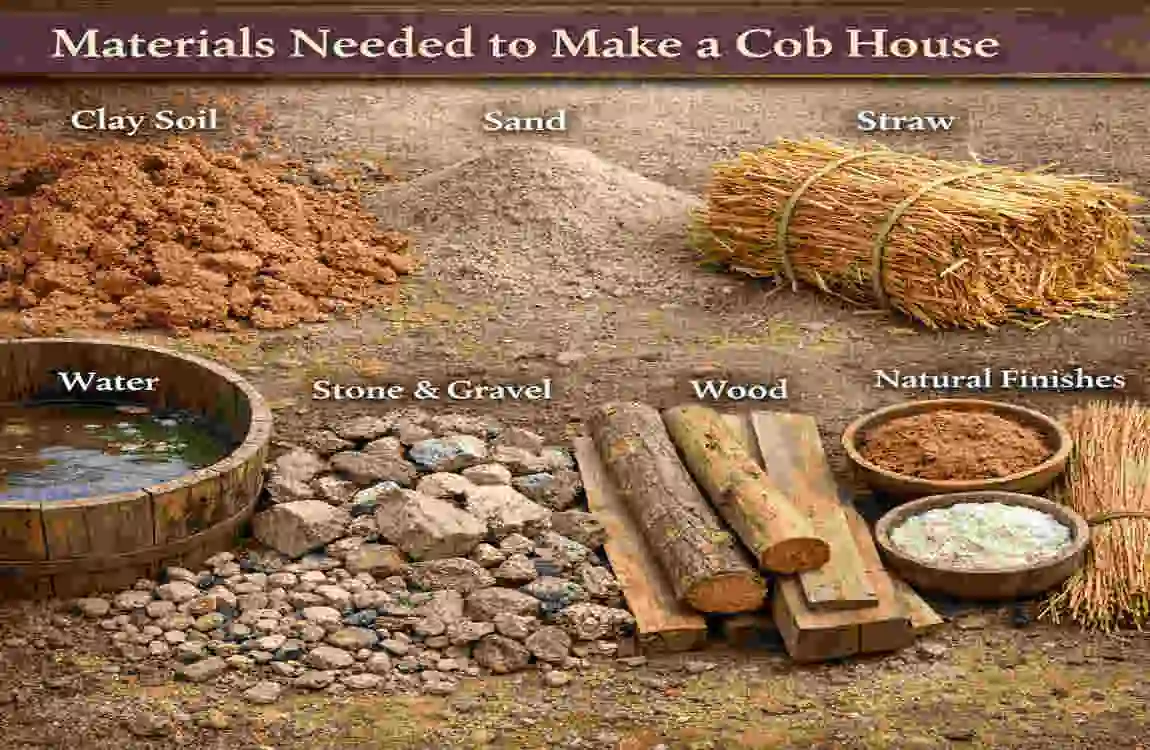
- Clay‑rich soil – provides the binding power.
- Sand – adds strength and prevents cracking.
- Straw – acts like tiny reinforcement fibres.
- Water – brings everything together into a workable mix.
- Stone or another sturdy footing – creates a moisture‑resistant base.
- Doors and windows – give light, ventilation, and access.
- Roofing material – shields the walls from rain and sun.
Material Main Role Typical Source
Clay‑rich soil Binds the mixture Local garden or natural deposit
Sand Adds strength & stability Riverbank or commercial sand
Straw Reinforces the mix Harvested hay or straw bales
Water Makes the cob pliable Clean tap or rainwater
Stone foundation Keeps moisture out of walls Local stone or concrete footings
Doors & windows Provide openings Reclaimed wood or new frames
Roofing Protects the cob from water Thatch, metal sheets, tiles
The exact recipe can shift depending on the soil you find and the climate where you build.
How to Make a Cob House Step by Step
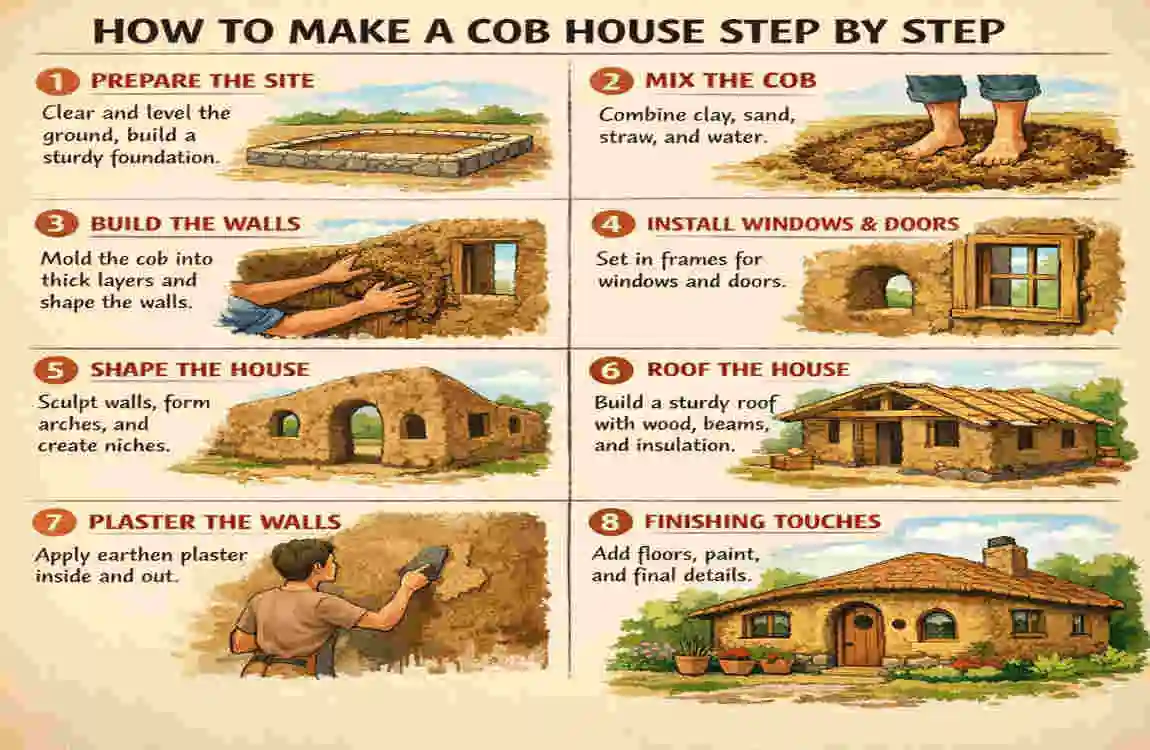
Choose and Prepare the Building Site
Pick a spot with good drainage, solid ground, and plenty of sunlight. Check local building rules early so you know any height or setback limits. Clear vegetation, level the earth, and create a slight slope away from where the walls will stand to guide water off the site.
Build a Strong Foundation
Cob walls love to breathe, but they hate moisture. Lay a raised stone or concrete footing that sits a few inches above ground level. Make sure the base is level and spread‑out, then add a damp‑proof membrane if the soil stays wet. This step gives the walls a dry, stable platform to grow on.
Mix the Cob
- Gather the dry ingredients – combine clay‑rich soil and sand in a large wheelbarrow or mixing tub.
- Add straw – sprinkle it in and turn the mix until the fibres are evenly spread.
- Add water gradually – keep stirring until the mixture feels like a thick, moldable dough that holds its shape when squeezed.
A simple test: form a small ball and press it in your hand. If it slides apart, add a little more clay; if it cracks, add more sand.
Build the Cob Walls
Start at the foundation and lay small “lifts” of cob – about the height of a kitchen countertop. Press each layer firmly with a board or your hands, shaping it while it’s still soft. Overlap each new lift with the previous one, just like bricks, to create a solid, monolithic wall. Work from the bottom up, letting each section dry a little before adding more weight on top.
Add Doors and Windows
Plan openings early so you can set door and window frames as the walls rise. Use wooden lintels or stone arches to carry the load above each opening. Make sure the frames are level and anchored securely before the cob hardens.
How to Build the Roof and Protect Cob Walls
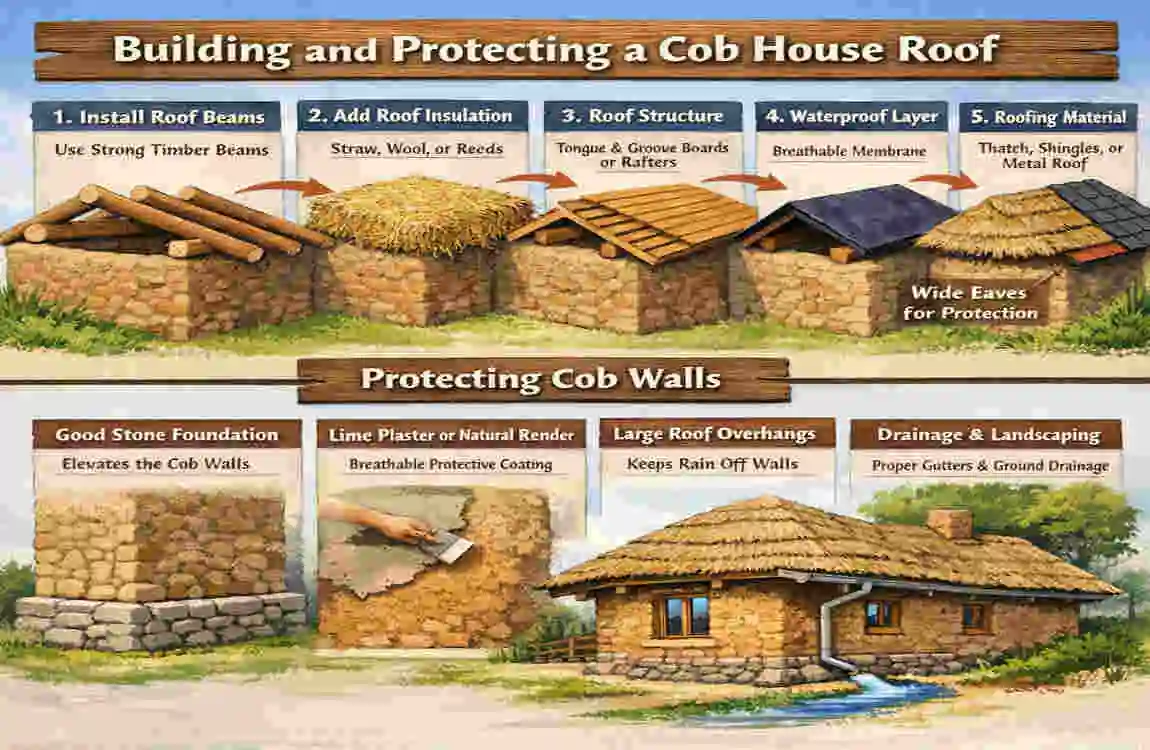
A roof with generous overhangs is essential – think at least four feet of shade beyond the wall line. This keeps rain from splashing onto the sides and gives the walls time to dry without constant wetting. Choose a roofing material that suits your climate: thatch for dry heat, metal sheets for snowy regions, or clay tiles for Mediterranean vibes.
Finishing the exterior with lime plaster, earthen render, or natural paint adds another protective skin. These breathable coats let moisture escape while keeping water out, extending the life of the cob walls.
Benefits, Challenges, and Cost of a Cob House
Benefits
- Uses locally sourced, low‑impact materials.
- Thick walls store heat, keeping interiors cool in summer and warm in winter.
- Allows for free‑form, organic shapes that feel personal and artistic.
- Offers excellent indoor air quality because the walls “breathe.”
Challenges
- Requires hands‑on labour and patience; mixing and building are physically demanding.
- Drying time can stretch weeks or months, especially in humid climates.
- Moisture protection is critical – a leaky roof or wet foundation can cause damage.
- Local building departments may have strict code requirements; you might need a structural engineer for certain elements.
Cost Factors
- Soil, sand and straw are often free or very cheap when sourced locally.
- Foundations, roofing, doors, windows and finishes usually represent the biggest expense.
- Labour (whether you do it yourself or hire help) can be the most variable cost.
Tips for Building a Safe and Durable Cob House
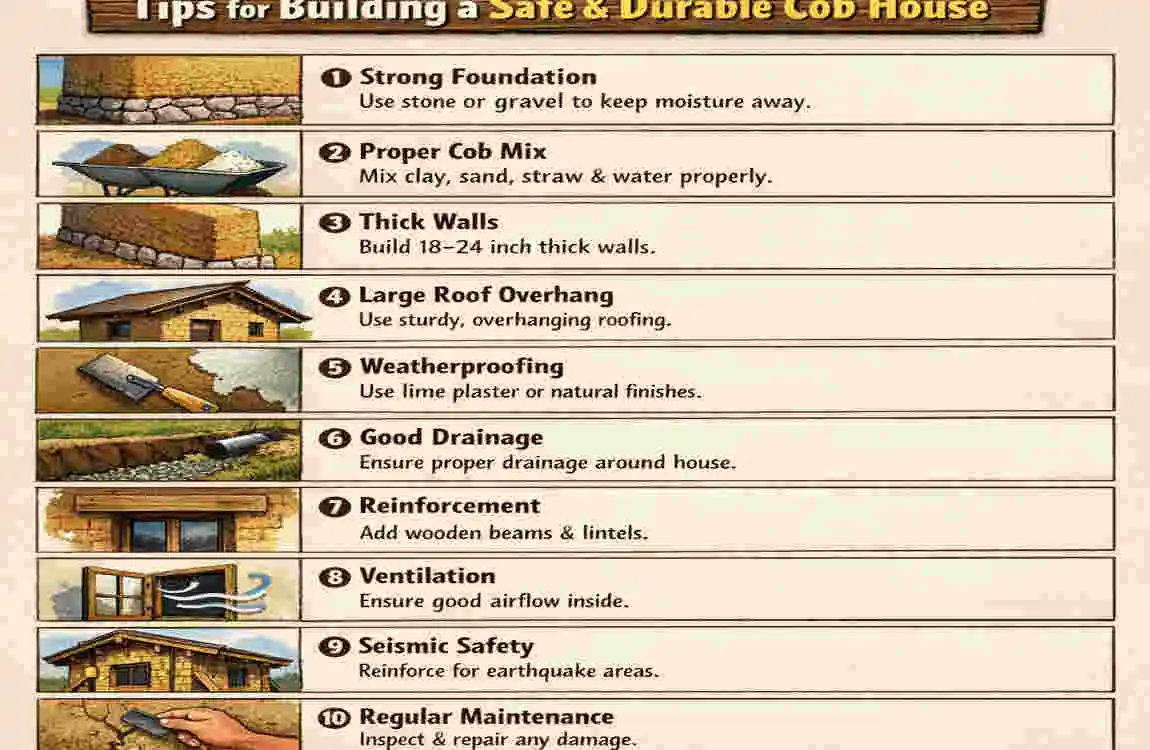
- Test your soil: Mix a small batch and let it dry. If it cracks, adjust the sand‑to‑clay ratio.
- Elevate the foundation: Keep the base at least a few inches above ground level and add a waterproof membrane.
- Mind the weather: Build walls during dry periods and protect fresh cob from rain with temporary tarps.
- Design wide roof overhangs: This simple step dramatically reduces water exposure.
- Check local regulations early: Some areas require engineered footings, fire ratings, or insulation that can be integrated into the cob design.
- Hire professionals for critical parts: Licensed experts should handle structural calculations, electrical, plumbing, and major roofing work.
| Aspect | Details |
|---|---|
| Building Method | Cob construction uses a mixture of clay-rich soil, sand, straw, and water to form walls. |
| Main Materials | Clay soil, sand, straw, water, foundation stones, timber, doors, windows, and roofing materials. |
| Site Preparation | Choose well-drained, stable ground and plan drainage around the building. |
| Foundation | Build a strong, raised, moisture-resistant foundation before starting the cob walls. |
| Cob Mixture | Combine clay-rich soil, sand, straw, and water until the mixture holds together without being overly wet. |
| Wall Construction | Place cob in manageable layers, compact it, shape the walls, and allow each section to dry gradually. |
| Doors & Windows | Install properly supported frames while constructing the walls and plan openings carefully. |
| Roof | Use a durable roof with generous overhangs to keep rain away from the cob walls. |
| Wall Protection | Protect walls from standing water and prolonged moisture through good drainage and suitable finishes. |
| Drying Time | Drying depends on wall thickness, climate, ventilation, humidity, and weather conditions. |
| Main Benefits | Natural materials, thermal mass, flexible designs, and potential sustainability benefits. |
| Main Challenges | Labor-intensive construction, slow drying, moisture management, maintenance, and building-code requirements. |
| Cost Factors | Land, foundation, roofing, labor, windows, doors, utilities, permits, and locally available materials affect the total cost. |
| DIY Suitability | Small projects may be suitable for experienced DIY builders, while a full home requires careful structural and code planning. |
| Best Tip | Test the local soil mixture first and make moisture protection a priority throughout the design. |
Frequently Asked Questions
Can I build a cob house myself?
Yes, many small cob projects – garden walls, tiny homes, or simple studios – are perfect for DIY. A full‑size residence needs careful planning, solid foundations and often professional input to meet codes.
What is cob made of?
Traditional cob blends clay‑rich soil, sand, straw and water. Some builders add a bit of lime or natural fibres for extra strength.
How long does it take to build a cob house?
Time varies. A modest-size home can take several months of active building, plus additional weeks for the walls to dry fully. Weather, crew size and design complexity all play a role.
Are cob houses waterproof?
Cob itself is porous, so it must be shielded from prolonged moisture. Proper foundations, wide roof overhangs, good drainage, and breathable exterior finishes keep water out and keep the walls dry.
How long can a cob house last?
When built correctly and maintained (especially the roof and exterior coat), cob structures can last for centuries. Historic cob homes in England and Spain still stand after 300 years.