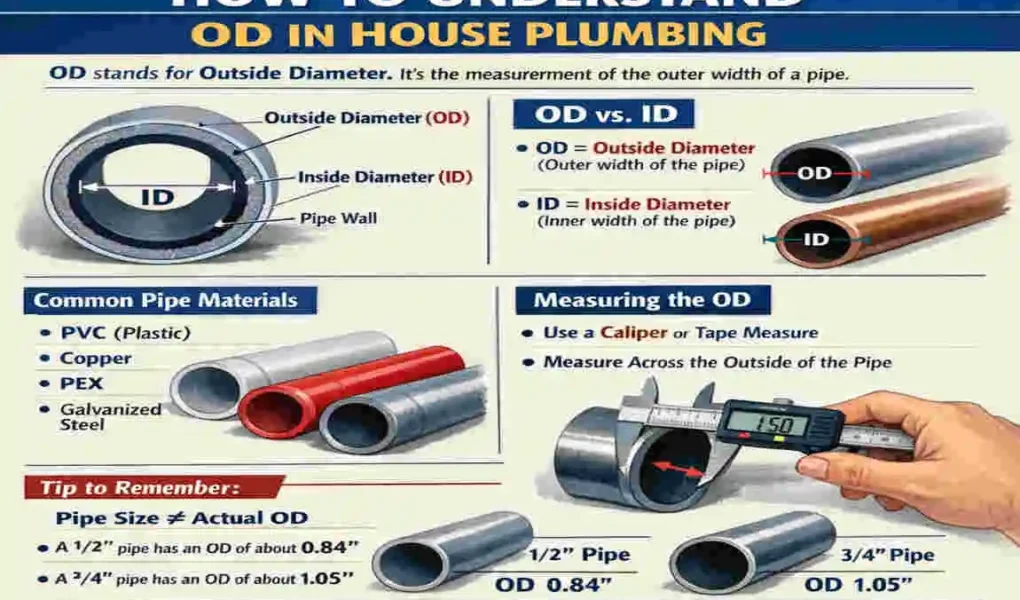
If you have ever tried to replace a pipe or buy a fitting, you may have seen the term OD and wondered what it means. In plumbing, OD stands for Outside Diameter. It tells you the width of a pipe from one outer edge to the other.
| Term | Meaning | Why It Matters |
|---|---|---|
| OD | Outside Diameter | Measures the outside width of a pipe |
| ID | Inside Diameter | Measures the open space inside the pipe |
| Nominal Size | Standard pipe size name | Helps identify compatible plumbing materials |
| Pipe Wall Thickness | Thickness of the pipe material | Affects the difference between OD and ID |
| OD Measurement | Distance across the pipe exterior | Useful when selecting fittings and replacements |
| Common Materials | PEX, PVC, CPVC, copper | Each may use different sizing standards |
| Best Tool | Caliper or measuring tape | Helps determine the actual pipe diameter |
Understanding this simple measurement matters. It helps you choose the right parts, avoid leaks, and make sure new pipes and fittings match properly.
What Does OD Stand for in House Plumbing?
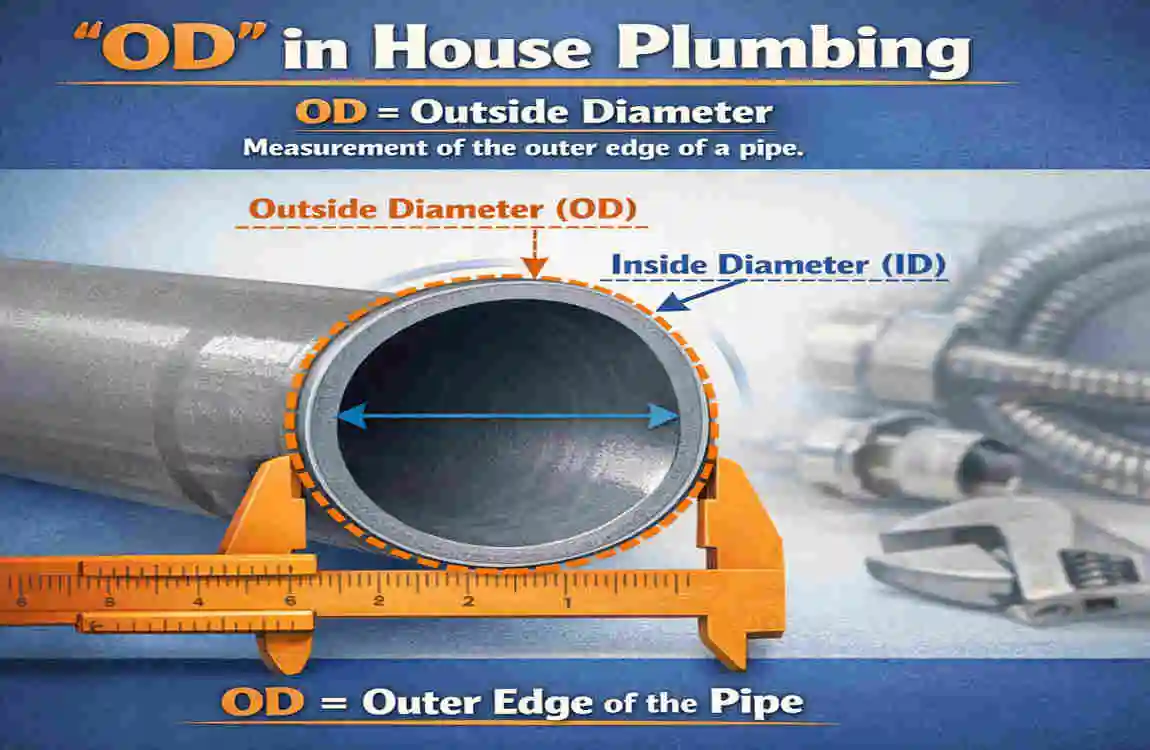
OD means Outside Diameter. It is the measurement across the outside of a pipe, not the inside.
This matters because a pipe’s labeled size doesn’t always match its exact outside measurement. Some pipes are sold by nominal size, a standard plumbing name, not always the actual measurement.
OD vs. ID in Plumbing
Here is the basic difference:
Term Meaning
Outside Diameter (OD) Measurement across the outside of the pipe
Inside Diameter (ID) Measurement across the hollow inside space
Nominal pipe size Standard name used to label the pipe
Wall thickness Material between the outside and inside
Wall thickness affects the pipe’s inside space, so two pipes can have the same OD but different ID.
Why OD Measurements Matter
Knowing the OD helps you pick the right:
- Fittings
- Connectors
- Compression parts
- Clamps
- Replacement pipes
If the OD is wrong, the connection may be loose or may not fit at all.
How to Measure the OD of a Plumbing Pipe
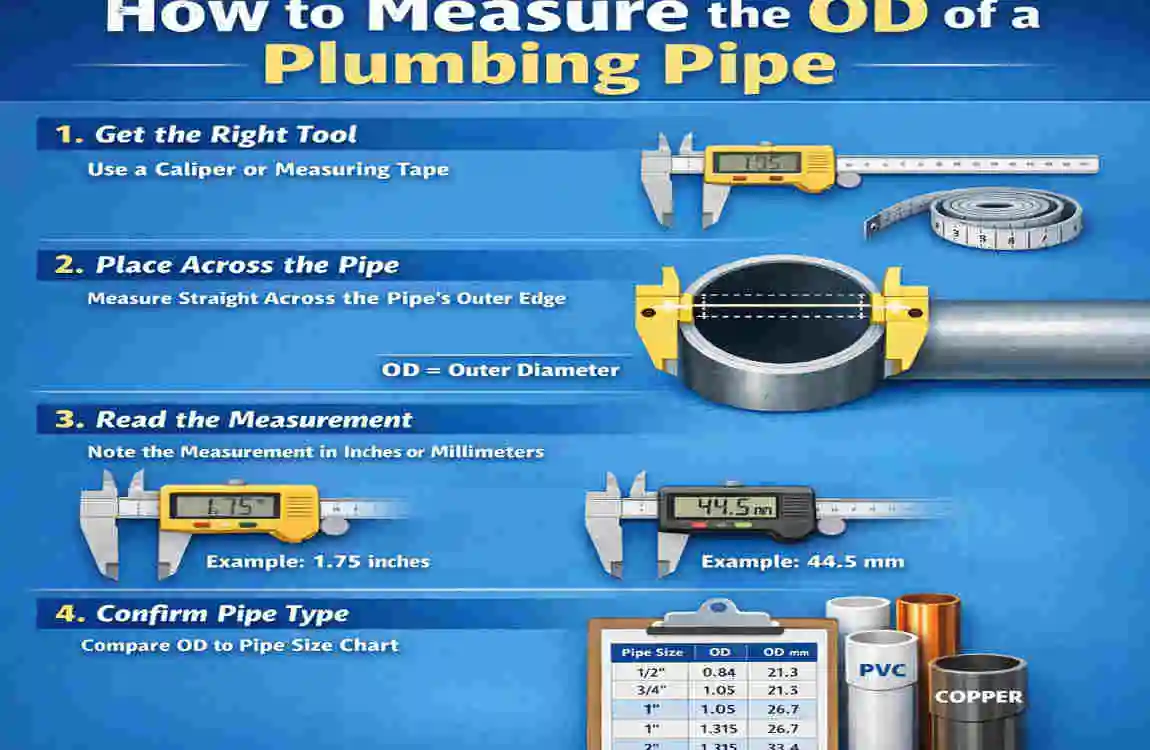
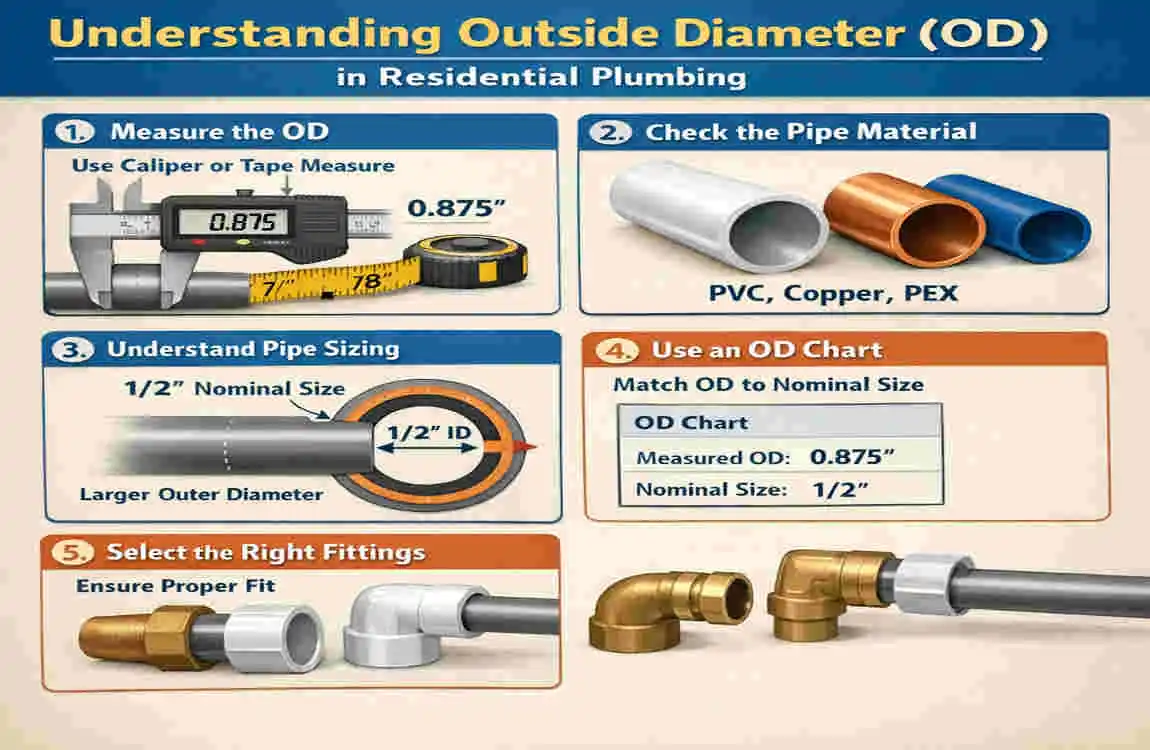
The easiest way to measure OD is with a caliper, but you can also use a tape measure or ruler if needed.
Measuring With a Caliper
A caliper gives the most accurate result. You place it around the outside of the pipe and read the measurement directly.
Measuring With a Tape Measure
If you do not have a caliper, wrap a tape measure around the pipe to find the circumference. Then use that number to estimate the diameter.
Common Measurement Mistakes
People often make simple mistakes like:
- Measuring the inside instead of the outside
- Including insulation or tape
- Measuring the wrong section of the pipe
- Trusting the label without checking the actual size
OD Sizes and Common House Plumbing Pipes
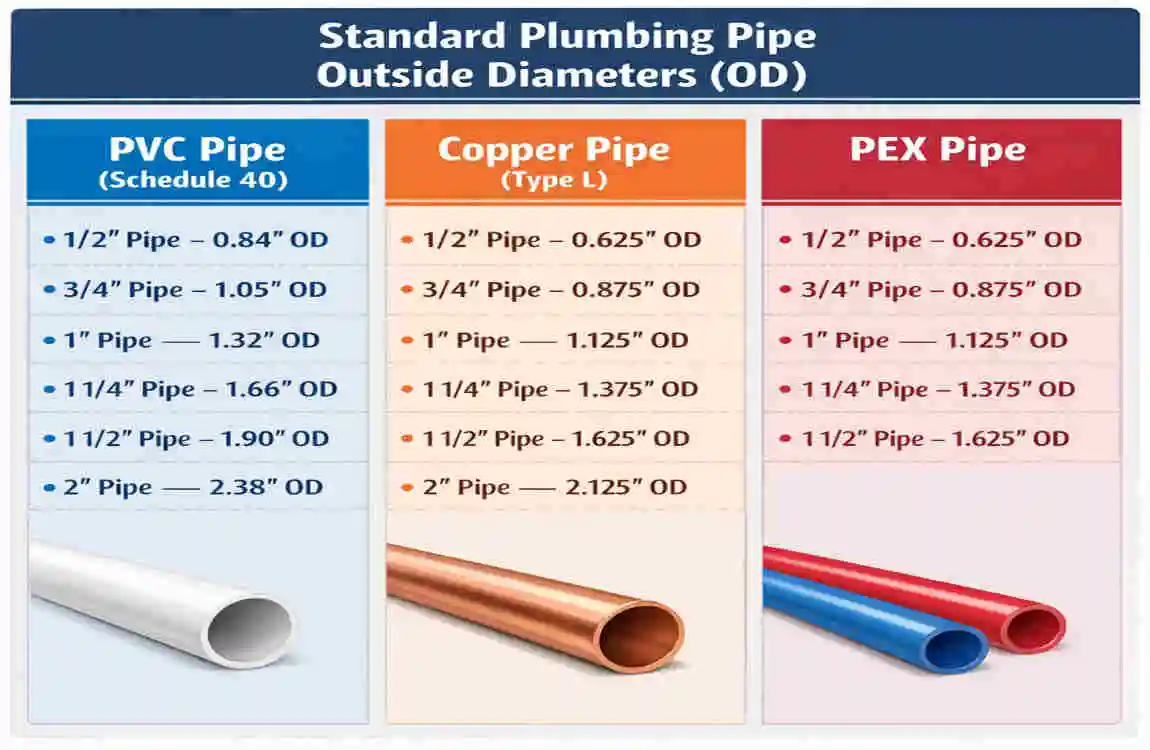
Pipe sizing can vary by material. PEX, copper, PVC, CPVC, and polyethylene all use different sizing rules.
Copper Pipe OD
Copper pipe is usually easy to identify, but the outside diameter is still important when choosing fittings. A small mistake can prevent the pipe from sealing properly.
PEX Pipe OD
PEX tubing is flexible, so check the OD and fitting type carefully. The wrong fitting can cause leaks or a weak connection.
PVC and CPVC Pipe OD
PVC and CPVC pipes may look similar, but they are not the same. Their fittings must match the correct pipe type and size for a secure fit.
How OD Helps With Plumbing Fittings and Repairs
Knowing the OD makes repairs easier because you can match the pipe to the right part before buying anything.
Choosing the Correct Fitting
A fitting must match the pipe material, size, and plumbing standard. A similar-looking part may still be the wrong one.
Replacing Damaged Plumbing
If you measure the OD first, you are less likely to buy the wrong replacement. That saves time, money, and stress.
OD and Pipe Connections
OD affects how the pipe sits inside a fitting and how well the seal holds. A proper match helps the connection stay tight and dependable.
Practical Tips for Understanding OD in Your Home Plumbing
A few simple habits can save you a lot of trouble:
- Check the pipe material
- Measure the pipe twice
- Read the manufacturer details
- Bring the old pipe or fitting with you when shopping
When to Check OD
You should check OD when you are dealing with:
- Leaks
- Renovations
- Pipe replacement
- New fixture installation
- Adding new plumbing lines
When Professional Help May Be Needed
Call a plumber if the pipes are hidden, the leak is serious, or the work must follow local plumbing rules. A professional can also help when the pipe type is hard to identify.
FAQ About OD in House Plumbing
What does OD stand for in house plumbing?
It stands for Outside Diameter, which is the measurement across the outside of a pipe.
Is OD the same as pipe size?
Not always. Pipe size can be a nominal label, while OD is the actual outside measurement.
How do I measure the OD of a plumbing pipe?
Use a caliper for the most accurate result, or measure the circumference with a tape measure.
Why is OD important when buying plumbing fittings?
Because fittings must match the pipe’s real outside size to connect properly.
What is the difference between OD and ID in plumbing?
OD measures the outside of the pipe, while ID measures the hollow inside.
Do all plumbing pipes use the same OD measurement system?
No. Different pipe materials use different sizing standards.