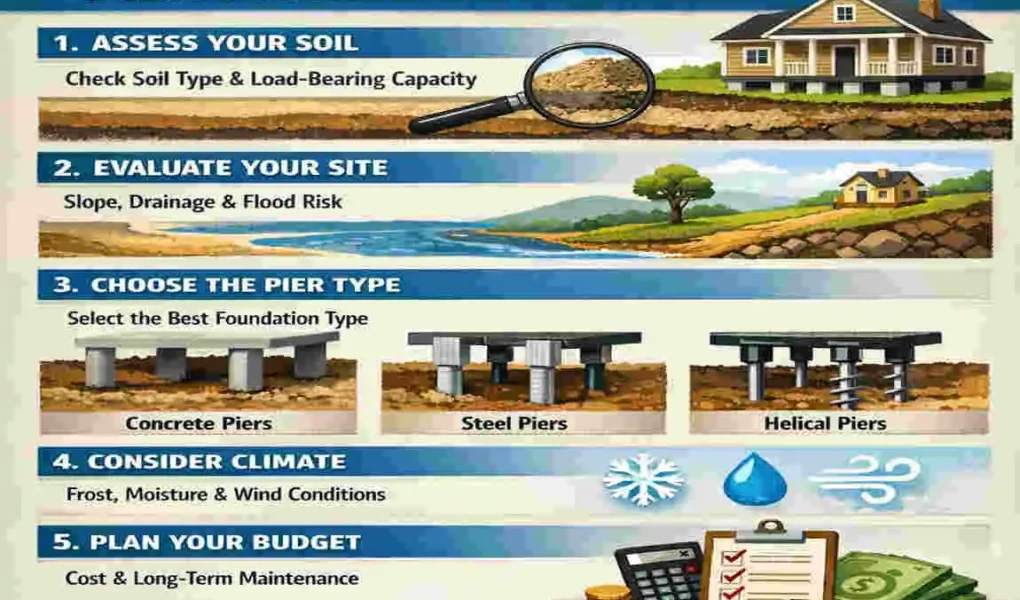
Did you know that the type of foundation you choose for your home can determine its longevity and safety? A foundation isn’t just the base of a house; it’s the backbone that supports the entire structure. When building homes, particularly in challenging terrain or harsh environments, pier foundations are often the go-to choice. But how do you decide if it’s the right fit for your home?
What is a Pier Foundation on a House?
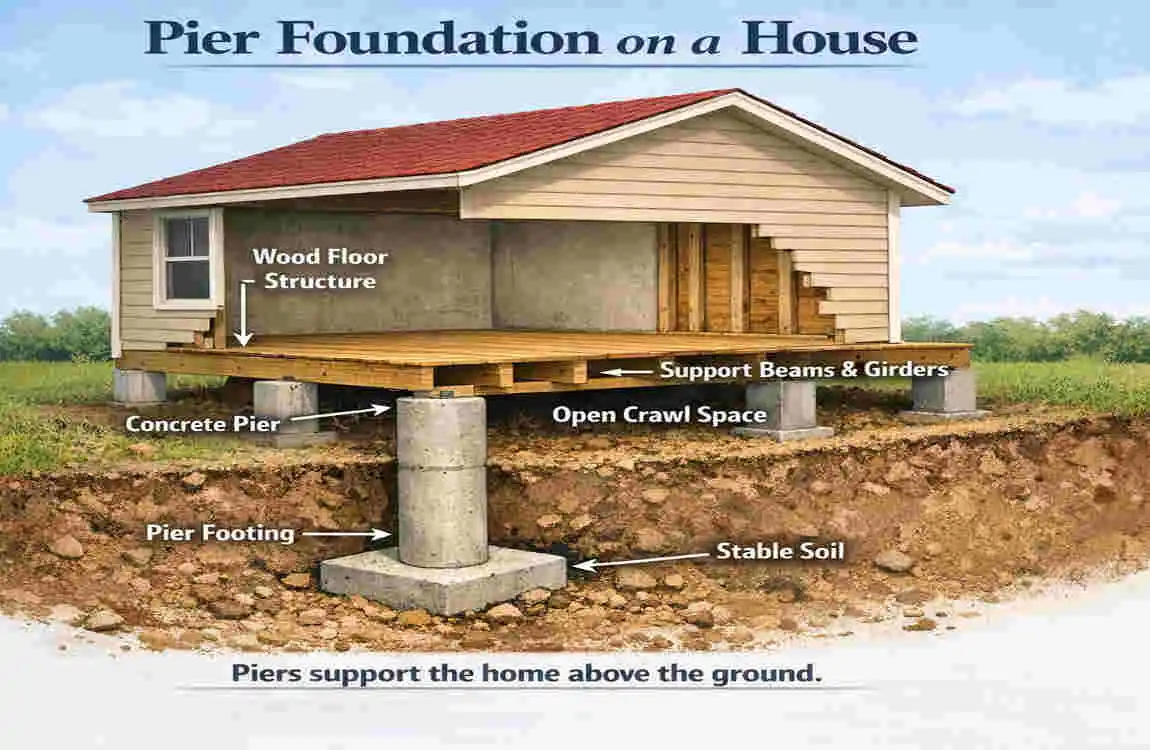
A pier foundation is a type of structural support system that uses vertical piers to anchor a house to the ground. These piers are typically made of concrete, masonry, or steel. They are strategically placed to bear the weight of the building. Instead of resting the entire structure on a flat concrete slab, as with traditional foundations, pier foundations elevate the house, leaving a gap between the ground and the floor.
Key Components of a Pier Foundation:
- Piers: Vertical columns that transfer the building’s load to the soil or bedrock.
- Beams: Horizontal supports that connect the piers and distribute weight evenly.
- Posts: Additional vertical elements that provide extra stability where needed.
Why Are Pier Foundations Used?
Pier foundations are especially popular in areas with uneven terrain, poor soil conditions, or high flood risks. They allow the building to adapt to environmental challenges while remaining structurally sound.
Benefits of a Pier Foundation
Pier foundations are not just practical; they offer numerous advantages that make them a preferred choice in residential construction. Let’s take a closer look:
Cost-Effectiveness
Compared with other foundation types, such as basements or slabs, pier foundations are often more affordable. They require less material and labour, especially in areas where soil excavation is difficult or expensive.
Adaptability to Terrain
Pier foundations excel in locations with slopes or uneven ground. Instead of levelling the land, piers can be adjusted to create a stable, level base for the house.
Accessibility for Repairs
Since a pier foundation elevates the house, it provides easier access to plumbing, wiring, and other systems located beneath the structure. This makes repairs and maintenance much simpler.
Durability in Harsh Conditions
Pier foundations are designed to withstand a variety of environmental challenges, including flooding, soil movement, and even seismic activity. This makes them especially reliable in areas prone to natural disasters.
Pros and Cons: Pier Foundation vs. Other Foundation Types
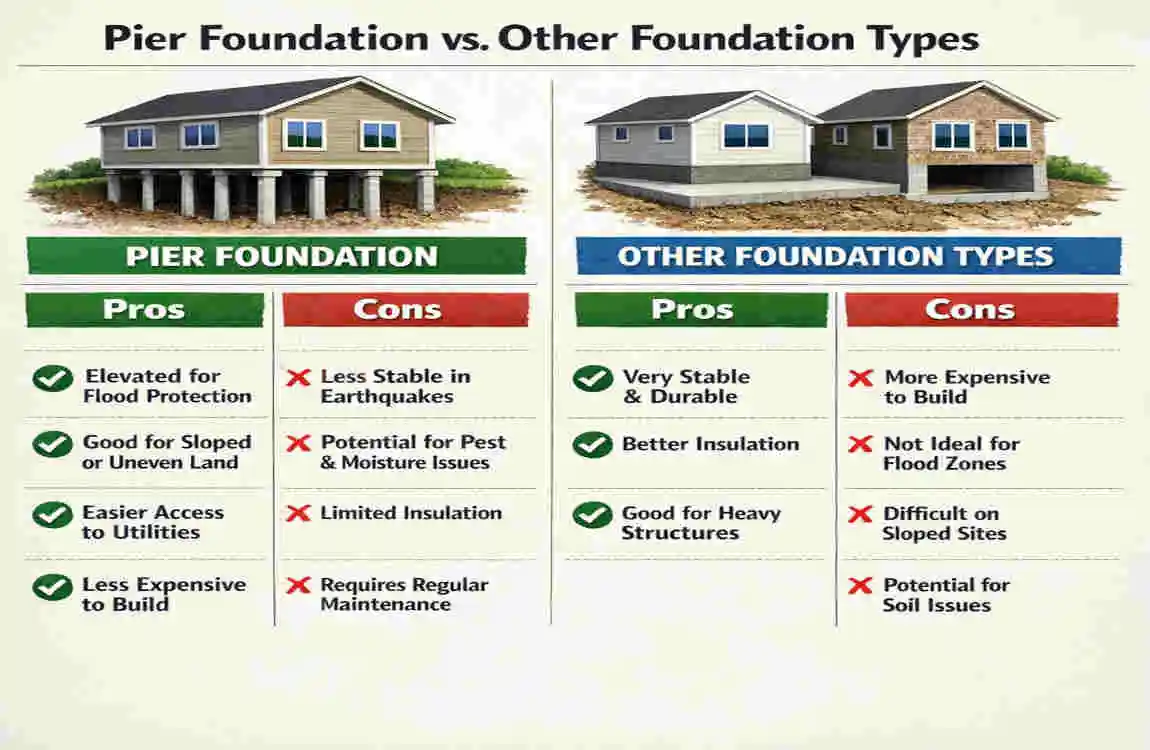
Choosing the right pier foundation requires careful thought and planning. Here are the key factors to consider:
Soil Type
Different soil types have varying load-bearing capacities. For example:
- Clay soil tends to expand and contract, requiring reinforced piers.
- Sandy soil may require deeper piers to reach stable ground.
- Conducting a soil test before construction is crucial to determine the best type of pier foundation.
Climate
In flood-prone areas, elevated pier foundations can protect your home from water damage. Similarly, in earthquake zones, flexible pier designs can help absorb seismic forces.
Load-Bearing Capacity
The size and spacing of piers depend on the weight of the house. Larger homes or structures with heavy materials may require more robust piers.
Budget
While pier foundations are generally cost-effective, the total cost can vary depending on materials, labour, and additional reinforcement. Plan your budget accordingly.
Local Building Codes
Always check your municipal regulations and acquire the necessary permits. Building codes ensure your foundation meets safety and structural standards.
Types of Pier Foundations
There are several types of pier foundations, each with unique home characteristics. Let’s break them down:
Drilled Pier Foundation
- Description: Piers are drilled into the ground and filled with concrete.
- Pros: Strong and suitable for heavy loads.
- Cons: Requires specialised equipment, which makes it more expensive.
Concrete Pier Foundation
- Description: Precast or poured concrete piers support the structure.
- Pros: Durable and weather-resistant.
- Cons: Can be labour-intensive to install.
Masonry Pier Foundation
- Description: Built using brick or stone.
- Pros: Aesthetic appeal and robust.
- Cons: Less common due to higher material costs.
Steel Pier Foundation
- Description: Uses steel pipes or beams for support.
- Pros: Extremely strong and highly corrosion-resistant.
- Cons: Higher upfront cost.
Type of Pier Foundation Material Used Best For Cost Durability
Drilled Pier Concrete Heavy Loads High High
Concrete Pier Concrete General Use Medium High
Masonry Pier Brick/Stone Aesthetics High Medium
Steel Pier Steel Extreme Conditions High Very High
Step-by-Step Guide: How to Choose the Right Pier Foundation
Follow these steps to make the right decision:
- Assess Your Property: Examine the soil, terrain, and climate.
- Determine Your Budget: plan for material, labour, and unexpected costs.
- Consult Experts: Work with a structural engineer or contractor.
- Compare Materials: Evaluate options based on longevity and cost.
- Check Local Codes: Ensure compliance with regulations.
- Hire a Reliable Contractor: Choose someone with experience in pier foundations.
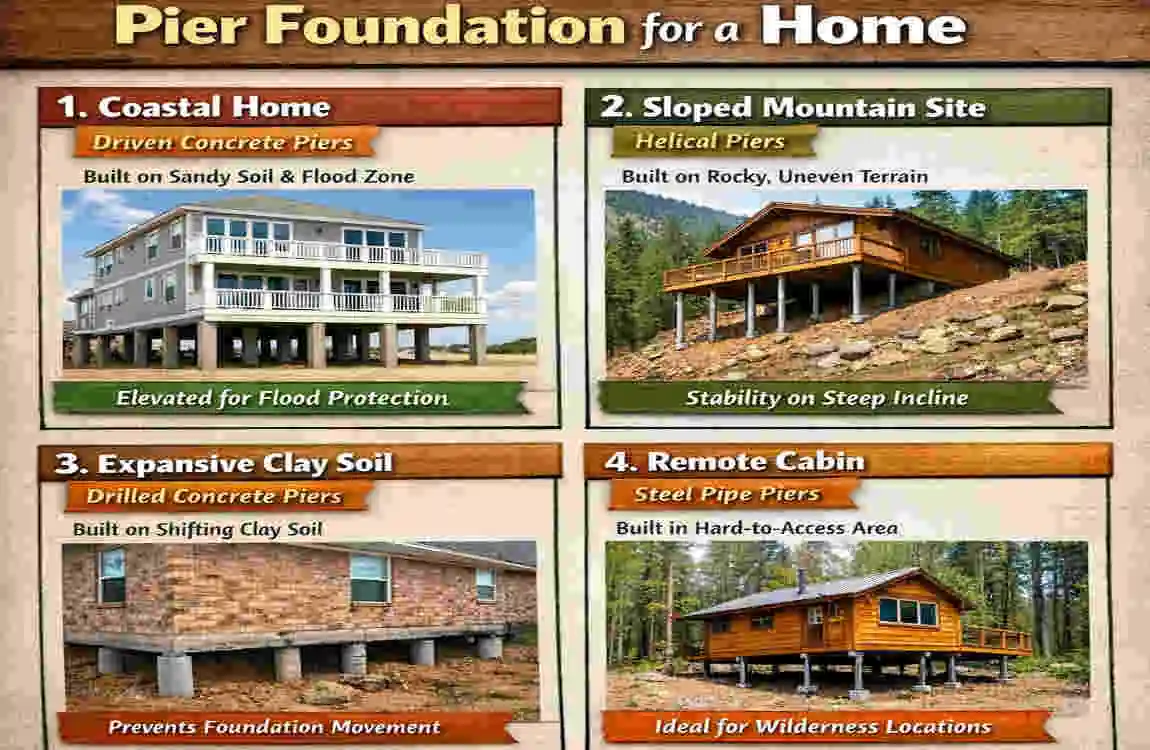
Real-Life Case Studies
- Ignoring Soil Conditions: Skipping a soil test can lead to structural failures.
- Choosing Price Over Quality: Cheap materials may result in costly repairs later.
- Skipping Professional Advice: DIY solutions often lack the precision required.
- Neglecting Maintenance: Regular inspections are essential for long-term durability.
Real-Life Case Studies
A Home on a Sloped Terrain
A homeowner in the mountains opted for a pier foundation due to the challenging slope. The adjustable piers provided stability and eliminated the need for extensive excavation.
Success in a Flood Zone
In a flood-prone area, a pier foundation elevated the house above water levels, saving it from severe water damage during a storm.
Retrofitting an Existing Home
A contractor successfully retrofitted an older house with a pier foundation, resolving longstanding issues with uneven floors and poor drainage.
FAQs About Pier Foundations
What is a pier foundation on a house?
A pier foundation is a structural support system that uses vertical columns (piers) to anchor a house to the ground, often elevating it for better stability.
How long does a pier foundation last?
With proper maintenance, pier foundations can last 50–75 years or more.
Is a pier foundation suitable for all types of homes?
No, it’s best for homes on uneven terrain, in flood zones, or in areas with poor soil conditions.
What maintenance does a pier foundation require?
Regular inspections for cracks, shifts, or wear are essential to ensure longevity.
Can I retrofit an existing house with a pier foundation?
Yes, but it requires professional expertise to ensure proper installation.
| Factor | Key Considerations | Impact on Choice |
|---|---|---|
| Soil Type | Soil stability, drainage, load-bearing capacity | Determines foundation depth and material needed |
| Climate | Flood risk, freeze-thaw cycles, seismic activity | Influences design for durability and safety |
| Load Requirements | Weight of the structure and future expansions | Affects pier size and spacing |
| Budget | Material and labor costs, long-term maintenance expenses | Guides selection between materials and methods |
| Local Building Codes | Permits, regulations, and inspection requirements | Ensures legal compliance and structural integrity |
| Accessibility | Ease of access for repairs and inspections | Important for maintenance-friendly design |